Donna Latson Gittens owns four Boston Red Sox World Series championship rings. There are people who spend a lifetime practicing a swing for less jewelry. Her route involved community relations, a television career and an advertising business built around causes. The rings mark a relationship that became part of her professional life. They also offer an unusually good opening question: how does a person whose job is to help other people be heard end up with a small collection of championship hardware?
Follow that question and the career moves across Boston: a television station, a small office in Watertown, a ballpark, a public-affairs studio. Different rooms, connected by an interest in who gets attention and what that attention can accomplish. By January 2025, the question had acquired another form. After twenty-eight years, who would take the agency forward?
A father’s advice, put to work
Gittens’s account of becoming an entrepreneur begins with a piece of encouragement from her father. In 1997, she acted on it. After twenty years in Boston broadcasting, she left to start a marketing agency dedicated to community and social causes. She called it causemedia. The name made the intended subject of the work fairly easy to establish.
Leaving an established career can sound like an elaborate act of self-invention. Her own telling is more matter-of-fact. She describes a calling to use the position she had reached to help others. Starting a company gave that intention a business address. Clients would need to hire it; colleagues would need to join it; the idea would have to survive the ordinary demands of keeping an enterprise going.
Her education included a BA from Park University and an MBA from Northeastern University. Later came an honorary doctorate from Elms College. The academic credentials belong to the biography. The father’s advice supplies something more personal: a compact account of why she was willing to begin.
“If you think it, you can do it.”
The advice Gittens remembers from her father
Before the agency, a television station
At WCVB-TV, Gittens rose into a vice-presidential role in community programming and affairs. It was a career spent working where a broadcaster’s audience met the communities around it. That experience helps explain why moving into cause-focused communications was a recognizable continuation of her interests, even as she changed the way she earned a living.
One relationship from those years has an especially long afterlife. Gittens hired Karen Holmes Ward into her first role at WCVB. Ward started as an associate producer on CityLine and went on to a forty-four-year career at the station. When Ward’s retirement was celebrated in 2025, Gittens remembered a colleague who had been quick on her feet and ready for the work.
A hiring decision can disappear into the administrative record. This one became part of Boston television history. The young employee eventually became a familiar host and executive producer, with responsibilities for public affairs and community service. It is a useful reminder that some of an executive’s consequential work arrives without a campaign launch or a ribbon to cut. Sometimes it begins with recognizing who should join the room.
The small office with a long memory
causemedia began in a small Watertown office. Judi Haber joined early in 1997, bringing experience in sales and finance; her responsibilities initially included operations, finance and human resources. Over time, she became Gittens’s partner and a co-owner. Behind the agency’s public-facing work sat a partnership concerned with the less photogenic necessities of running a business.
The office history has a pleasing loop. The firm outgrew its original space, spent roughly a decade on Walnut Street in Newton, then returned to the Watertown building where it had started. In 2021, Haber described an agency of seventeen employees that had grown deliberately. She also said it had come through recessions without laying anyone off. Those were her observations at that point in the company’s life, and they give the growth story a human scale.
In 2012, causemedia became MORE Advertising. The expanded name accompanied a business with a broader range of services. Yet the recurring work still involved causes, public organizations and audiences whose attention had to be earned. The partnership endured long enough for the next major business decision to concern who would inherit responsibility for it.
Four rings, no batting average required
The Red Sox became an enduring part of Gittens’s work. Her relationship with the club included community-relations consulting, and her recognition included the first annual Jackie Robinson Award for Most Valuable Diverse Business Partner from the Red Sox and Major League Baseball. The championship rings correspond to 2004, 2007, 2013 and 2018. A business biography rarely gets such a convenient set of props.
There was serious work behind the association. In 2018, Gittens was involved in the Take The Lead initiative and spoke publicly about the club, race and Boston’s changing civic life. She acknowledged that progress would take time. Her assessment allowed for movement without treating a successful season as the solution to an entrenched problem.
That measured view is worth keeping alongside the rings. Sporting victories provide dates and photographs. Community relationships develop through a much less orderly calendar. Gittens’s career contains both kinds of record: the visible recognition and the continuing conversations that gave the work its purpose.
Who gets the microphone?
In a 2017 conversation about workplace culture, Gittens turned her attention toward people with fewer resources to speak publicly: low-income workers, hotel workers and secretaries. Her stated wish was to advocate for women who lacked the platform available to more prominent figures. It was a specific choice of emphasis, directed toward the people least likely to have a ready audience.
Her speaking and moderating work has taken that interest into several settings. Engagements include a Liberty Mutual Foundation panel on youth homelessness, a Boston Business Journal conversation on race, and a leadership session for Grassroots Soccer youth coaches in Soweto, South Africa. The subjects change. Each asks someone to make an exchange of experiences useful to the people listening.
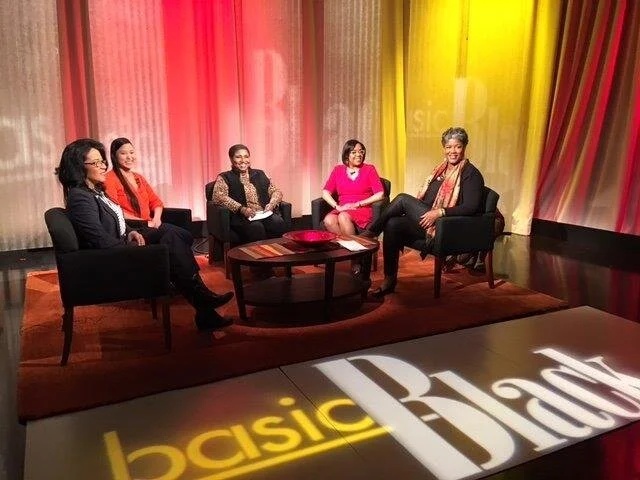
In February 2023, she hosted a Basic Black discussion about philanthropy in communities of color. The participants included Bithiah Carter, Aixa Beauchamp, Danielle Kim and Natanja Craig Oquendo, leaders working across different parts of Boston’s philanthropic community. Questions about giving opened onto questions about power, representation and which organizations receive support.
The moderator’s craft is partly visible in what other people are able to say. Published testimonials describe Gittens as prepared, knowledgeable and able to draw out frank views. That is practical praise. A panel can have an impressive guest list and still spend half an hour politely avoiding its subject. Preparation gives a conversation somewhere to go.
The people who carry a career forward
Jahaan Blake’s relationship with Gittens began during Blake’s Red Sox years. When Blake interviewed her for Game of Her Own in April 2023, she introduced Gittens as one of her mentors. Their conversation covered building a business as a Black woman in Boston, responding to rejection and looking beyond familiar circles. The relationship had lasted long enough for the person once receiving advice to become the interviewer.
Mentoring young women and female entrepreneurs is a documented part of Gittens’s work. So is service beyond her own company. Her civic record includes Associated Industries of Massachusetts, the Massachusetts Marketing Partnership and The Village Bank. The Lenny Zakim Fund lists her among its board emeriti. These roles place her in the recurring business of helping institutions make decisions.
In November 2021, The Boston Club gave her its inaugural Women in Business Racial Equity Award. The award recognizes a woman of color who founds, owns or leads an organization committed to advancing women into leadership. That definition connects an individual’s position with the opportunities made available to others. It also makes a useful companion to the less ceremonial work of mentorship: both concern who will be able to lead next.
The next names on the door
On January 3, 2025, Gittens and Haber closed the sale of MORE Advertising to two senior colleagues, Megan Palamé and Beth LePage. Palamé took over as CEO. LePage became COO and CFO. The announcement described a twenty-three-person agency and emphasized continuity in its account, creative and operational teams.
The transfer gave the company a future led by people already familiar with its work. It also changed Gittens’s place within it. She continued on the board, preserving a connection to the agency while the incoming leaders took responsibility for its daily direction. MORE’s current team page lists her in that board group as its founder.
Her speaking identity, Donna Speaks, offers another way to follow the same interests: storytelling, moderating, hosting and helping organizations express their missions. The microphone remains part of the job. So does the effort to make room for other voices.
Across the career, the memorable objects are easy to collect: a small office, four rings, an award, a company name. The relationships are harder to fit into a display case. A producer hired at a television station. A business partner who stayed. A mentee asking questions. Two colleagues taking ownership. Those people give the story its movement. Gittens began with a father’s encouragement to act on an idea. Nearly three decades after founding the agency, she helped place its next decisions in other hands.