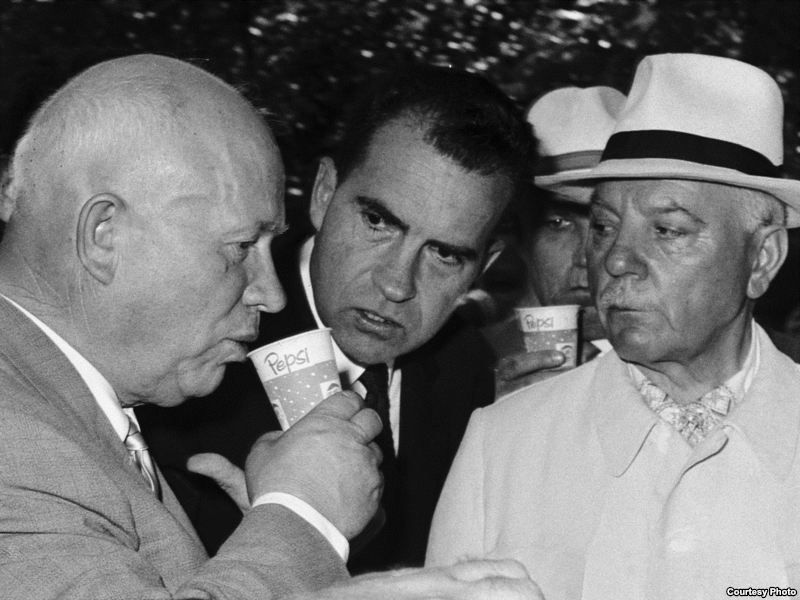
The Soviet premier had a paper cup in his hand. For Donald M. Kendall, this was progress. In Moscow in July 1959, Nikita Khrushchev and Richard Nixon were arguing about the merits of their respective systems. Kendall had a more immediate concern: whether the cameras would catch the leader of the Soviet Union drinking a Pepsi.
They did. At the American National Exhibition, the head of Pepsi-Cola’s international business offered a comparison between Pepsi made with American water and Pepsi made with Soviet water. Khrushchev preferred the local version. A Soviet leader could praise Soviet production while an American company received the advertisement. The cup had room for both conclusions.
Kendall understood the value of that encounter. He also had the patience to discover its limitations. A photograph could travel around the world in a day. A bottling operation needed permission, equipment, workable payment arrangements, and a political climate in which people were willing to sign. The first Soviet Pepsi plant would open in 1974. Fifteen years is a lengthy interval between offering a drink and receiving the repeat order.
A tasting with two winners
The opportunity had a commercial logic. Coca-Cola was established in Western Europe. Kendall looked east, toward a market where his rival had less of a head start. In his later recollections, he was quite direct about that calculation. The Iron Curtain was a formidable obstacle, but it also stood in front of people who might buy something.
At home, taking Pepsi to a communist country attracted skepticism. Kendall enlisted Nixon to help arrange the encounter with Khrushchev. It was a useful combination of preparation and access: choose the customer, find an introduction, and make the sample available when the customer arrives. The setting was exceptional. The sales procedure was recognizable.
The picture has outlived many details of the exhibition. Its appeal is easy to understand. Two governments were staging an argument over how people ought to live; a beverage company found a moment when one of the participants wanted a drink. Kendall had placed his product inside the argument without requiring anyone to agree.
The farm boy takes the long route
He was born on March 16, 1921, in Sequim, Washington, and grew up on his family’s dairy farm. College football took him to Western Kentucky State College. The war interrupted his education. In 1942 he joined the Navy, serving as a seaplane pilot in the Pacific and receiving the Distinguished Flying Cross and Air Medals.
His route into Pepsi included bottling work and sales. He joined in 1947, and advanced through the business until he became president of its international operation in 1957. Selling fountain syrup was an education in a practical kind of availability: the buyer had a business to run, and a salesman needed to work around it.
Years later, Kendall remembered early mornings milking cows and the consequences of missing the school bus. When he and his brothers decided to join the Navy, their father asked, “Who’s going to milk the cows?” The family’s immediate production problem had survived the arrival of a world war.
Fishing also had a claim on his calendar. Before starting at Pepsi, he had arranged a trip to pursue Atlantic salmon. The executive offering him the job agreed he could start after he returned. It is a pleasing detail in a career usually told through work: even an ambitious salesman could arrive with a prior appointment on a river.
“Not bad for a farm boy.”
Donald Kendall, as remembered by his family
Put something salty beside it
In 1963, Kendall became president and chief executive of Pepsi-Cola. Two years later, he and Herman Lay joined Pepsi-Cola and Frito-Lay to create PepsiCo. Lay became chairman; Kendall became president and CEO. A company identified with a bottle now had a substantial business in bags.
The combination followed an ordinary human habit. Snacks and soft drinks meet at the same parties, picnics, and shop counters. Bringing them into the same corporation gave PepsiCo a broader set of products to sell and a different shape from a business organized around cola alone. The idea could be explained without a consultant’s diagram, which must have been a relief at the meetings.
That simplicity did not remove the work of running it. Kendall’s achievement included managing an increasingly varied company. Frito-Lay grew under his leadership, and PepsiCo expanded into restaurants. Pizza Hut, Taco Bell, and Kentucky Fried Chicken became part of its business during his tenure. The executive selling a drink had acquired more of the meal.
His leadership had an abrasive edge. He was a forceful, demanding operator as well as a sociable salesman. Those qualities are compatible: someone skilled at keeping a customer interested can still be difficult to work for. The genial photograph and the long working day belong to the same career.
Payment in another bottle
The Soviet market required a solution to a problem no amount of smiling could settle. The ruble was not freely convertible on international markets. A sale needed a means of payment that worked outside the country. In the 1972 arrangement, Pepsi concentrate and Soviet alcoholic beverages became parts of the same commercial system.
PepsiCo obtained U.S. distribution rights for Stolichnaya vodka, while Pepsi would be bottled locally in the Soviet Union. The deal connected demand on both sides. Americans buying Soviet liquor helped support the arrangement through which Soviet consumers could buy an American soft drink. The paperwork had found a way around the currency problem.
The factory opened in Novorossiysk in 1974. That date matters. Kendall’s Moscow publicity success was now attached to production. He had spent years returning to an idea that had once fit inside a paper cup. The delays reveal the scale of the task more clearly than the photograph does.
Two markets connected around a currency obstacle.
In 1975, Kendall described taking PepsiCo’s directors to the Soviet Union and holding a board meeting at a winery. He discovered that the seating had positioned them beneath a portrait of Lenin. A capitalist board had become an irresistible local photograph. This time someone else had understood the possibilities of the camera.
His commitment to trade extended beyond Pepsi. He became the first American co-chairman of the U.S.-USSR Trade and Economic Council, serving from 1973 to 1977. In public remarks, he argued that contact, commerce, and tourism could build trust. That conviction gave his sales work a larger purpose, although purpose and commercial advantage often traveled together.
Later Soviet transactions introduced ships into the story. A 1989 arrangement involved seventeen retired submarines and three warships, destined for scrap through a shipping venture. The episode supplied an enduring business anecdote. Its actual machinery was barter, disposal, and finance. There were no Pepsi admirals directing a fighting fleet.
The price of knowing the president
Nixon’s place in Kendall’s life went beyond the Moscow exhibition. In the 1960s, he worked as a legal adviser to Pepsi and traveled with Kendall. Their friendship crossed into family occasions: Kendall recalled that Nixon played the piano at his wedding. Few corporate relationships come with such a literal accompaniment.
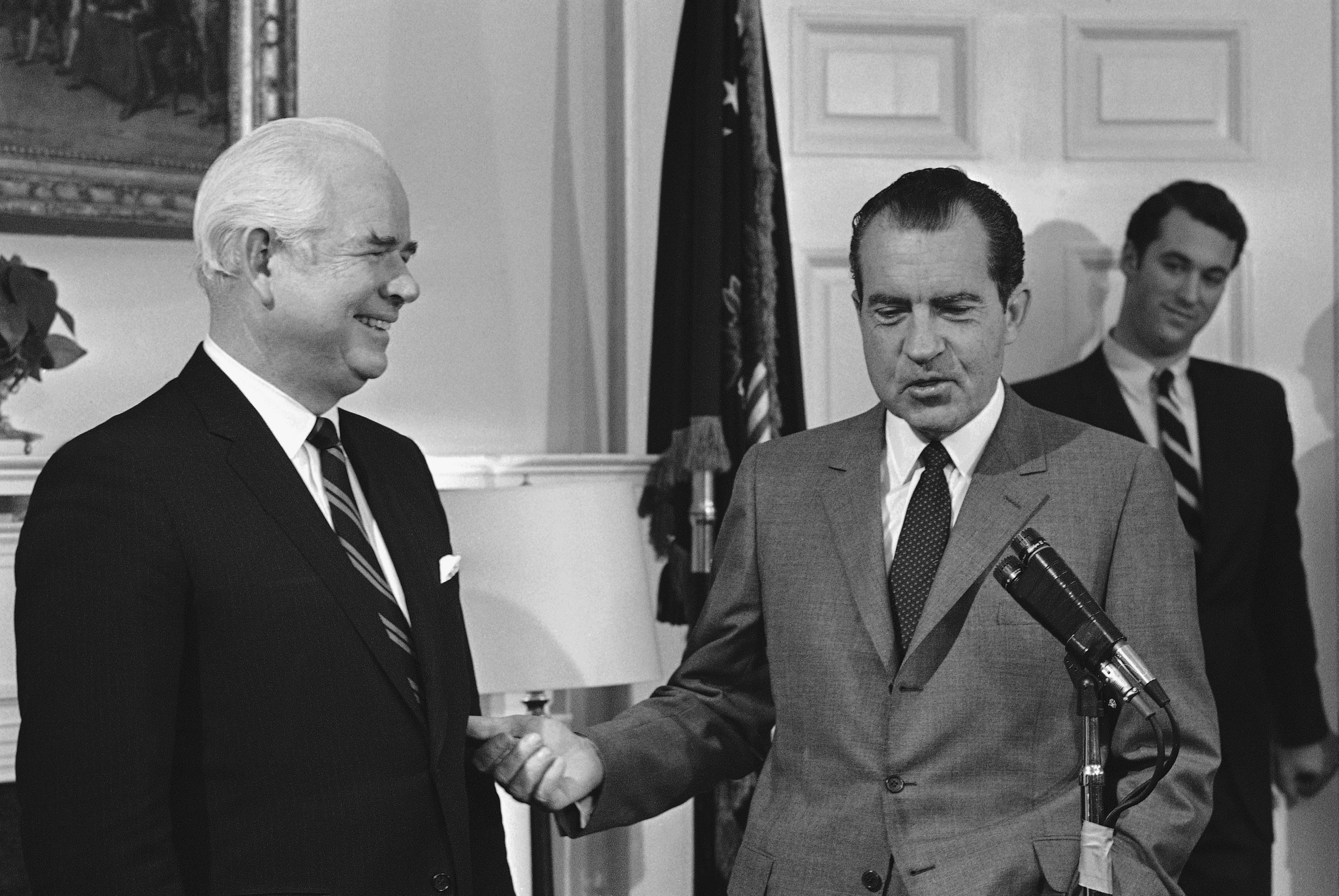
In February 1969, Nixon appointed him chairman of the National Alliance of Businessmen. Kendall also later chaired the U.S. Chamber of Commerce. He occupied a recognizable position in American public life: a corporate executive whose relationships gave him opportunities to influence conversations beyond his own company.
That access requires scrutiny. In September 1970, Kendall accompanied Chilean publisher Agustín Edwards in Washington. They met senior officials, including Henry Kissinger, and Kendall participated in a meeting with CIA director Richard Helms. Edwards discussed the political situation following Salvador Allende’s election plurality. The meetings occurred as the Nixon administration moved to prevent Allende from taking office.
These encounters place Kendall in the record of American intervention in Chile. They also complicate the comfortable picture of a businessman connecting countries over a drink. A private executive could help open a commercial market and help bring a foreign political ally before American officials. The consequences of those introductions extended beyond a company’s sales.
Room for a different kind of ambition
At Purchase, New York, Kendall helped give PepsiCo another public face. The headquarters opened in 1970, designed by Edward Durrell Stone. Around it grew the sculpture gardens Kendall conceived. The collection had begun in 1965; Russell Page later developed the landscape around works by major twentieth-century artists.
There is room here for a different measure of an executive’s interests. Kendall wanted surroundings that encouraged creativity and experimentation. Sculpture made the grounds a place to walk, look, and encounter something without a sales pitch. His involvement with art also included chairing the American Ballet Theatre Foundation’s board from 1977 to 1983.
He retired as PepsiCo’s chairman and CEO in 1986, and continued chairing the board’s executive committee until 1991. In later life there were family gatherings, fishing trips, and a Wyoming ranch. Back in Sequim, he helped build a Boys & Girls Club named for his father, Carroll. The dairy farm remained part of the story he told about himself.
Kendall died at home in Greenwich on September 19, 2020, aged ninety-nine. The gardens bearing his name still admit visitors on PepsiCo’s seasonal schedule. A career spent asking people to try something left this quieter invitation: come in, take a walk, and look around.