In October 2015, Ben Gilbert and David Rosenthal published a podcast about Disney buying Pixar. The name, Acquired, told you exactly what you were getting. It also put a fence around everything the show might become.
- Free company histories, told at audiobook length.
- Built by two hosts who followed audience evidence.
- Funded by sponsors who want to reach business decision-makers.
Today, that fence is gone. Acquired makes extended audio histories of companies, tracing the decisions that turned an idea into an institution. The central attraction is explanation: how did this particular business come to work? A listener can arrive knowing the brand and leave understanding the machinery. Costco, NVIDIA and Hermès become more than familiar names.
The oddity is the length. An episode can occupy roughly four hours, longer than many films and a substantial portion of a working day. Acquired calls the format a conversational audiobook. That is a useful description of the bargain: two people have done the reading, assembled the evidence and brought enough personality to keep the lesson moving.
The first thing to go was the premise
Gilbert and Rosenthal met at Madrona Venture Group in Seattle. Their first recordings used QuickTime, without microphones. For years, this was a hobby. They could follow a subject because it interested them, then discover whether anyone else wanted to come along.
What ran out first was the usefulness of acquisitions as a boundary. As they explained in a WorkOS interview, many businesses worth studying were the buyers. They added IPOs, then questioned why Shopify needed its stock-market debut to justify an episode. The company itself was the story. The title survived; its original editorial restriction did not.
A second discovery concerned duration. Recounting the journey at Kindred Ventures in 2025, Rosenthal identified the 2018 Tesla episode as a turning point. Their first two-hour deep dive became their biggest episode by about 20-30%, in his telling. Going longer had given people more of what they came for. The response supplied a reason to keep experimenting.
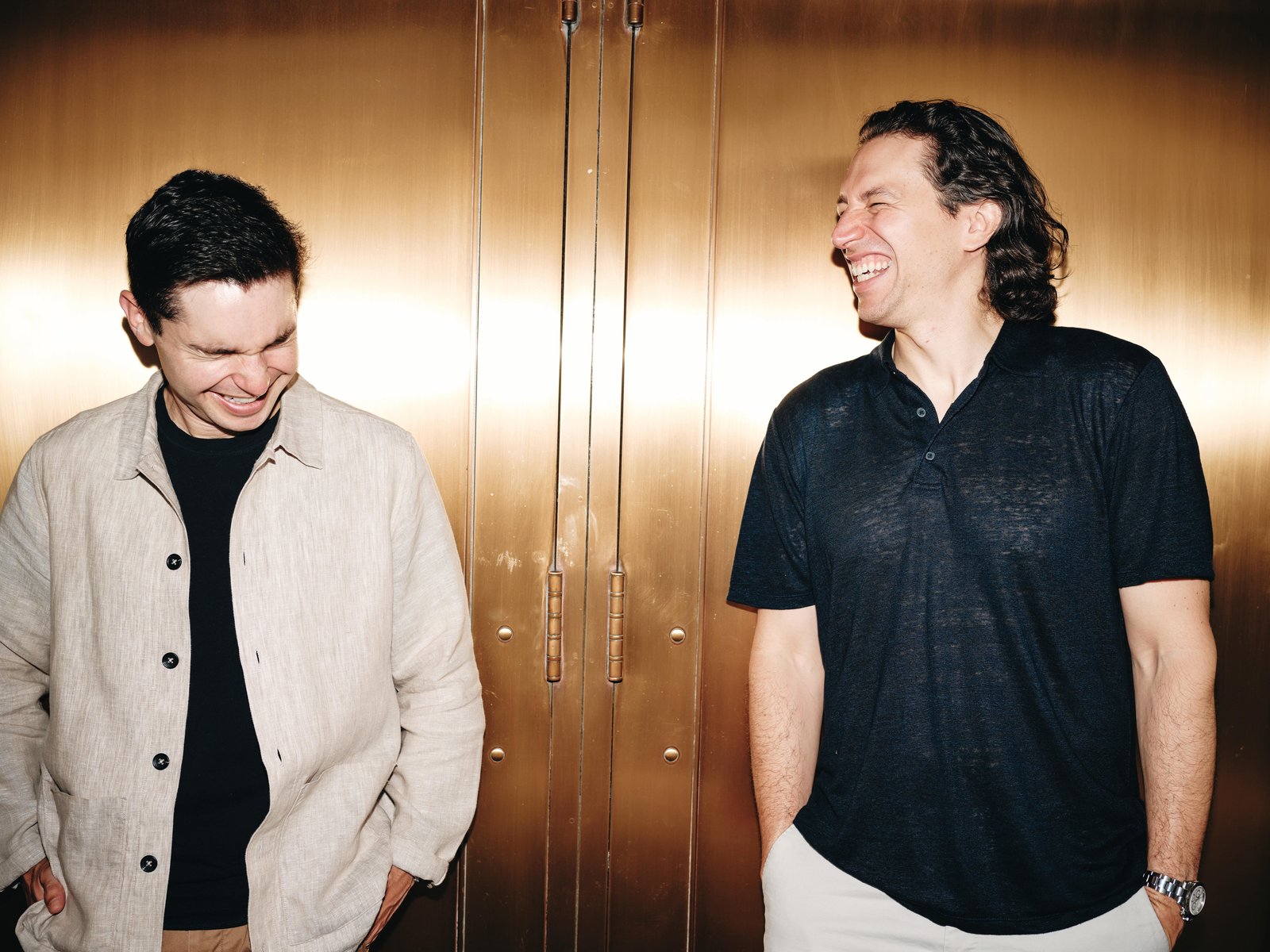
A very expensive free listen
The main show is free to hear. The expensive part happens before anyone presses play. Acquired says an episode requires more than 200 hours of research and production. The work includes documents, interviews and the reconstruction of events that rarely arrived in a neat sequence. On that basis, a four-hour listen has more than fifty hours of preparation behind each hour of audio.
That is a time ratio, not a production budget. It helps explain the product, though. A company profile written from yesterday’s press release can tell you what management wants you to notice. A history has room for the earlier bets, awkward dependencies and decisions that looked quite different before their outcomes became obvious.
The hosts bring complementary experience. Gilbert worked in software engineering at Microsoft and in startup building and investing. Rosenthal studied French literature at Princeton and earned a Stanford MBA before working in venture capital. Technical questions and narrative questions can share the same conversation. The attraction is hearing business analysis carried by a story rather than delivered as a lecture.
The listener is also the business model
Acquired serves two groups. Listeners get business histories; sponsors buy access to those listeners. Its partnership kit describes relationships with a small number of companies over time. That makes the identity of the audience consequential. Someone deciding which software, bank or service a business uses can be worth much more to an advertiser than a casual impression.
The early sponsorship story is instructive. According to Kindred’s account of Rosenthal’s talk, the hosts offered a bank a free sponsorship to associate the show with an established name. The bank instead paid $5,000 for the season. A later listener survey attributed roughly thirty new banking relationships to the show. The hosts reconsidered their pricing. The survey was a signal of commercial value, not an audited return calculation.
Named partners have included J.P. Morgan Payments and WorkOS. Acquired now reports more than a million listeners per episode. The point is the combination: an audience large enough to matter, gathered around a subject that helps identify why they matter. You do not have to sell four hours of everyone’s attention if the right people volunteer theirs.
“It’s hard to stop once you start listening.”Eddy Cue · Apple SVP of Services
Testimonial published by Acquired
The headphones came off
In September 2024, six thousand fans gathered at San Francisco’s Chase Center for a live show. Spotify’s account describes a conversation with Daniel Ek; Acquired’s interview archive also lists Emily Chang, Jensen Huang and Mark Zuckerberg. The company-history podcast had become an occasion people would travel to and experience together.
A sold-out Radio City Music Hall show followed in July 2025. listeners who have spent hours with the same two voices can develop an attachment that survives the move from headphones to a stage.
The product has other doors. ACQ2 offers interviews with founders, investors and operators, including Shopify’s Tobi Lütke and Plaid’s Zach Perret. An email list shares follow-ups and research material; a Slack community extends the conversation. The long histories remain the main attraction, with these formats giving interested listeners somewhere else to go.
Borrow the question, then test the answer
Acquired sits between business entertainment and serious self-education. Compared with a daily news show, it offers historical distance. Compared with a founder interview alone, it assembles a longer sequence of causes and consequences. Books, case studies and other business podcasts compete for the same finite resource: the hours a curious person can give them.
For a new listener, start with a company you already care about. Listen for one decision that changed its economics, then ask what made that decision possible. A founder can use the exercise to examine distribution; an operator can examine incentives; a prospective employee can investigate how an industry took shape. Familiarity gives the details somewhere to land.
The copyable move is to let evidence revise the format. The acquisitions boundary loosened when it obstructed better subjects. Longer episodes earned their place through audience response. Sponsorship pricing changed when listeners demonstrated value. Each was a concrete adjustment to something the founders could observe.
Length alone will not reproduce that outcome. The approach needs a subject that rewards investigation, people capable of doing it and listeners willing to spend the time. It suits an enduring question better than a breaking-news deadline. By September 2026, Acquired was publishing a Home Depot history. Eleven years after Pixar, the question had widened, and the company was still giving itself room to answer.
Put on your headphones
Start with Home Depot, visit the episode archive, or try ACQ2.