The complaint arrived after the business had worked. Readers of Lenny’s Newsletter were getting too much to read. Listeners had too much to hear. In August 2025, Lenny Rachitsky announced a smaller publishing calendar, including one podcast episode a week starting in 2026. For a company whose product is advice, this was a useful piece of advice from its customers: leave us time to use it.
- Free interviews for people building products and careers.
- Sponsors fund the show; subscriptions fund the surrounding newsletter offering.
- An existing audience helped launch it. Feedback later helped slow it down.
The newsletter gets a voice
Rachitsky did not particularly want another project. “The last thing I wanted was more work,” he told Spotify. Harry Stebbings, host of The Twenty Minute VC, nudged him toward a show. There was also a practical reason to reconsider: people who would never sit down with a long newsletter might happily listen to a conversation.
On June 7, 2022, the first two episodes were live. Julie Zhuo, formerly Facebook’s VP of Design, discussed management, intuition, and career growth. Shreyas Doshi brought ideas about product work and decision-making. Even the name had been negotiated: Rachitsky said listeners had persuaded him to choose Lenny’s Podcast over something more creative. A business about listening had listened before opening.
The promise was concrete. Experienced builders would explain how they worked, giving other builders material for their own decisions. It addressed a familiar professional problem: the person who has already solved your problem usually works somewhere else. A podcast makes that experience available without requiring an introduction, a conference ticket, or a job at the same company.
One early reader described turning laundry folding into an MBA course. The joke captures the appeal better than a syllabus could. Learning fits into the life you already have. The warning is tucked inside the joke, too: listening to a capable manager is easier than becoming one.
Free listening, paid proximity
The audience is unusually legible. Product managers, founders, designers, and growth professionals come with questions about launches, hiring, positioning, and careers. The show’s expertise comes through its practitioners. Its distinction is an editorial emphasis on usable detail, rather than simply access to recognizable technology figures.
Consider the first Doshi conversation. Its topics included pre-mortems, different levels of product work, and opportunity-cost thinking. Those are tools a listener can take into a planning meeting. The value is the chance to ask a better question before committing a team to months of work.
There is a commercial audience on the other side of the microphone. The show’s sponsor list includes Amplitude, WorkOS, Notion, and Productboard. These businesses sell tools relevant to the people listening. The fit is straightforward: a product-building audience attracts companies that want to reach product builders.
The main podcast costs nothing to hear. The surrounding newsletter business sells subscriptions for deeper research, archive access, and a private community. Annual and Insider plans add Product Pass benefits. Readers can also seek reimbursement through their employers’ learning budgets. Free listening and paid membership serve different levels of commitment.
In the market, this puts Lenny between technology interview shows and professional education. Compared with a course, a podcast offers a flexible route through ideas rather than a prescribed sequence. Compared with a founder interview show such as 20VC, its product-and-career focus gives listeners a particular reason to return. That positioning is an interpretation of the offering, not a claim that one format wins.
The head start that slowed learning
Rachitsky’s March 2024 production account contains a useful mistake. He recorded about ten episodes before launch. By the time listener feedback arrived, that batch was already finished. His recommendation became three to five in advance. Preparation had bought security at the expense of learning.
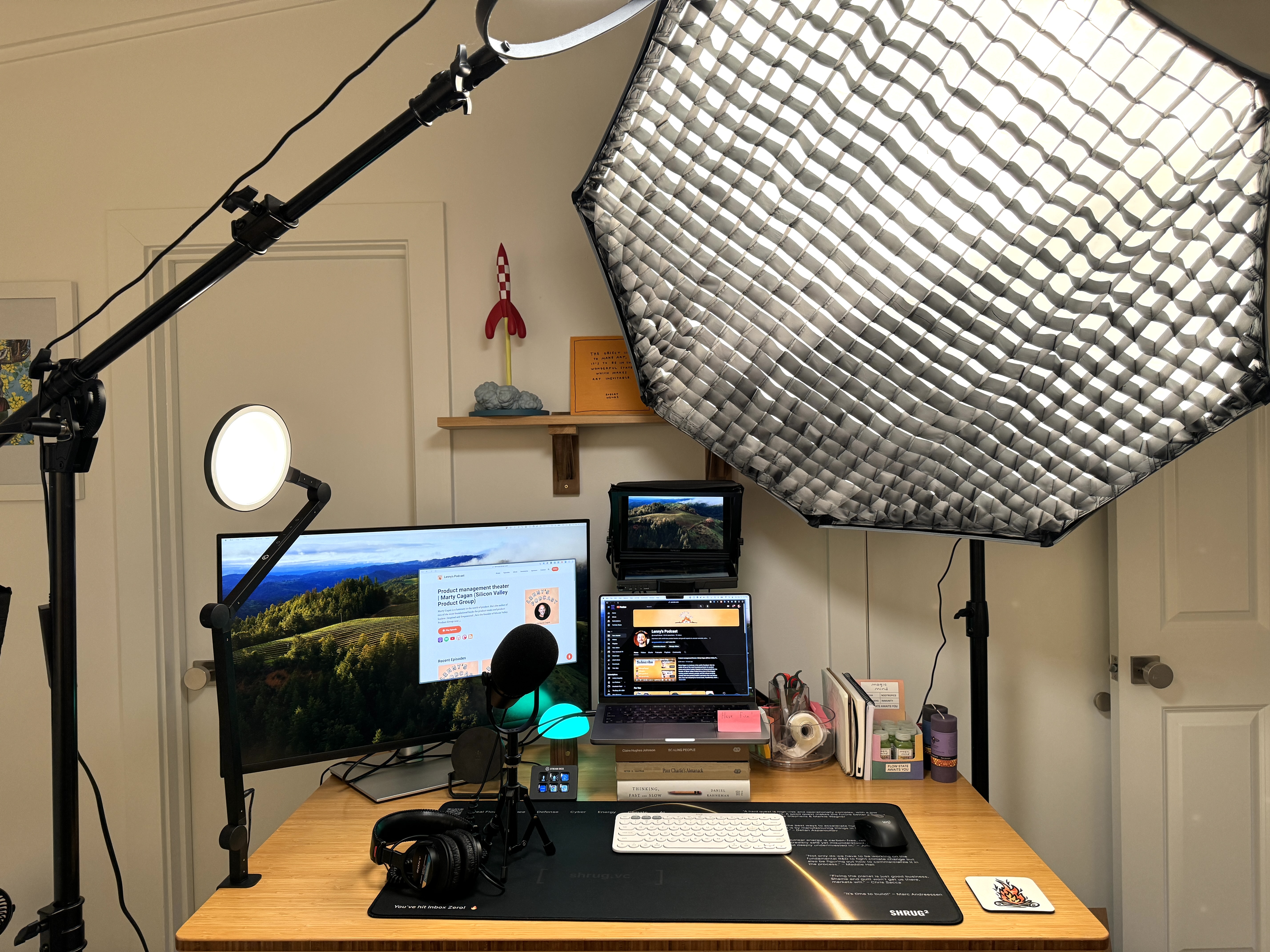
He also described starting with basic equipment and audio only, adding video later. With production help, his own work took roughly four to five hours per episode. That figure counts the host’s time, not everybody’s labor. The visible microphone is only one part of the cost.
By that March, he reported ten million downloads and three million YouTube views. These are dated milestones, not today’s audience figures. His newsletter and former Airbnb colleagues helped give the show a starting audience and guest access. A new creator can copy the experiment; those advantages take longer to build.
“Become 100 people’s favorite podcast”Lenny Rachitsky, 2024
A library with more doors
The company’s related products make the same material usable in different circumstances. Lenny’s Reads, introduced in April 2025, turns newsletter posts into audio. The stated aim was to publish an audio version within 48 hours. Paid subscribers receive full posts; free subscribers receive previews. The distinction follows access, while the format follows preference.
Lenny’s Data goes in another direction. Its free starter repository contains newsletter posts and podcast transcripts in markdown. Subscribers can access a larger archive through compatible AI tools. For someone facing a pricing or onboarding question, searching across conversations may be more useful than remembering which guest discussed it six months ago.
In August 2026, Rachitsky introduced Lenny’s Jobs with TrueUp founder Amit Taylor. The related service focuses on product management, engineering, design, and growth or marketing roles. Its rationale follows the audience’s circumstances: advice about doing better work has limited value when somebody cannot find work they want.
The audience asked for less
The publishing cut is the decision worth keeping. Rachitsky said content volume was the most common reader complaint, and the existing pace was difficult to sustain. The podcast would remain free. A lighter schedule would make room for deeper work and a longer working life.
For a listener, the sensible approach is equally selective. Choose an episode around a current decision. Write down one method, identify the conditions that made it useful for the guest, and try a small version. A large company’s hiring advice may assume resources your startup lacks. A sales method may depend on buyers you do not serve. These are reasons to examine advice before applying it.
Lenny’s Podcast makes experience portable. The listener still has to unpack it.