In August 2006, Don MacAskill did something mildly inconvenient for a chief executive: he defended a competitor. Another photo-sharing founder had complained about Flickr. MacAskill, already running SmugMug, thought the complaint missed the point. Flickr deserved respect. Its low barrier to entry and its community were accomplishments, even if the attention it received left other companies feeling neglected.
He gave his blog post a title with very little room for misunderstanding: “Flickr doesn’t suck.” It was a useful preview of a transaction still twelve years away. In April 2018, SmugMug bought Flickr from Verizon’s Oath. The rival had become a responsibility. MacAskill had spent years explaining why the two services could coexist; now his company would have to make that argument work in practice.
The tempting version of this story ends with the purchase. A family business outlasts fashionable assumptions and acquires a familiar internet name. Roll credits. MacAskill’s more interesting story begins where the acquisition announcement stops: with bills, passwords, photographs, and people who expect the place they love to remain there tomorrow.
“Flickr doesn’t suck.”
Don MacAskill · August 2006
The side project that collected a subscription
His route into photography software came through games. Before SmugMug, MacAskill hosted the internet launch of Duke Nukem 3D on his servers and worked on SiN. He knew the pleasures of making software for an enthusiastic audience, along with the less delightful experience of shipping something that needed fixing. His later writing about games included the candor of someone who had been on both sides of a crash.
The original business behind SmugMug was supposed to be a social network built around video games. Photo hosting was a side project, prompted by the founders’ difficulty finding somewhere suitable for their own pictures. The first equipment was distinctly unceremonious: borrowed rack space and three old servers rescued from a failed dot-com. An internet company can begin with a vision. This one also needed somewhere to put the boxes.
Don and his father, Chris, launched SmugMug in November 2002. The family connection mattered before there was a company to share. When Don was younger, father and son built computers together, buying components and assembling machines. Chris had encouraged the interest instead of expecting Don to inherit his own profession. Later, Don persuaded his father to join him in business, reversing the usual direction of family recruitment.
The photo service asked customers to pay. That was an awkward request in a market full of free alternatives. Its appeal lay in how photographs were presented and handled: attractive galleries, room for customization, and images preserved without being resized. Photographers could eventually use their own domains and sell their work. The business made its pitch through the usefulness of the service. Getting an invoice from a website was part of the arrangement.
A critic was more useful than another compliment
It would be easy to turn that choice into a fable about knowing the answer before everybody else. MacAskill’s writing is more revealing when he admits that a customer has identified something he missed. In November 2006, he responded to a review arguing that Flickr was better than SmugMug in several ways. He welcomed it. Compliments, he observed, could hide the work still waiting to be done.
The examples were wonderfully specific. SmugMug made it easier to retrieve photographs than to retrieve their accompanying metadata. Its geotagging interface needed attention. Statistics could offer better ways to search and sort. These were small items compared with a founder’s grand theory of the internet, but they affected what people could actually do with their pictures. A caption trapped in a service is still a caption someone has lost access to.
His defense of Flickr had never required pretending the products were interchangeable. SmugMug served customers who valued presentation and professional tools; Flickr had a different kind of social life. A person could prefer either one for sensible reasons. MacAskill even described referring people to Flickr when SmugMug was a poor fit. That is an unusually practical way to respect a competitor: send it the customer you cannot serve well.
His appetite for answers also extended to programming. In 2010, he explained that he had learned to write SmugMug through Google searches. He admired Stack Overflow and wanted to bring the question-and-answer approach to his own community. The attraction was concrete: useful answers should rise to the top, expertise should be recognizable, and a question already answered should be easy to find. The chief executive was still interested in improving the plumbing of a conversation.
The romance of a smaller storage bill
Cloud computing gave this family business a way to grow without buying every piece of its own infrastructure. SmugMug adopted Amazon S3 in 2006, early enough that its experience became part of the story of the service itself. MacAskill could discuss the change in technical terms, but he also understood the appeal of money remaining in the bank.
In a November 2006 calculation, he set out an estimated $423,686 in hardware and related costs avoided over seven months, against $84,255.25 spent on S3. The difference was $339,430.75. Those were his historical calculations, with assumptions explained, rather than a promise about what another business would save. The decimal places are part of the charm. A founder can talk about freedom all afternoon; sometimes freedom arrives as a spreadsheet.
Cheaper infrastructure was only useful if it held up. During a major AWS outage in April 2011, SmugMug’s main services remained online with limited disruption. MacAskill explained the architecture: services spread across availability zones, components built to recover from failure, and some important data still housed in the company’s own datacenters. He also acknowledged separate failures in that equipment. His account left room for both preparation and imperfection.
The tone mixed technical seriousness with science-fiction jokes. He encouraged testing what happened when components disappeared, including deliberately shutting them down. For a company entrusted with photographs, reliability required imagining breakage in advance. The family album looks peaceful from the outside. Behind it, someone needs to be asking what happens when a machine stops answering.
Keeping more cash in the frame
Buying Flickr meant inheriting its unfinished work
By the time SmugMug acquired Flickr, MacAskill had years of experience running a subscription service and moving infrastructure. He also understood that Flickr’s appeal lived in its relationships: comments, discussions, groups, and the discoveries people made through other photographers. Keeping the two products distinct allowed those differences to survive. Ownership could change without requiring every customer to want the same thing.
The early agenda was remarkably ordinary. Remove the Yahoo login requirement. Reduce spam. Improve Flickr Pro. Make the service faster and more stable. In November 2018, MacAskill described himself as personally involved in work on photo ingestion, rendering, and delivery. The job title still included Chief Geek, and the technical details continued to justify the joke.
There was a particularly neat demonstration of why login deserved attention: Flickr’s own announcement acknowledged that MacAskill had been locked out of his account after confusion over credentials. Even buying a company does not necessarily get you past its sign-in screen. It is hard to devise a more direct customer interview than the chief executive encountering the same locked door.
Other decisions demanded more than engineering. In 2018, Flickr changed free accounts to a limit of 1,000 photos and videos, while Pro retained unlimited storage. The plan placed a price on some people’s existing habits and asked a community accustomed to generous free storage to adjust. MacAskill had built SmugMug around payment from the beginning. At Flickr, he had inherited expectations created by someone else.
A rescue has to pay its own bills
In December 2019, he made the economics public. Flickr was still losing money, despite progress and new Pro subscribers. His letter asked more members to pay for the service. It also reported completed work: the move to AWS, removal of Yahoo login, faster pages, and quicker photo loading. Improvement had not abolished the operating bill.
He described Flickr as having more than 100 million accounts and tens of billions of photographs. These were the dimensions of the community in that 2019 appeal, not a fresh count of today’s active users. The distinction matters. An account can be dormant while the photograph inside it remains valuable to someone. Infrastructure has to accommodate that inconvenient separation between activity and importance.
The letter was an admission that buying something beloved and making it sustainable are separate undertakings. Affection was the reason to take the risk. Subscriptions were part of the mechanism for continuing. That combination makes MacAskill a more interesting subject than an acquisition headline suggests: he had chosen an obligation that could not be discharged with a press release.
Keeping Flickr open also meant treating its public collections carefully. In November 2018, he promised that Flickr Commons photographs would survive the announced storage changes. Images licensed under Creative Commons before the announcement were protected too. Institutional archives and freely licensed individual work required different explanations. A policy about storage could become a policy about what the wider public was able to see.
One hundred years is an awkward product deadline
The preservation question grew beyond the commercial platform. In December 2022, SmugMug and Flickr announced the Flickr Foundation, a nonprofit working to keep photographs visible for generations. Ben MacAskill, Don’s brother and colleague, described the conversations that followed the acquisition: cultural institutions, community organizations, and Creative Commons wanted to know what ownership would mean for their collections.
Ben worked with George Oates, who had started the Flickr Commons program, to develop that effort. Its horizon was a hundred years. It is an ambitious span for anything dependent on passwords, file formats, changing institutions, and people remembering where they put things. The foundation’s work recognizes that keeping an image available involves more than retaining its bytes. Someone must remain able to find and understand it.
Don’s public work still has a distinctly technical side. His GitHub profile links to Rust and PHP projects for fast CRC calculations, a form of checksum used in detecting data errors. The Rust project supports multiple variants and hardware acceleration. Its December 2025 release includes his changes to the required Rust version and dependencies. It is a fitting detail for someone whose company handles photographs: he remains involved with the tools beneath the pictures, where small efficiencies can matter at scale.
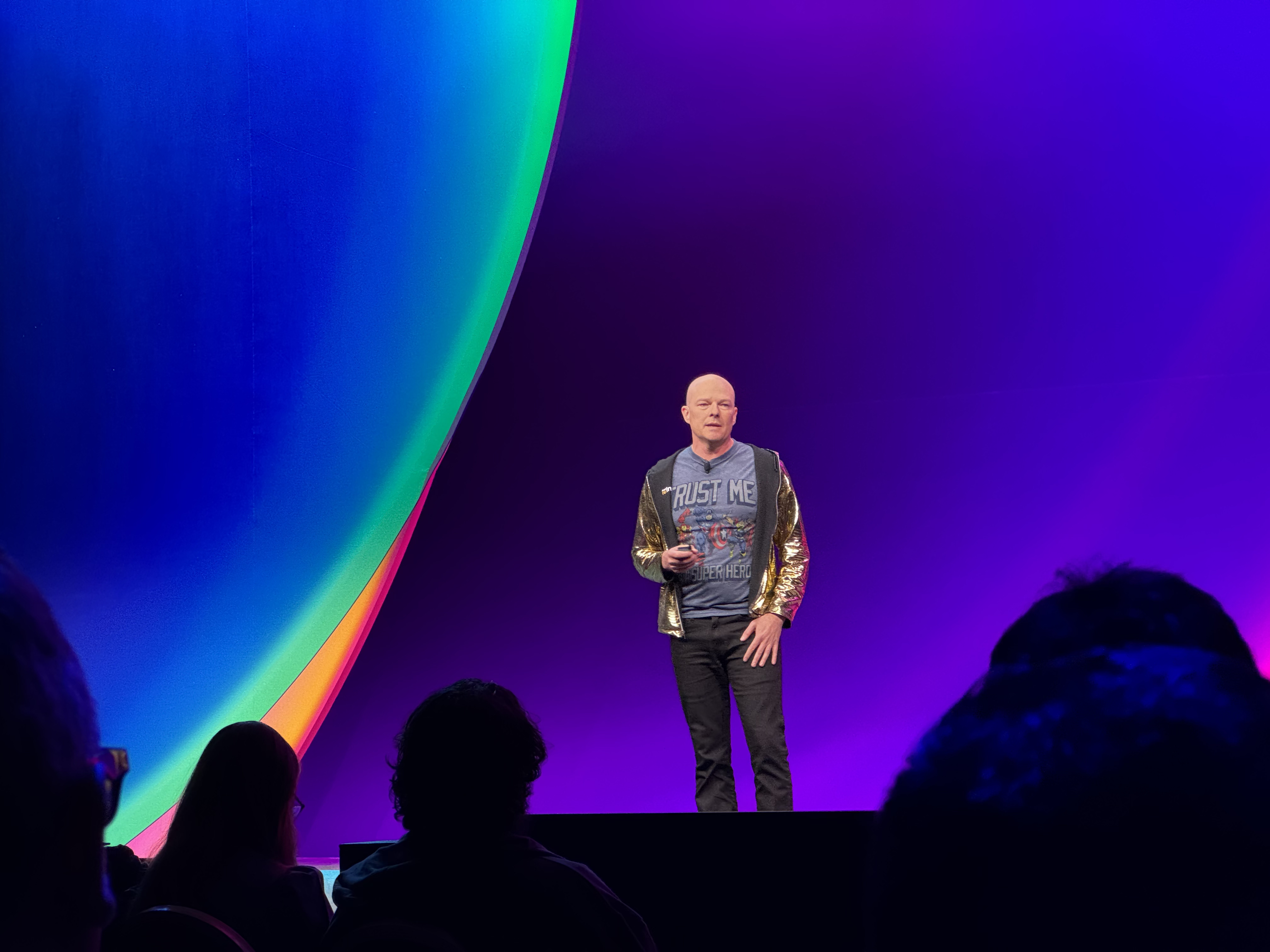
In December 2024, he appeared at AWS re:Invent to discuss the long relationship with S3. Earlier that year, he joined Flickr colleagues for an interview during its twentieth-birthday celebration in San Francisco. The two appearances capture the territory he occupies: infrastructure on one side, a gathering of photographers on the other. Both belong in the same story.
The developer who once defended a rival now helps keep its photographs accessible. What makes the arc persuasive is the unfinished quality of the work. A gallery must load, an archive must stay searchable, a member must be able to get through the door. MacAskill’s story continues whenever someone returns to an old photograph and finds it waiting.