Early in his time as Executech’s CEO, DJ Dorff had a habit that will sound familiar to anyone who has just been handed a larger job. Someone would bring him a problem, and he would want to fix it immediately. He wanted people to know he was listening. He also wanted them to know he could do the job. A complaint was an opportunity to demonstrate both.
A year later, he described learning to slow that reflex. A single frustration deserved attention, but it did not necessarily deserve a company-wide response. His task was to connect what he was hearing with the rest of the business. Sometimes the respectful answer involved listening carefully, then choosing a different course.
That small admission makes a useful starting point for his career. Dorff now leads Baysora Accounting Partners, the company he founded in 2024. Its proposition to accounting-firm owners depends on a particular exercise of restraint: bring in capital and support while leaving local leaders enough authority to lead. The buyer has to resist rearranging every room simply because he has acquired the house.
A founder’s business, someone else’s chair
Before he was making that promise to other owners, Dorff stepped into a business somebody else had built. Executech began with Eric Montague in 1999. By the time Dorff arrived in early 2018, it had an established identity and a founder with nearly two decades invested in it. Taking charge meant inheriting relationships as well as responsibilities.
Montague publicly welcomed the handoff. He described the need for founders to recognize when an organization would benefit from someone with different abilities, and credited Dorff with handling the transition. There is a considerable amount of trust inside that arrangement. The incoming executive gets the title; the outgoing founder has to watch another person make decisions about the enterprise he started.
Dorff had worked in business operations at Adobe and studied at Brigham Young University before earning law and business degrees at Stanford. That combination put corporate operations, legal training and management education on the same résumé. His next education came at a services company, where decisions eventually reach a technician, a customer and a bill.
He joined Executech as chief operating officer in January 2018 and became CEO that October. Within the year, the work had changed from helping run the operation to carrying responsibility for it.
The map got bigger. The job got closer.
The expansion was tangible. In November 2018, Executech acquired HiTechnique in Spokane, extending its reach into Eastern Washington and Northern Idaho. The assurance to customers was specific: they would keep their technicians. Dorff was growing the company while asking clients to trust the continuity of a relationship they already knew.
The following month came Seattle’s Z7 Networks. Dorff spoke about investing in the development of its team and strengthening Executech’s presence in Washington. These were acquisitions of service businesses, where a substantial part of the value walks in each morning and can, in principle, walk out again.
By 2020, the scale of his assignment had changed markedly. Executech’s revenue had risen from $15 million at his start to $60 million, and its workforce from 108 to more than 261. Seven add-on acquisitions were part of that history. Those figures describe the combined business, including acquisitions. They are a measure of the operation he was leading, rather than a claim that every new dollar came from selling more to existing customers.
A larger company to look after
Revenue, including acquired businesses. Workforce: 108 → 261+.
In his January 2019 account of the business, Dorff had already identified the less photogenic problem behind a spreading map. Employees were dispersed, which made building a shared culture harder. He described investing in team events, weekly training and leadership opportunities. A new office pin was easy to put on a map. Giving its people a reason to feel part of the same company required more work.
Executech later appeared at No. 2,387 on the 2022 Inc. 5000. The listing named Dorff as its leader. In 2023, the company announced Naomi Shine as his successor and said he would become executive chairman. His own experience of a founder’s handoff had acquired another chapter.
The question that survived the meeting
One board member gave Dorff an unexpectedly difficult assignment during that first year: identify the most important thing he was working on that day. He could name several important things. Choosing one was harder. He later wrote about the need to be deliberate with his attention and to trust colleagues with substantial decisions.
It is a modest anecdote with a demanding implication. A growing company supplies a chief executive with an inexhaustible menu. Availability can masquerade as usefulness. The person who answers everything may discover that the one decision only they could make is still waiting.
“Team is everything.”
DJ Dorff, reflecting on his first year as CEO
A new industry, with familiar questions
By February 2024, Dorff had also led Westwood Technology Group. Evergreen announced that he would spearhead a new industry vertical. The same announcement brought its managed IT-services businesses together under Lyra Technology Group and Elliott Hyman. For Dorff, it marked a move from an established operating platform toward building in another field.
He put the personal significance of that move plainly: “the best part of Evergreen is the people.” The observation fits the work he had been doing. Acquiring a service company requires agreement on a price, but running it afterward means working with the people who made it worth buying.
Baysora, founded that year, brought him into boutique tax and accounting firms alongside co-founder and president Chris Shelton. The company now describes itself as a long-term holding company backed by family offices, with no fixed holding period or planned exit. The practical question follows naturally: what does an owner gain, and what will the owner still get to decide?
Its answer includes shared help with recruiting, administration, finance, technology and marketing. Partners retain a stake at the holding-company level. Major matters, such as acquisitions and substantial budget changes, are decided together. Day-to-day leadership stays close to the firm. The arrangement asks both sides to be precise about where help ends and control begins.
Put the restraint in writing
Baysora’s Autonomy Charter makes several commitments concrete. It protects firm identity and local leadership, rejects imposed rebrands and disruptive software changes, and describes a growth model based on adding capacity. Shared resources are available when firms want them. Succession planning is part of the promise, too.
Close to the clientLocal leaders retain decisions about clients, culture and staffing.
Behind the firmShared teams provide recruiting, finance, technology and other support.
Built togetherSuccession planning and joint decisions on major changes.
There are practical qualifications. Baysora distinguishes the software firms use for client work from the systems used to report their own finances. Firm books move toward a shared accounting standard and a modern cloud system, with possible exceptions for an existing system that works. Independence still involves coordination. A reader considering Dorff’s model should keep both parts of that sentence in view.
Ryan Rees, whose Hartle & Rees was the first firm to join, has described keeping control of his operating decisions across two years. He also found value in comparing approaches with other firms, including pricing and onboarding. These are his reported experiences inside the partnership, the everyday tests of a promise that can sound abstract from outside.
BJ Thomson took longer to decide. Milestone Advisors shared partners with Hartle & Rees, and he watched the relationship for a year before joining. He wanted to protect the culture he had built. Afterward, he described retaining the leadership team, developing an incentive plan for key employees and adding an assurance practice. For a buyer offering patience, a prospective partner who waits and watches is a particularly relevant audience.
A learner, with more company
Dorff is also building a team around the work. Sandra Arnold joined Baysora in August 2025 to lead HR and administration, bringing experience from Executech. His comments on her appointment emphasized guiding teams through growth and change. The connection carries operating experience from one period of his career into another, with people administration treated as a central part of supporting firms.
Technology remains part of the assignment. In September 2026, Baysora described a webinar led by technology director Asa Laws using examples from four partner firms. The projects involved document organization, reconciliation and client onboarding, with accountants checking the output and retaining professional judgment. The useful unit of discussion was a task somebody actually needed to finish.
Dorff has described learning about AI with fluctuating confidence: some days feeling caught up, other days behind. He has also credited finance leader Justina Brown with helping him bring more curiosity to conversations. Both admissions fit a leader still willing to be taught. A CEO can hire expertise; allowing it to change his own behavior is another piece of the job.
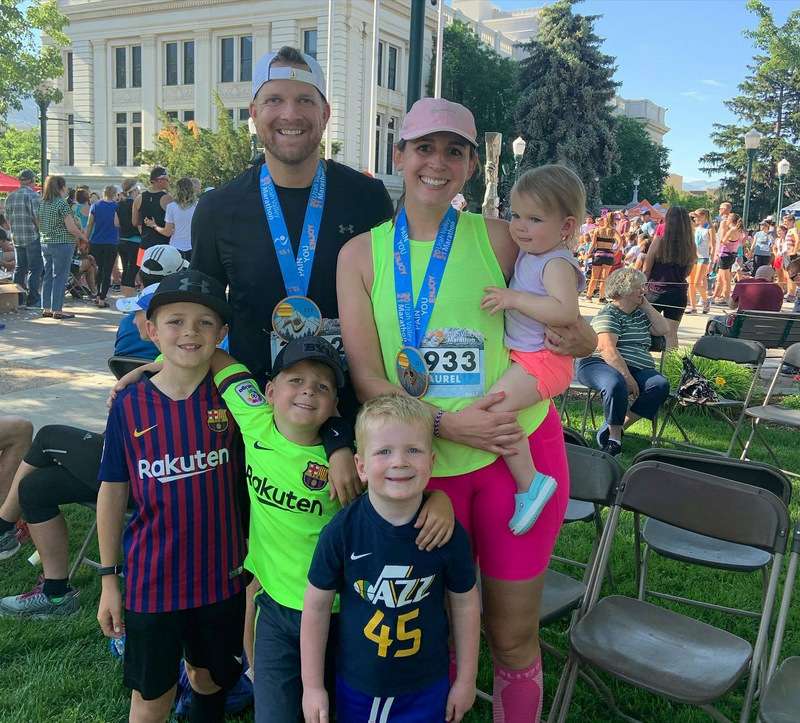
Away from work, his answers become pleasingly specific. He has joked about getting his wife interested in the Utah Jazz, enjoys running, owns plenty of shoes and once named becoming a baseball coach or an astronaut among the professions he would like to try. His dog is Maggie. His idea of an enjoyable evening includes a burger, a milkshake and an action movie. The astronaut application may need a different evening schedule.
His chosen motto is the Chinese phrase “Yǒu bàn fǎ,” which he translates as there being a way. He lists professional working proficiency in Chinese and spent two years volunteering in Taichung, Taiwan. The phrase is an apt place to leave a career spent finding routes through changes of ownership. At Baysora, the continuing test is whether growth leaves room for the people already there.