Software has a fondness for farewells. A new version arrives, the old one gets an end date, and the announcement makes the whole business sound tidier than it is. Somewhere, a developer still has an application to run. Aaron Frost built a company around that awkward interval between the industry's goodbye and the customer's ability to leave.
Frost, known around the Angular community as Frosty, founded HeroDevs in 2018. It began as a development services business. The later opportunity was supporting open-source software after its original maintainers stopped. That change put an old question at the center of his working life: what does the person using this actually need?
There is a pleasing complication in his biography. Before selling businesses more time with older software, he taught managers why they should pay attention to newer JavaScript. Before running a company, he helped organize a conference because he and a colleague wanted somewhere to go. His career repeatedly begins with an inconvenience that refuses to stay small.
A support call before a keynote
His early route into technology included supporting accounting software for motorcycle dealerships. A manager noticed his ability to trace software problems and encouraged him toward quality assurance and further study. Recognition came before the founder title. Someone saw a skill he could build a career around.
In his account of becoming a programmer, Frost described an earlier spell as a loan officer, followed by work in an accounting support call center. SQL made sense to him. Testing and automation opened another door, and he moved into development full time in 2010.
JavaScript arrived by way of jQuery and browser extensions. He spent several months with the library before going deeper into the language itself. His explanation of the attraction was wonderfully unceremonious: it fits in his head
. Every profession deserves at least one recruitment slogan this honest.
One early project involved a browser extension for his twin brother's real estate website. The work was specific, useful and close to hand. Years later, his advice to engineers still emphasized solving users' problems and paying attention to the business consequences of technical choices. Perfect code could become an expensive distraction if it displaced the problem a customer needed solved.
The conference they couldn’t find
At Domo, a conversation with Kip Lawrence supplied the next inconvenience. They wanted to attend an Angular conference. The idea of making one themselves took shape around that wish. Frost already knew Lawrence through UtahJS, and had helped organize Google's Utah developer group.
Those meetups had given him practice presenting and a reason to learn material well enough to explain it. They also supplied relationships. Ahead of Google I/O in 2013, Frost planned to ask Angular's team whether a couple of its members might participate in the proposed event.
His own recollection names the people around the idea: John Lindquist, Dave Geddes and Joe Eames were among the connections that helped make a conversation possible. The origin has the texture of a community project: overlapping friendships, a provisional name and people willing to ask.
Frost later added a correction after others remembered part of the sequence differently. Agreement from an Angular team member may have crystallized after a subsequent Fluent conference talk. He left that disagreement visible. Even a conference origin story, it turns out, can need version control.
Forty pages about moving forward
In October 2014, O'Reilly published his JS.next: A Manager's Guide. Forty pages addressed the coming JavaScript specification and the practical business of adopting it. Its audience was development managers, the people who have to turn an appealing technical possibility into a training plan, a schedule and working software.
The contents move from the reasons to consider ES6 through features such as modules and arrow functions, then into where a team should start. It is a compact artifact from a career spent translating between enthusiasm for a tool and responsibility for the people using it.
His 2015 essay, JS.Next, pressed the adoption question further. New language features created decisions about when and how to introduce them. Frost was asking managers to engage with change rather than assume their current arrangements could last indefinitely.
Teaching was another outlet. His JS.Next: ES6 course runs for more than five hours, covering JavaScript's history, language features, browser support and tools for using newer syntax. The instructor and the future support-company founder shared a preoccupation: how to make a transition workable.
Dana Scully enters the codebase
HeroDevs also built Scully, a static site generator for Angular. In a 2020 conversation about the project, Frost described hearing developers ask for a way to build static sites and blogs with their familiar framework. He eventually took that request to the Angular team.
His explanation credited collaboration, including Stephen on the Angular team and Minko's Guess.js work. Ease of use mattered. Existing applications should have a manageable route to the tool, and newer developers should have a chance of using it without first becoming specialists in another complicated setup.
The name came from The X-Files. Frost liked the show as a child, wanted a female hero's name, and found Dana Scully a fit for a project dealing with static files. A small act of naming reveals a bit of the person in an otherwise technical discussion: useful software could still contain a private grin.
“If everyone felt as welcomed as me, that would make me happy”
Aaron Frost, discussing the Angular community in 2020
Who gets into the room?
Conference organizing brought a different kind of design problem. A speaker lineup and an audience are made of people, and the price of attendance or the expectation of belonging can decide who ever gets through the door.
In 2018, Frost and Eames joined an Angular Air conversation in which the community was asked to help fund attendance for underrepresented developers. ng-conf offered to match contributions up to $5,000. It was a concrete mechanism: collect money, help people attend, make the gathering accessible to more of the people it hoped to represent.
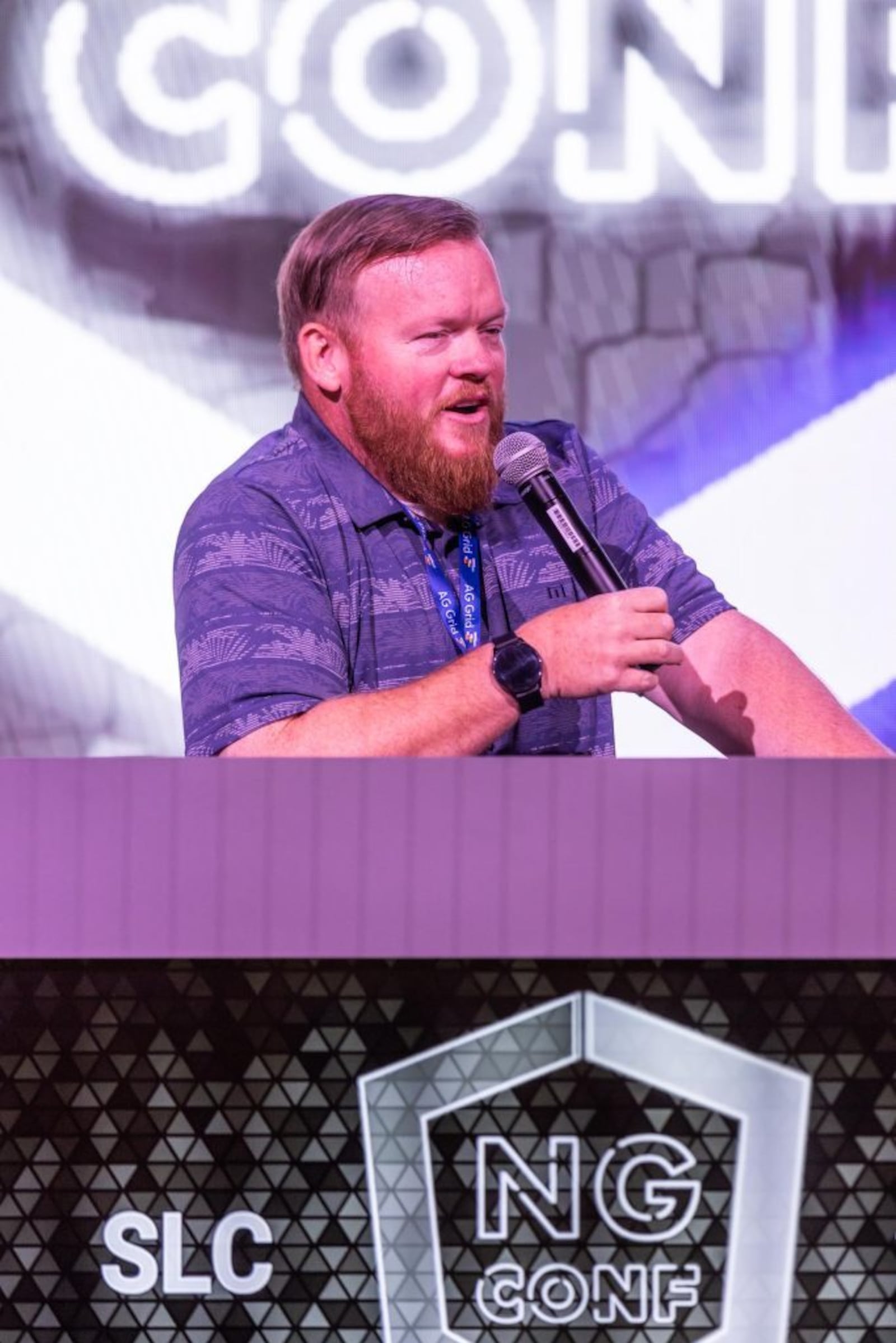
His ng-conf biography describes years of meetup organizing, international speaking, online content and emceeing. Each format makes a different demand. A talk needs preparation; an event needs other people to succeed; a recurring community needs someone to return after the excitement of the first meeting has worn off.
A business in the support gap
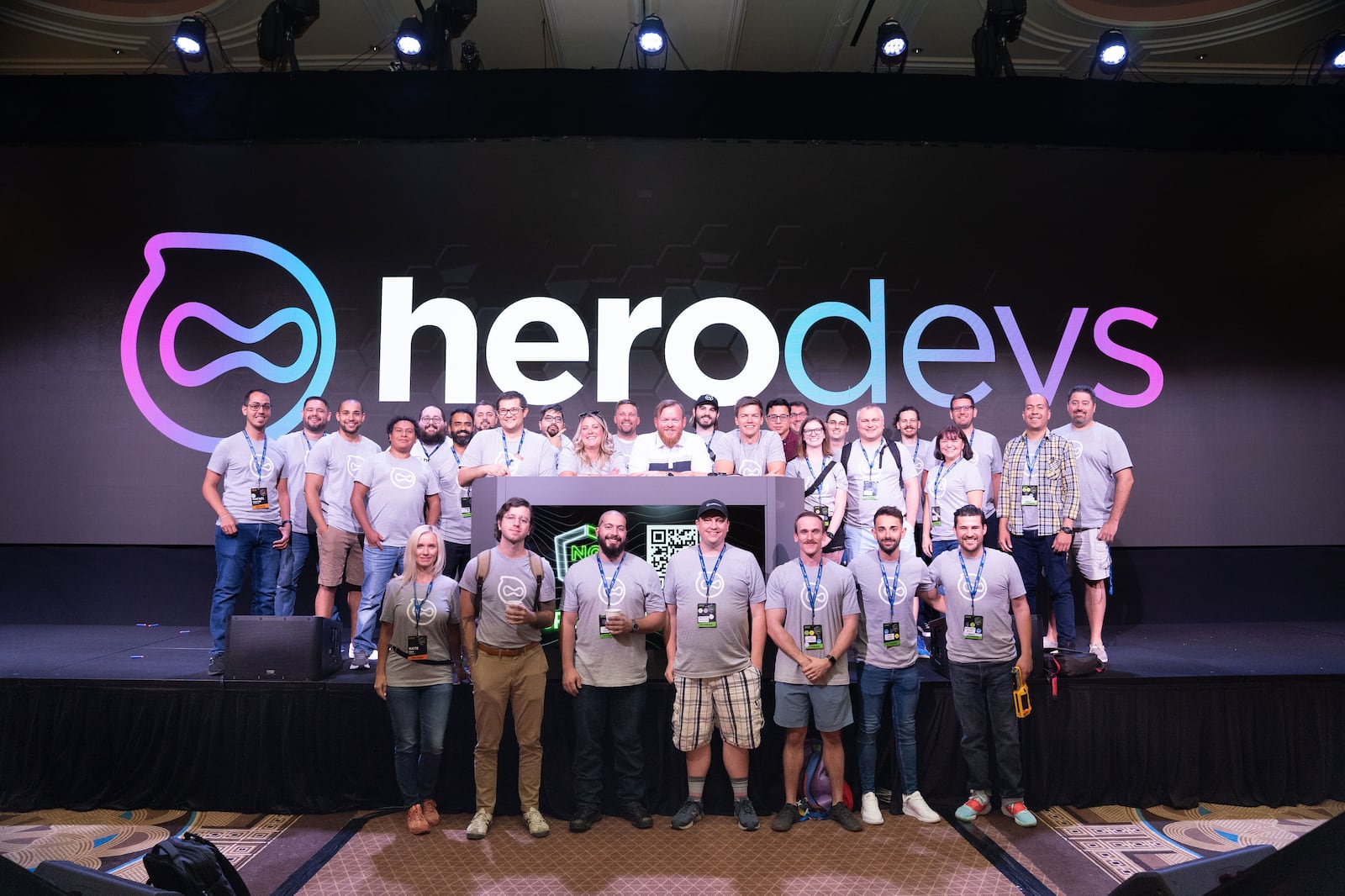
AngularJS brought the business problem into focus. When official support ended, customers still depended on applications built with it. HeroDevs' Never-Ending Support offered continued fixes and support for software that had reached its original end of life.
The proposition has an everyday logic. A software release follows its maintainer's calendar. Replacing a working business application follows the customer's calendar, budget and obligations. Those dates do not automatically agree. Supporting an older dependency gives a team another way to manage the intervening period.
By 2024, the business had attracted outside recognition. Frost was named a finalist for EY's Entrepreneur Of The Year Mountain West award. HeroDevs placed No. 71 on the 2024 Inc. 5000, following No. 771 in 2023. The rankings mark a company growing around work that usually receives less ceremony than a new release.
Frost's July 2025 explanation of expansion was practical: bring in people who understand additional technologies and build more products. He said customer demands had outgrown the company's existing scale. The company that began with developers doing migrations now had customers asking it to cover more of their software stacks.
Two clocks. One application.
Putting money back upstream
In July 2025, HeroDevs announced a $125 million growth investment led by PSG, with existing investor Album also participating. The announcement paired expansion of its support business with a $20 million Open Source Sustainability Fund.
The fund was intended for creators, maintainers and projects following end-of-life practices, with proposed grants from $2,500 to $250,000. HeroDevs also reported $4 million in donations to open-source creators and projects up to that point, including $2 million during 2024.
These figures describe different commitments. Investment finances a company; a fund allocation sets aside resources for a program; past donations record money the company says it has already given. Keeping those distinctions clear matters when discussing a business built on software other people created.
There is a reciprocal idea here. A maintainer needs room to move a project forward. An organization may need time before it can follow. Frost's business sits between those needs, and the fund proposes sending some of the proceeds back toward the people building the software.
July 2025
Open Source Sustainability Fund
A different seat at the table
On January 1, 2026, Aaron Mitchell became HeroDevs' CEO. Frost moved from day-to-day leadership into an advisory and board role. The announcement described years of the two working together across products, customers, maintainers and company culture.
Frost's continuing involvement matters to the shape of his story. Founding, running and advising a company are different jobs. By remaining on the board and available as an advisor, he retained a connection to the organization while another leader took responsibility for its daily decisions.
I’m not disappearing,
he said. It is a fittingly plain line from someone whose public work has so often involved staying around: for a meetup, a conference, a framework's users, or a company after a change in title.
Outside those roles, his public biographies return to family and fishing. A conference introduction also makes room for his enthusiasm for tacos. The details are pleasantly resistant to a corporate strategy slide. A person can spend years thinking about the useful life of software and still prefer a day in the mountains.
The thread through Frost's career is attention to whoever is left with the practical problem. First there were callers with accounting software to fix. Later there were developers wanting somewhere to gather. Eventually there were organizations still running code after its farewell announcement. He kept finding work on the other side of the goodbye.