A red squiggle under a line of code is an unusually persuasive recruiting tool. It points to something you missed, often before you have pressed Save. For the people drawn to TypeScript, that small interruption is part of the attraction: a chance to correct an assumption while the mistake is still cheap.
TypeScript Developer describes itself as a global community for developers, researchers, and educators. Its stated activities include workshops, mentorship, and open-source support. The language itself is Microsoft’s creation. The distinction matters: this is a network organized around a technology, and the technology supplies the problems, arguments, and experiments that give such a network something useful to discuss.
The product is a second look
TypeScript adds type information to JavaScript. A function can declare that it expects a number; an object can describe the fields it contains. The tooling compares those expectations with the code being written. Pass a string where a number belongs, and the editor can object before the program runs. Autocomplete and navigation draw on the same understanding.
For a team maintaining an application, the appeal extends beyond individual mistakes. An unfamiliar function becomes easier to inspect. A changed interface exposes callers that need attention. The compiler can turn a colleague’s undocumented assumption into something another developer can examine. That is especially useful when the person who remembers the original design is elsewhere.
The official documentation makes an essential distinction: JavaScript remains the execution model. Type annotations are removed from the generated program. A browser does not gain a new type-enforcement service merely because the source file ended in .ts. TypeScript helps people prepare software for execution; JavaScript still does the running.
Types help before execution. Runtime validation still has a job.
A community beside the compiler
The network’s stated mission emphasizes adoption, education, and inclusion. That places it in the learning and participation part of the developer market. Its audience includes people working in startups, enterprises, and academia. These are the constituencies it describes, rather than a list of customers buying a proprietary compiler.
There is a practical reason for communities to gather here. The official handbook stretches from everyday objects to generics, conditional types, and module behavior. Installing a package is one decision. Choosing how strictly to check an existing application, or interpreting a complicated error, can involve many more. A useful discussion starts with the actual code and the behavior someone expected.
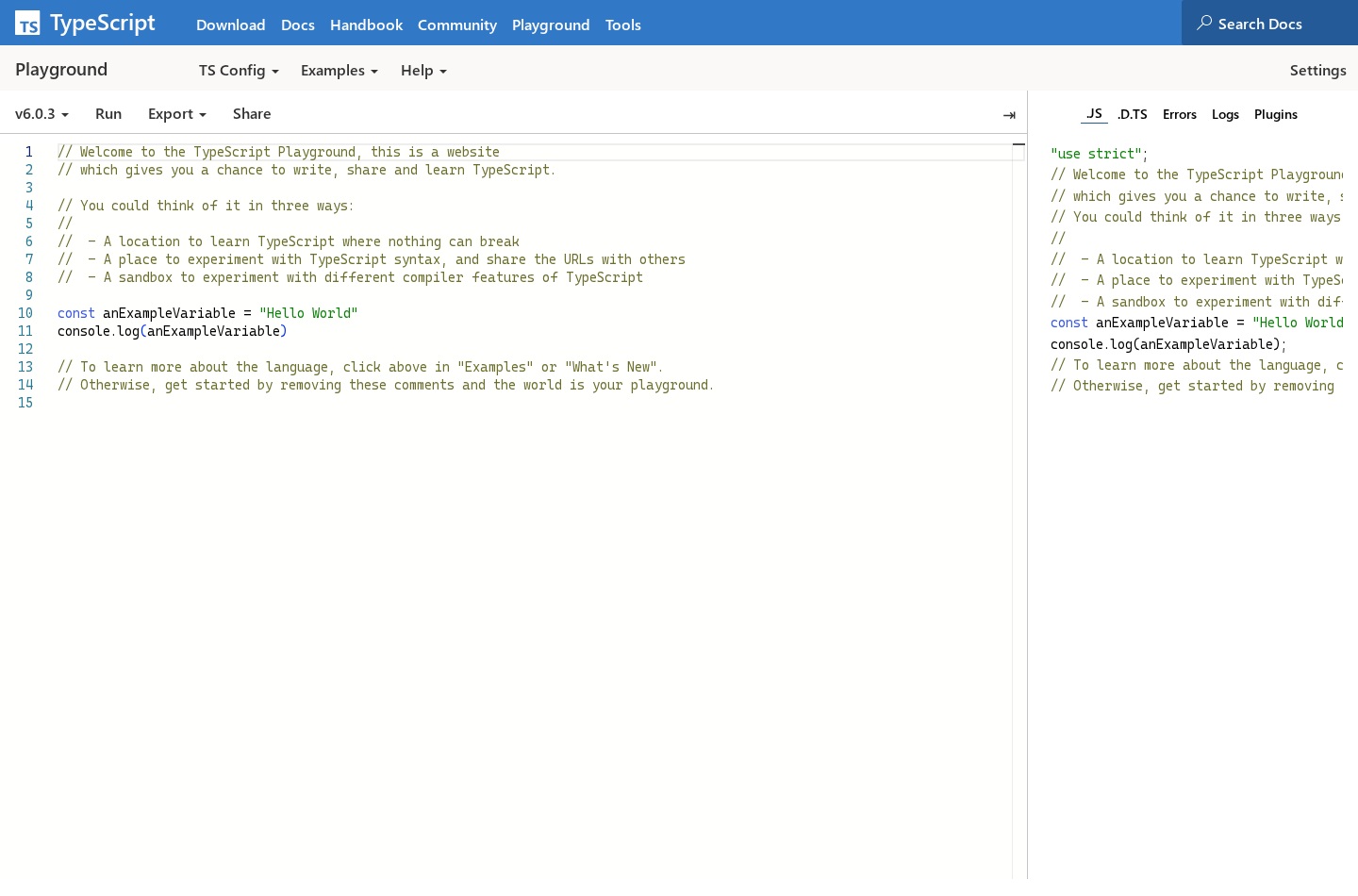
Readers can already experiment in Microsoft’s free browser-based Playground. It pairs editable source with compiler output and diagnostics, and offers examples and configuration controls. A small example can be shared through a link. That makes it possible to discuss the same reproducible problem instead of trading screenshots of slightly different files.
Keep the JavaScript. Add some questions.
TypeScript first became public in October 2012. In the project’s tenth-anniversary retrospective, product manager Daniel Rosenwasser described early skepticism and the importance of fitting existing JavaScript habits. The team’s approach required open development and compatibility with code people already had. Demanding a clean slate would have made the adoption decision much harder.
The migration guide still reflects that practical approach. JavaScript and TypeScript can coexist while a project is converted. Developers can introduce checking, supply missing descriptions, and make selected areas stricter over time. The sensible unit of progress is a comprehensible piece of the application, with behavior that can be checked as the migration proceeds.
Slack’s published account gives the idea some weight. Its desktop team wanted more confidence at boundaries between JavaScript and native components. It adopted TypeScript gradually while continuing feature development and bug fixes. The transferable lesson is straightforward: introduce the checker early enough to learn from it, while keeping the product moving. Slack’s experience belongs to the language’s adoption history, independently of this community.
There is another route for teams that want to retain JavaScript files. TypeScript understands supported JSDoc annotations in comments, including descriptions of parameters and return values. That offers a way to express intent without immediately changing every filename. The choice depends on how the team wants to maintain its code and documentation together.
“Impose no runtime overhead on emitted programs.”
One of the TypeScript project’s design goals
Free software, real work
Microsoft distributes TypeScript as open-source software under the Apache 2.0 license. The compiler is available through npm, and its development is public on GitHub. That explains the economics of the language: there is no per-developer license purchase required to start using the compiler. It does not establish a revenue model for the separate community.
The adoption bill is paid largely in attention. Someone must understand existing dependencies, decide which files to check, and resolve disagreements between the program and its declared expectations. Migration guidance includes dealing with outside libraries and adjusting compiler settings. For an existing application, those choices are part of the engineering work, even when the download costs nothing.
Some of that work has a remarkably reusable form. Declaration files describe the public shape of JavaScript libraries. They tell tooling what functions accept and what they return without replacing the library’s implementation. A library author can distribute those descriptions; another developer can then receive useful editor feedback while using the package.
DefinitelyTyped provides a community-maintained home for many such definitions, distributed through @types packages. Its contribution and testing process turns small descriptions into shared infrastructure. For a reader looking for a concrete contribution, improving an inaccurate declaration is an intelligible task: identify the library behavior, describe it correctly, and test the description.
Then the checker needed checking
The language’s own tooling eventually encountered a scaling problem. In March 2025, lead architect Anders Hejlsberg described long project-loading and checking times on very large codebases. Developers could face a choice between quick editor startup and a complete view of the project. The tool that helped people manage complexity was itself becoming a source of delay.
Microsoft’s response was a native port of the compiler and language service. The team evaluated languages and built prototypes, including in C#. Go suited the existing compiler’s structures, memory needs, and graph traversal. Compatibility carried substantial weight: preserving the accumulated behavior made a direct port attractive. Choosing another language was an engineering decision about this particular codebase.
TypeScript 7.0 arrived in July 2026. Microsoft’s published full-build comparison put the VS Code codebase at 125.7 seconds with TypeScript 6 and 10.6 seconds with TypeScript 7. These are the team’s benchmark results, not a promise for every machine. They measure development tooling, not the speed of a customer’s finished application.
Shorter coffee break.
The transition also has an integration cost. At release, TypeScript 7 lacked a stable programmatic API. Tools that embed the compiler could still need TypeScript 6. The release-candidate guidance described running both versions together. Teams adopting the faster compiler therefore need to check their surrounding tools as well as their application’s types.
A compiler cannot read your customer’s mind
TypeScript’s type system deliberately permits some operations that cannot be proven safe. Its compatibility documentation calls this unsoundness and explains that the choices accommodate common JavaScript patterns. Passing the checker is consequently useful evidence about a program, with specific limits. It cannot certify every path the application might take.
The everyday escape hatches need similar care. The any type relaxes checking, and a type assertion tells the compiler how to regard a value without verifying it at runtime. External JSON still needs examination. Writing an expected shape beside incoming data does not force a remote server to send that shape.
Ordinary checks can do double duty. Test whether a value is a string, and TypeScript can narrow its understanding within that branch. A discriminating field can help distinguish several kinds of message. These techniques connect runtime decisions to the checker’s reasoning, giving developers a way to express what the code has actually established.
Flow is another typed JavaScript option, with its own checking rules and React-oriented features. Plain JavaScript with JSDoc offers a different working style. TypeScript’s practical distinction is its combination of JavaScript compatibility, type checking, and editor services. Choosing among these approaches should include the libraries, tools, and maintenance habits of the team that will live with the decision.
Start with a mistake you understand
A useful first experiment is small. In the Playground, write a function that expects a number and call it with text. Read the diagnostic, fix the call, and inspect the JavaScript output. Then try a real object from an application. The exercise connects an abstract word, “type,” to an observable difference in everyday work.
Generics can come later, when a function needs to preserve a relationship between its inputs and outputs. The handbook’s examples show how a type parameter can retain information that would disappear through any. Learn the machinery in response to an actual need. A difficult type expression earns its place when it makes the surrounding program easier to use correctly.
That is a useful standard for the conversations around TypeScript, too. Bring an example. Explain the assumption. Let someone else try it. A red squiggle is helpful; understanding why it appeared is the part a developer can take to the next project.
Open a tab. Try an idea.
The community, the language, and a look inside the compiler.
TypeScript Developer on LinkedIn ↗Official TypeScript website ↗Try the Playground ↗Microsoft’s TypeScript on GitHub ↗TypeScript project on X ↗TypeScript project on Bluesky ↗TypeScript team blog and release news ↗Watch: A 10x Faster TypeScript ↗