David Mink had a law degree to work toward and mattresses to sell. During his second and third years of law school, he would find an empty classroom and take customer calls. Somewhere between the formal education and the telephone, another career was becoming plausible. The customers needed a mattress for an RV, a boat, a cabin. Mink needed to understand how they had found his company in the first place.
It is an agreeably unceremonious beginning for a marketing executive. Today, Mink is the co-founder and CEO of Avalaunch Media in Lehi, Utah, and president of Amplēo Marketing. His working life has moved from selling a physical product to organizing the people who help other businesses sell theirs. Yet the earlier job keeps explaining the later one. He remembers what it feels like to pay for marketing, wait for results, and repeat the same explanation to another specialist.
The mattress orders also provide a useful antidote to the polished founder biography. There was no single revelation that delivered the finished agency. There was a business, a downturn, a sideline, and a gradual recognition that the sideline deserved more of the day.
The education on the other end of the phone
As an undergraduate, Mink worked a hotline for a business that advised internet entrepreneurs. Callers wanted to find suppliers, build websites, and get customers to those websites. He was encountering ownership through other people's practical questions. His father was in the military; running a company had not been an obvious career destination. The hotline made it imaginable.
He and college friends started Rocky Mountain Mattress. Law school followed soon afterward. At first, the business relied largely on referrals. Then its pages began appearing on Google's first page for searches involving custom, memory-foam, and RV mattresses. The phone became considerably more interesting. Search visibility had turned a quiet project into something that required attention between classes.
His LinkedIn profile records study at the University of Alabama School of Law from 2005 to 2007. His public speaking biography identifies him as a licensed attorney. The two occupations leave him with an unusual professional combination: experience with the fine print and experience with the customer who simply wants something delivered.
Matt Siltala, an Avalaunch co-founder, was Mink's old college roommate. Siltala had come toward search marketing through radio-station websites. Their paths joined around a less glamorous concern than agency positioning: making an ecommerce business work. A shared history preceded the company name. So did the experience of relying on people outside their own business.
The customer gets tired of repeating himself
Rocky Mountain Mattress hired independent help with design, development, and search. Mink saw the value of specialists. He also saw the inconvenience of coordinating them. A conversation on Monday could require a fresh telling on Wednesday: the business, the problem, the customer, the objective. Everyone had a lane. The owner had to keep building the intersections.
When the 2008 downturn reduced spending on the recreational purchases that supported their mattress business, the partners looked for additional income. Marketing consulting was work they already understood from the buyer's side. SEO came first. Paid advertising followed, partly because paid-search results could inform their understanding of keywords and audiences.
Creative hires arrived for a specific reason. Data visualizations and infographics could earn attention and links, helping their search work. Larger agencies began commissioning those projects for their own clients. Mink recalls assignments from shops including SEO.com, OrangeSoda, and Internet Marketing, Inc. Being trusted to do the work behind another agency's offering helped convince the partners to commit.
They sold the mattress business. In 2012, they adopted the Avalaunch name, opened an office in the Salt Lake area, and brought in early full-time employees. Mink's account makes 2012 a concrete turning point: the agency gained a name, a workplace, and more of its founders' attention. An office is a modest milestone until you have spent enough time working from a basement.
“You’re the boss.”
David Mink, on the starting point of a client relationship
Building a fuller service offering brought a different calculation. The partners had to decide when they could afford the next person and which skill the next client would need. Every additional service created a promise that someone had to fulfill. The agency's breadth depended on hiring people, rather than adding another line to a brochure.
The question before the campaign
Years of those relationships have moved Mink's attention toward a less photogenic document: the organizational chart. In conversations with prospective clients, he asks who is responsible for marketing, what their background is, and who works beneath them. The answer helps him judge whether an agency has a reasonable chance of doing its job.
His January 2025 essay on organizational strategy describes familiar arrangements: marketing shared across departments, or entrusted to a recent graduate who is still learning. His concern is the support surrounding the person. Someone can be capable and still lack the authority, budget, or colleagues required to turn a plan into useful work.
One example in that essay is Park City Performing Arts. Avalaunch placed a fractional marketing leader on its executive team and helped recruit independent contractors to fill execution gaps. Mink describes planning sessions, a rebrand, budget decisions, and help with marketing technology. The example shows his interest in how a team is assembled, alongside what it produces.
An editorial illustration of the leadership-and-agency approach Mink describes.
A fractional chief marketing officer supplies executive experience for part of the week. The agency supplies specialists who can carry out the agreed work. The arrangement still depends on clarity between the client and the marketing team. Mink's pitch is that the executive and the people making campaigns should have a working connection from the beginning.
He also expects the relationship to tolerate disagreement. His approach starts with the client in charge, but he argues that an agency should challenge a poor decision tactfully. Respecting contracts, responding thoughtfully, and recognizing misplaced responsibility all feature in his account. A pleasant meeting can conceal an unresolved problem. He wants someone willing to raise a hand.
A photograph, and a difficult conversation
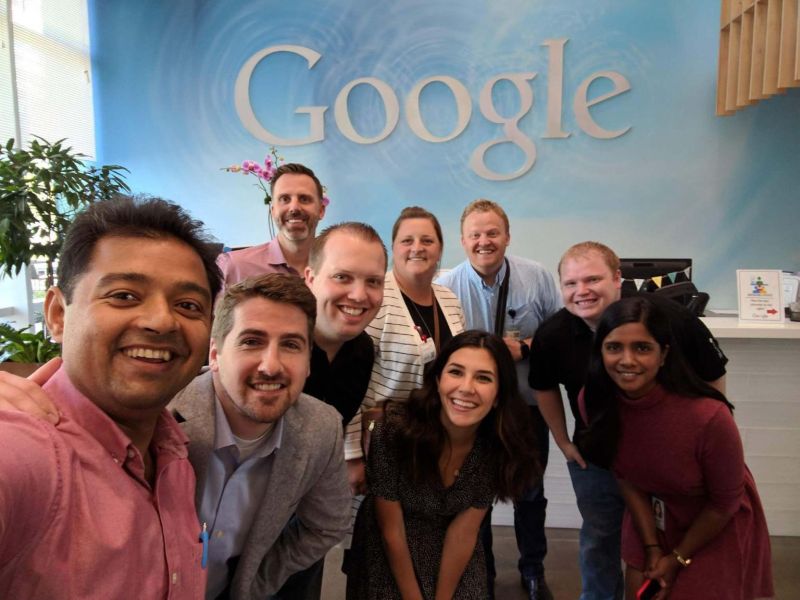
In a public recollection of working with Google's Rishiraj Chowdhury, Mink describes an observation that caught him off guard: the organization was avoiding difficult conversations and decisions. He recognized the criticism. The lesson he drew was that leaders have to move toward uncomfortable work rather than let it accumulate.
That is a useful companion to his customer-service instinct. Someone who wants clients to feel looked after can also become too accommodating. Mink's own account acknowledges the need to change that habit. It gives his leadership story a little friction: friendliness remains useful, but the conversation occasionally has to get less comfortable.
His advice to his younger self contains another adjustment. He wishes he had built relationships with competing agencies earlier. Other shops can teach, exchange referrals, and take work that fits them better. For a founder whose agency found early credibility working behind larger agencies, that advice has a practical history. Competition need not require spending every lunch alone.
The obligations he chose
Mink once asked his uncle why he would run for city council. They were driving to Las Vegas for the Mountain West Conference basketball tournament, discussing the assortment of subjects that fills a road trip. His uncle explained that life had treated him well and giving back mattered. Mink remembered the answer as his own company began to establish itself.
He and his partners developed Avalaunch Gives Back to create opportunities for employees to serve. In writing about the initiative, Mink also recalled an account manager who recruited colleagues to help her children gather blankets for homeless people. The idea could begin with an employee's own concern. Participation did not require waiting for the founder to supply every cause.
Education gives that interest a continuing place in his work. At Utah Valley University, he serves on the digital marketing advisory board, helping professors with curriculum and internship planning. Avalaunch also describes him connecting a colleague interested in adjunct teaching with the university's marketing department chair. These are specific introductions, the kind that can make an unfamiliar career feel reachable.
His calendar leaves room for less institutional forms of connection. He has described annual Alaska fishing trips with his partners as a tradition they protect. At a spring offsite in St. George, a discussion of Unreasonable Hospitality ended with a cowboy poem and guitar. It is reassuring to discover that a meeting about marketing strategy can make room for a rhyme.
A larger table, the same practical question
In September 2025, Avalaunch joined Amplēo, whose services include fractional finance, marketing, and HR leadership. Mink continued leading the agency and became president of Amplēo Marketing. Avalaunch had been adding executive marketing experience to its execution team; Amplēo had been extending fractional leadership into services. The deal put those approaches together.
“Avalaunch’s roots are in execution, enhanced by fractional CMO leadership.”
David Mink, September 2025
The next addition came in March 2026, when Amplēo Marketing announced its combination with Chad Jardine's CMO Zen. Substantially all of CMO Zen's assets were acquired. The announced purpose was to deepen the marketing division's executive expertise while pairing it with agency support. Mink's title had changed, but the problem he was describing remained recognizable.
His current strategy-sprint offering gives that problem a two-day appointment. Business leaders work with a fractional CMO on positioning, the customer journey, and investment priorities. In discussing the process, Mink welcomes the finance perspective too: acquisition costs and customer value can help anchor choices that otherwise become arguments about taste.
The distance from the empty classroom is considerable. The question carried across it is ordinary enough to fit into a customer call. How will this business find people, persuade them, and keep its promises? Mink first had to answer it for a custom mattress. He now spends his working life assembling people who can answer it together.