Twenty cooks were spending hours making flatbreads. Dickey Singh tells the story of five families who prepared and served food for people at Glide Memorial Church in San Francisco. There was cooking to do, food to transport, a meal to serve, and cleaning afterward. The bread had acquired a rather large staff.
One year, the group invested in a tortilla-making machine. A single person could handle the flatbreads. The other volunteers could devote more attention to vegetables, meats, and desserts, and expand the menu. Singh remembers the thanks they received. His example of automation arrives with dinner attached.
For the co-founder and CEO of Cast.app, the interesting part is where the freed attention goes. A machine has earned its place when people can spend their time on something more valuable to the person they are serving. The meal gives his business vocabulary a welcome concrete object. You can eat the result.
An app publisher needed a data scientist
Singh’s route to that idea runs through years of product and engineering work. He says he has been in Silicon Valley since the early 1990s, after time in Virginia and Europe. Customer-facing software became a recurring occupation: satisfaction measurement, feedback management, behavioral analytics, and customer intelligence. He held technical and product leadership roles before becoming the founder people now encounter in customer-success discussions.
By March 2016, he was introducing Pyze Growth Intelligence as Pyze’s co-founder and CEO. The product addressed an awkward imbalance. App publishers could gather information about their users, but turning it into a useful decision often required a data scientist, separate analysis tools, and another system to carry out the decision. Each handoff added work.
Pyze proposed automated segmentation and personalized engagement: understand behavior, identify changes, and reach a user at an appropriate moment. Later that year, its platform expanded beyond mobile to web and native applications. In March 2017, further integrations brought support for development platforms including Xamarin and React Native. Singh’s concern extended to making the technology available where developers were already building.
The 2016 Tech Trailblazers awards named him the Male CxO winner. The recognition supplies a date in the career. The more revealing continuity is the work itself: reducing the distance between learning something about a user and doing something useful with it.
The words people use for numbers
In 2017, Singh wrote about a translation problem hiding inside analytics. People describe customers as highly engaged, inexperienced, or likely to buy. Software usually wants more explicit instructions. What does highly engaged mean in this particular product? Which measurements support the description?
His examples made context do the work. A few minutes of activity could mean something different in a photography app than in a photo-editing app. The number alone did not carry its own interpretation. He explored fixed intervals, clustering, and classification as ways to connect ordinary descriptions with quantitative analysis.
It is an engineer’s question with a social consequence. If the person making a decision must first learn the software’s private language, the tool has assigned them another job. Singh wanted products closer to the way business users already think.
His impatience with unnecessary translation also appeared in a 2018 appeal to AI researchers. He urged them to make their work more accessible, publish an accompanying explanation, and give engineers and entrepreneurs something they could try. The imagined reader mattered. A paper could contain a useful idea and still fail to let that idea travel.
A wave from the coffee robot
Then there was the cappuccino. In October 2018, Singh described watching a Cafe-X robotic barista. The arm picked up a cup, placed it under an espresso machine, moved the finished drink, and waved to the customer. He noticed the precision and the small gesture of acknowledgment.
He also began asking what would make the encounter more useful. A kiosk could accept an order. A conversation could work through a request that arrived half formed: a remembered ingredient, an uncertain preference, a description instead of a brand name. Recommendations would require the machine to understand more than the button someone pressed.
Another practical concern was the setting. The robot had its own carefully arranged environment. Singh was interested in machines that could work alongside people in places people already used. The customer and the workplace should have some say in the design.
The essay is an unusually good glimpse of his attention at work. He enjoyed the performance, then looked for the unfinished job. A wave is delightful. It leaves plenty of engineering to discuss after the coffee.
Two founders, one unread dashboard
When Singh wanted a second opinion on the idea that became Cast.app, he turned to his longtime friend Daljeet Virdi. Virdi was a data scientist working at Andreessen Horowitz. He recognized the difficulty immediately: he had built dashboards, then still needed to present their meaning to executives himself.
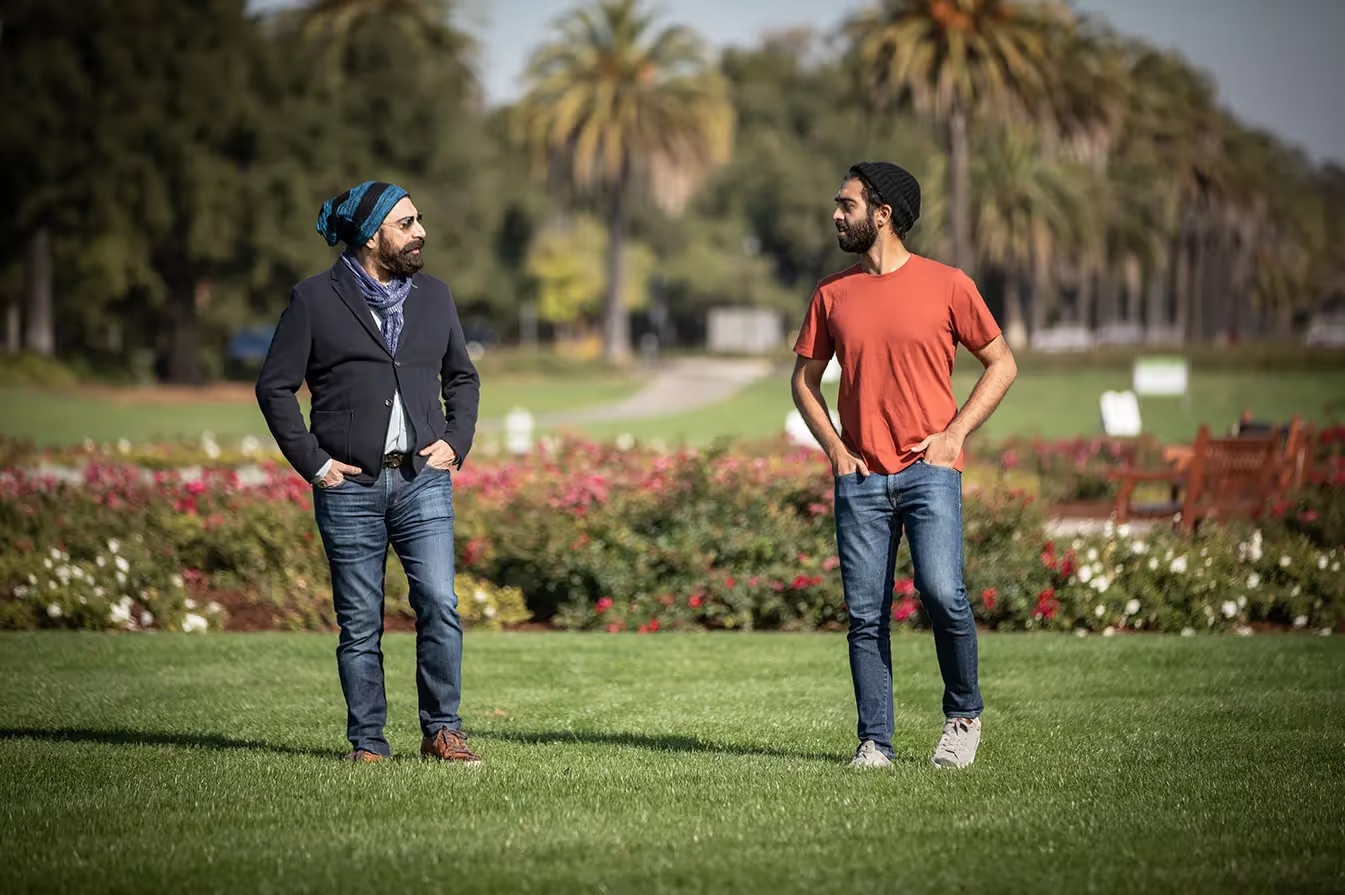
“The problem comes in the last mile,” Singh said. The organization had paid for the analysis. The intended recipient still needed an explanation. Virdi became his co-founder, bringing a data engineer’s experience of that same awkward final stretch.
Cast’s early approach used short, individually generated videos to explain data. Narration and sentences varied with the information being presented. The company participated in the 2020 Comcast NBCUniversal LIFT Labs Accelerator, powered by Techstars, with customer success and account management among its initial applications.
The premise made the explanation part of the product. An executive or customer should receive something understandable without requiring another person to assemble a presentation each time. For the two founders, the dashboard had revealed the work that came after the dashboard.
The problem comes in the last mile.Dickey Singh
The computer could write. Could it stay accurate?
In February 2020, Singh co-authored an essay with Virdi and Dileep Pasumarthi on natural language generation from structured data. They considered how a language model might turn information into narrative, with different accounts for different readers. A sports result, for instance, has a different emotional meaning depending on which team you follow.
They also showed the rough edges. Their experiments paired structured information with generated sentences and explored financial-data summaries. A tactic intended to add variety by introducing synonyms made the output worse. The published examples were awkward, and the authors said so.
The work exposed a distinction that remains central to these systems: fluent language and faithful reporting demand separate attention. The authors discussed copying information from structured data while using a language model to compose sentences. They were interested in a useful relationship between the two.
Showing an experiment that misbehaved is valuable in its own right. It gives the reader something firmer than a polished demonstration: a description of a decision, its consequence, and the next problem to solve.
Who gets the explanation?
Singh’s customer-success work keeps narrowing the unit of attention. In his February 2024 conversation with Alex Turkovic, he emphasized responsibilities, interests, and user profiles rather than relying on titles alone. People inside the same customer account may need very different information. An executive who rarely opens the product still has decisions to make about it.
Three approaches discussed in Singh’s customer-success interviews. A conceptual comparison, not a performance chart.
These approaches can coexist. A webinar gives everyone a common starting point. A community allows people to exchange experience. A personalized explanation can address a particular decision. Singh’s work concentrates on making the third possible without requiring a human to prepare every interaction.
In a 2019 essay about business decisions, he had already separated information people consult from knowledge they absorb. Dashboards provide a reference. Explanations help someone build understanding they can carry into the next decision. He warned that an excess of information could leave people disengaged.
That observation makes the customer’s attention a design constraint. More communication still needs to earn a reason to be read. A useful system has to consider what the recipient understands, what they need now, and which action the explanation makes possible.
When the demo meets Monday morning
Singh was writing about autonomous operations in May 2018. He described a progression from recommendations to systems that could learn which actions an operator approved, then automate suitable decisions. Cooperation with people was part of the picture. Autonomy came in degrees and specific uses.
By May 2026, his published work was sorting agent engineering into four disciplines: the immediate instruction, the information available for the current task, the memory carried across interactions, and the machinery governing execution. Each could fail in a different way. Treating them as one fashionable term made the failures harder to see.
- Prompt
- What the agent is asked to do.
- Context
- What it can see for this task.
- Memory
- What it retains and updates.
- Harness
- How tools, checks, and execution work.
The continuity is practical. A recommendation needs follow-through. A remembered fact needs updating. An agent claiming completion needs a system that can establish whether the work happened. His writing keeps asking what surrounds the apparently clever part of the machine.
Second from the top of the speed dial
There is more to Singh’s public life than product terminology. He enjoys portrait photography, lists films by Christopher Nolan, Luc Besson, and Quentin Tarantino among his interests, and is a fan of Tintin. His podcast biography mentions a wife, twins, and an English Labrador named Elektra. The details make room for a person beside the professional argument.
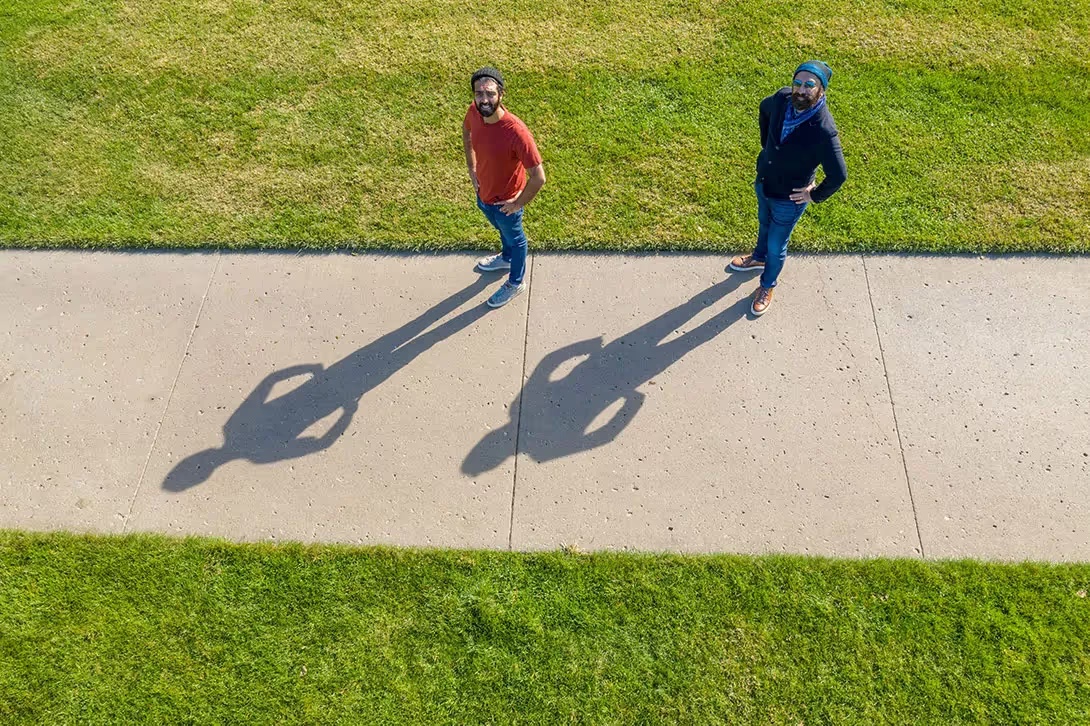
Asked what he wants people to say about him, Singh gives a short answer: “I want to be known for being helpful.” He wants people he works with to become references. He jokes about being on their speed dial, second from the top. It is a specific enough ambition to invite a return call.
That wish gives the twenty cooks another meaning. The technical achievement is the machine. The human result is a better meal and more attention available to prepare it. Across Singh’s work, the recipient remains there at the other end of the process, waiting for something useful to arrive.
Keep the conversation going
- Cast.app
- Personal essays
- Twitter / X
- Photography on Instagram
- GitHub
- Photography portfolio
- Watch: Digital Customer Success, episode 40
- Watch: The Jasons Take On automation
- Read: Cast’s beginnings
- Read: Four disciplines of AI agent engineering
- Read: The robotic barista essay
- Read: The flatbread conversation