The website has passed its beauty contest. The typography behaves, the photographs sparkle, and the checkout button is exactly where the designer wanted it. Then someone tries to buy something using a keyboard or a screen reader. Suddenly, the finished website has unfinished business.
This is the territory occupied by Deque, pronounced “dee-cue.” The company tests websites and mobile apps for barriers that can exclude people with disabilities. It sells software, specialist audits, consulting and education. Its subject is accessibility; its recurring practical problem is getting accessibility work into the ordinary machinery of making software.
- Free axe-core checks give developers a starting point.
- Paid tools add guided testing, integrations and reporting.
- Audits and training help teams tackle what automation misses.
- The repair still needs an owner, time and validation.
A free engine with a paid business around it
Preety Kumar founded Deque in 1999. Her biography describes a background as a developer, test manager and engineering manager, including work at Verizon, and a master’s degree in computer science from George Washington University. That background helps explain the company’s attention to the development process: a rule is useful only when the team building the product can apply it.

In 2015, Deque released axe-core as open source. Developers could put its accessibility checks into their own testing environments. A company selling accessibility expertise had made a central piece of that expertise freely available. The commercial logic is quite legible: make the engine available, then sell capabilities that organizations need around it.
By August 2026, Deque reported five billion axe-core downloads. That is a software distribution milestone, not a headcount of customers or a count of accessible websites. Repeated installations are part of software development. Even with that qualification, the number describes the reach of a testing component that can travel far beyond Deque’s direct sales relationships.
Downloads measure distribution, not completed accessibility work.
Google Lighthouse uses axe-core for accessibility checks, according to Deque’s product documentation. Microsoft has incorporated the engine into its development and testing practices, Kumar wrote in August 2026. The engine can sit inside tools a developer already uses. That is a useful position for a specialist company: its work can become part of somebody else’s routine.
The first failure is often the handoff
A revealing account appeared on Deque’s blog in 2016. Developer Matt Isner described a familiar problem: an outside expert identifies accessibility defects and sends them to an engineering team, but the report leaves developers guessing about the repair. Deque’s response was to supply implementation guidance and explicit validation instructions, tailored to the customer’s environment.
The lesson is transferable. A useful ticket explains the affected user, how to reproduce the problem, what to change and how to verify the result. A list of deficiencies can create a backlog. Instructions that survive the handoff give someone a reasonable chance of clearing it.
Help Scout offers a customer example of that larger shift. Its published Deque case study says customer feedback influenced its accessibility practice. An audit helped the company understand the scope of its problems. It subsequently moved accessibility into design, technical investigation and acceptance testing, with engineers using Axe DevTools Pro and employees receiving Deque University training.
“Having a truly accessible product allows us to pursue business with industries that have strong accessibility requirements.”
Corey Nilan, Engineering Coach, Help Scout
The remark supplies a business reason alongside the user benefit. A customer support product must work for the people providing support as well as those requesting it. Accessibility can also matter when a prospective buyer has specific requirements. Help Scout’s account connects those concerns to concrete changes in how features are built.
Coffee, four months and a better sprint
Blue Bottle Coffee’s story starts with a new ecommerce site and a good intention: accessibility was a priority. During development, the team recognized that it needed more structure and expertise. Deque’s case study says the Axe Auditor dashboard and available support helped clarify the work ahead.
The engagement combined an audit aligned with WCAG 2.2 AA, Deque University training and Axe DevTools for Web. Blue Bottle also reconsidered sprint planning and design reviews so teams could identify issues earlier. In April 2026, Deque published a reported 87% reduction in accessibility issues over four months.
That result is reported by the vendor, rather than an independent experiment. It describes a reduction in issues, not proof that every visitor could complete every task. The copyable part is the sequence: establish a baseline, teach the team, put checks into development and review progress. Buying the scanner alone would omit much of what Blue Bottle actually did.
Which part of the work are you buying?
The Axe Platform divides accessibility work into several jobs. Axe DevTools supports web and mobile testing during development. Its free browser extension performs basic automated checks one page at a time. Pro adds features including intelligent guided testing, user-flow analysis and Jira integration. The web bundle extends testing into source code and development pipelines, with APIs and centralized reporting.
Axe Monitor addresses the wider estate: automated scanning, issue prioritization and progress reporting across websites and digital content. Axe Auditor organizes manual testing. These products serve different people and moments. A developer needs a defect attached to a piece of code; a program manager needs to understand patterns across products.
Services cover audits, strategic consulting, remediation support and accessibility conformance reporting. Deque University offers self-paced and instructor-led education. Deque reports more than 10,000 completed audits and 200,000 training learners. Those figures describe its accumulated testing and teaching activity; they should not be rolled into one imaginary customer total.
The business model combines software subscriptions and enterprise packages with services and training. Axe-core and the basic extension cost nothing to use. The web bundle is bought through sales, with scope shaping the purchase. A team’s actual budget also needs engineering time for repairs, manual evaluation and education. A free diagnostic tool does not make those hours disappear.
The machine leaves room for judgment
Axe-core’s documentation says it finds an average of 57% of WCAG issues automatically. It also marks uncertain results as incomplete, requiring manual review. That distinction matters when a dashboard looks reassuring. A scan reports what the engine can detect in the interface it examined; it cannot provide a complete account of a person’s experience.
Deque emphasizes a commitment to zero false positives. Its open-source manifesto qualifies that ambition with “bugs notwithstanding.” The engineering point is sensible: developers should spend their time on real defects. The commitment deserves to be read as a design goal, with software fallibility kept in view.
The newer Axe MCP Server connects Deque’s testing and guidance to compatible AI coding agents. Developers can review, apply or reject suggested accessibility fixes in their development environment. It moves the repair discussion closer to the code. Human review remains part of the advertised workflow, rather than a ceremonial step after an unattended fix.
A specialist in a crowded repair shop
Deque operates in an enterprise accessibility market with substantial alternatives. Level Access combines a platform with managed services, training and governance. Evinced supplies developer and QA testing integrations for web and mobile. Free testing tools are another option for teams beginning with automated checks.
Deque’s distinctive combination is its widely distributed open-source engine, commercial developer tooling, organized manual testing and education. Buyers can assess that combination against their actual bottleneck: detection, remediation, expertise or program oversight. Comparing a free engine with a whole enterprise service contract would make for a wonderfully tidy spreadsheet and a thoroughly muddled decision.
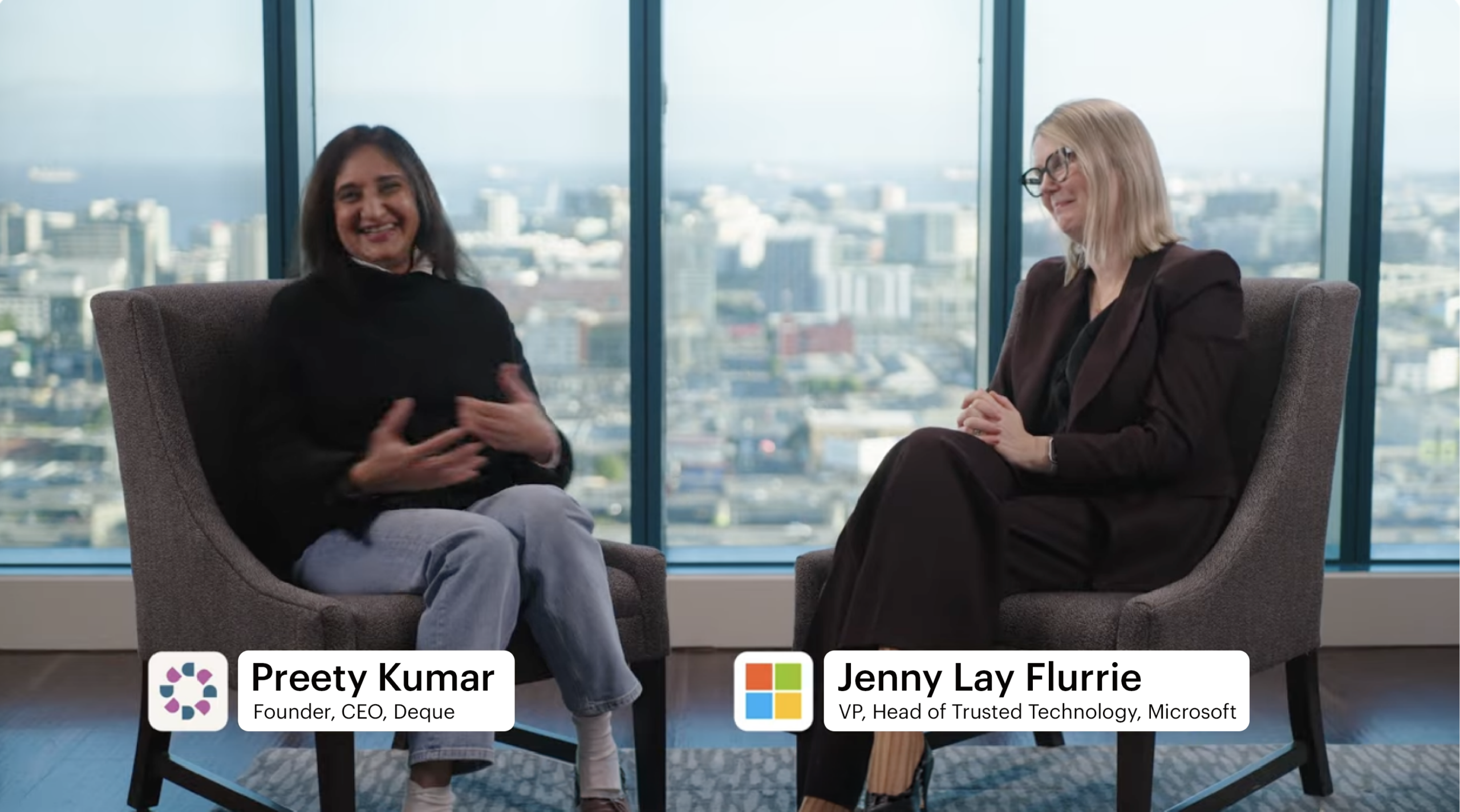
The company’s community work adds another piece. Deque describes a remote-first culture and internal accessibility practices using its own tools. Its scholarship program gives eligible people with disabilities a year of online Deque University access; its culture page reports more than 7,500 scholarships. It also runs Axe-con and contributes to accessibility standards work.
For someone borrowing the approach, start with an important user journey. Test it, bring human judgment to the gaps and give repairs an owner. Repeat the checks when the interface changes. This approach depends on access to the relevant product states and a team willing to change the product. A report with no repair time assigned to it is a very expensive reading list.
Deque’s proposition becomes clearest there. It helps organizations make accessibility work specific enough to perform and routine enough to repeat. The finished-looking website gets another examination. This time, the question is whether people can use it.