A website can look perfectly hospitable and still refuse a visitor entry. The problem might be a menu that cannot be reached with a keyboard, a form a screen reader cannot explain, or a checkout that strands somebody halfway through buying. accessiBe built a business around an appealing proposition: help the owner fix accessibility without first becoming an accessibility specialist. The attraction is obvious. So is the temptation to confuse purchasing a tool with finishing the job.
- The offer: automated adjustments, developer tools, and expert services.
- The entry price: accessWidget starts at $59 monthly or $490 annually.
- The reckoning: a final 2025 FTC order required $1 million in monetary relief.
- The useful lesson: test complete tasks, including the parts another vendor controls.
01 / A button with a business behind it
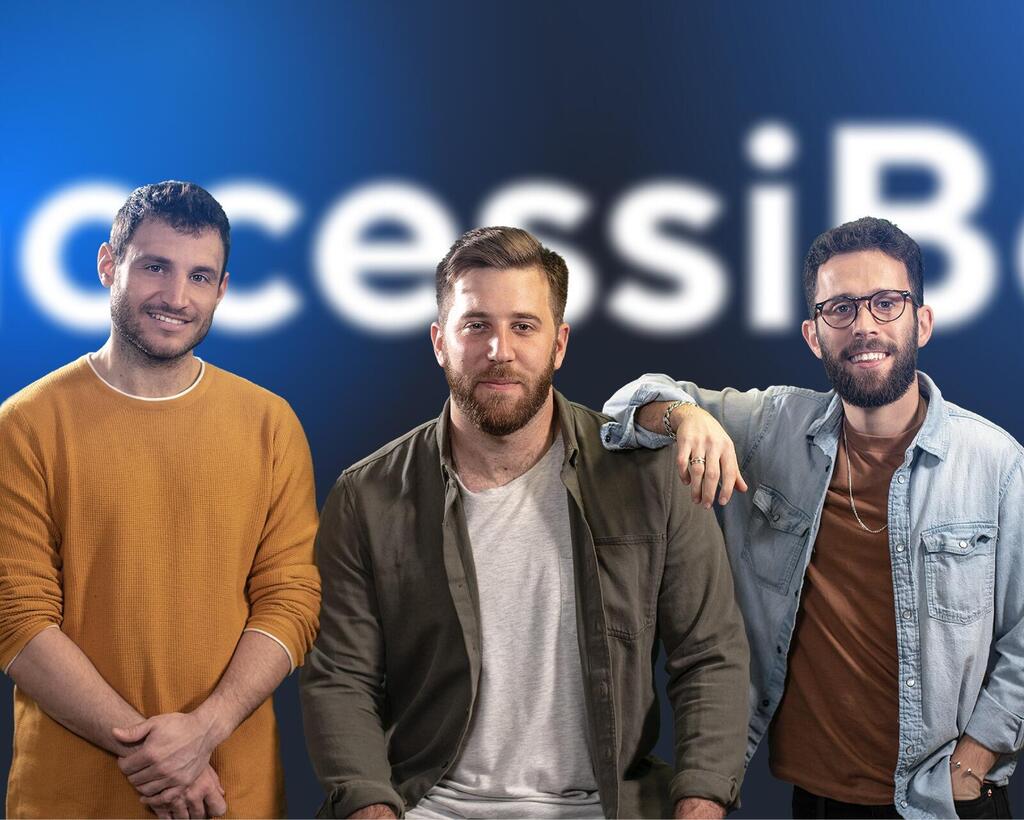
Founded in 2018 by Shir Ekerling, Dekel Skoop, and Gal Vizel, accessiBe emerged from the world of building and marketing websites. In a published founder interview, Skoop describes a route through bars, restaurants, and a marketing agency. The team encountered a practical mismatch: small businesses were expected to provide accessible websites but often lacked the expertise and resources. Their early prototype went onto client sites. The agency was a laboratory with invoices.
That background helps explain the flagship product’s packaging. accessWidget is installed through a code snippet or a content-management-system integration. Visitors can adjust presentation, including text and contrast, while the software supplies automated keyboard and screen-reader adjustments. The changes operate in the user’s session. For an owner reluctant to commission a rebuild, the installation is an unusually approachable starting point.
Investment followed. An August 2022 Series A extension added $30 million, bringing reported cumulative funding to $58 million, with K1 Investment Management, Glilot Capital Partners, and The Phoenix involved. The company now reports more than 100,000 websites using its technology. Those are adoption figures, rather than independent measurements of whether every visitor can complete every task.
02 / The promise met the regulator
The difficulty was in the breadth of the sales pitch. In January 2025, the Federal Trade Commission alleged that accessiBe falsely or without substantiation represented that accessWidget could make any website compliant with the Web Content Accessibility Guidelines. The complaint also challenged third-party articles presented as impartial reviews without adequate disclosure of the company’s connections.
Monetary relief required by the final FTC order.
Finalized April 2025
The final order, approved in April, required $1 million in monetary relief and restricted unsupported compliance claims and misleading endorsements. It also required disclosures about third-party domains and subdomains outside the product’s coverage. accessiBe publicly disputed the allegations and said it chose to settle. A consent settlement should not be dressed up as a courtroom verdict. Equally, the restrictions are consequential for a business selling confidence alongside software.
The practical fault line is quite ordinary. A store can contain a payment service embedded from elsewhere. A page can link to a PDF. A custom booking application can behave differently from a conventional menu. The visitor experiences one journey; the software encounters separate technical territories. A tool’s boundary can arrive precisely where the customer needs to proceed.
03 / The product grew a second address
accessiBe’s wider portfolio gives accessibility work somewhere else to live: the development team. accessFlow audits websites and user flows, prioritizes issues, supplies code guidance, and tracks remediation. Its purpose is to help teams work on the underlying source. accessServices adds expert audits, testing by users with disabilities, document and media work, and accessibility documentation. These jobs demand different skills; putting them beside a widget does not make them disappear.
In 2025, Robert Lopez became CEO. By May 2026, his account of the business emphasized conversations with customers, agencies, developers, and the disability community. He described accessLabs, a team of blind usability analysts embedded in product workflows, and an advisory board informing decisions. These are the company’s descriptions of its process, rather than independent proof of its results.
“Automation is necessary, but not complete on its own.”
Robert Lopez / May 2026
The broader strategy was already visible in the company’s 2022 investment plans, which included developer tools. Lopez’s account makes the rationale explicit: websites keep changing, and customers want a sustainable process. July 2026 release notes extended accessFlow’s MCP connection to SDK-based audits, letting AI clients obtain issues and guidance. The direction is toward accessibility inside everyday development work.
04 / What the subscription actually buys
accessiBe sells recurring software and separately quoted services to small businesses, enterprises, and agencies. Current accessWidget pricing starts with Micro, covering up to 5,000 monthly visits. Larger tiers add support and, at Scale, annual manual testing and custom remediation. The price ladder is therefore also a ladder of human involvement. A subscription amount alone tells only part of the story.
Distribution matters too. accessiBe reports more than 5,000 partners, with referral, reseller, and technology tracks. Published tiers offer recurring software commissions or discounts of 20 to 30 percent. An agency already maintaining a client’s website can introduce accessibility during an existing conversation. Buyers should ask what the agency will actually test and deliver alongside the license.
The market offers other routes. Deque’s axe tools concentrate on developer testing and guidance; specialist consultants can assess and remediate sites. accessiBe’s distinctive proposition is the combination of visitor adjustments, source-code workflows, and services under one supplier. The comparison should turn on the work required, the team available, and the evidence produced.
05 / Start with the checkout
A useful evaluation begins with a real task: register, search, book, pay. Check it with keyboard navigation and assistive technology, then commission appropriate human testing. Read accessiBe’s exclusions before buying. They include documents, embedded third-party content, and CAPTCHA remediation; unusual components and applications may require manual attention. Assign those gaps to someone. W3C guidance likewise explains that evaluation tools cannot determine accessibility by themselves. The habit worth copying is to connect scanning, accountable fixes, and user feedback. The customer came to finish something. That is the test worth passing.