A desk was an expense. A computer could be an investment. In the early years of Touch of Modern, Dennis Liu described an office where new employees received Apple computers and multiple monitors, while the company spent little on the furniture underneath them. Desks, he reasoned, tended to do much the same job. The distinction was almost comic in a business selling desirable objects: the people encouraging customers to appreciate design were perfectly willing to work at an inexpensive table.
It is a useful place to begin with Liu. Retail rewards the attractive surface. He was interested in what happened behind it, too: the cost, the repeated task, the reason a customer returned. His career has moved through consulting, an activities marketplace, a shopping destination and a children’s product company. The merchandise has changed several times. Each change has required another look at what people wanted and what the business could deliver.
Ten thousand things to do
Before the shopping site came the engineering education and the consulting jobs. Liu attended Cornell, then worked at Capgemini and Ernst & Young. His professional history includes financial-services strategy and transformation work. He also taught himself to program, beginning at 12. That combination put him near both the business plan and the means of building something from it.
In 2010, Skyara, an outdoor-adventure discovery and booking business, placed third in the Wharton Club of New York’s business-plan competition. The presenting team included Liu, Jonathan Wu and Steven Ou. The proposition extended beyond finding an outing: providers would get tools to handle bookings, tickets and payments. Even an adventure needed some administration.
The later activities marketplace was called Ravn. Its ambition was appealing enough: help people discover something to do, then make the booking possible. The practical difficulty was expansion. An activity belonged to a place and depended on the people supplying it there. Adding another city meant dealing with another local market.
Liu and his partners pushed hard for attention. He later described working with a bulk-download company to move Ravn up the app charts before Apple cracked down on the practice. A team in the Philippines gathered activity listings from the web. The app accumulated 10,000 activities. Those tactics deserve to remain in the account, alongside the more flattering milestones. Getting a product noticed had not settled whether its market was large enough.
For a founder, that is an awkward discovery. Effort has already gone into the business. People can use it. There may even be a persuasive number to put in a presentation. The decision still arrives: keep the machinery running as it is, or change the transaction at its center. Liu’s team changed it.

A shop for the unplanned purchase
Touch of Modern emerged in 2012 with four co-founders: Liu, Jerry Hum, Steven Ou and Jonathan Wu. Hum and Liu had a Cornell connection; Hum described Liu as his fraternity brother. The group’s next proposition was a store for people whose tastes resembled their own, with unusual products and an emphasis on design. They would introduce a customer to something he might never have thought to search for.
“The conventional wisdom was that men don’t shop,” Liu said in 2015. The company’s wager gave that customer more credit. Watches, electronics and home accessories could attract an audience if the selection gave people a reason to look. An unexpected object offered an opening. The site would do some of the finding before the shopper arrived.
Hum later described the difference between this approach and a conventional clearance sale. The appeal was discovery rather than simply shifting last season’s branded stock. By March 2017, the company was featuring 25 new sales a day. Its website and app shared a cart, allowing a browsing session to continue across devices. Two-thirds of sales were coming through mobile devices at that point. The shop could accompany its customer.
Revenue in the first three months, as Liu reported in his first-person account of the launch.
The first validation had arrived much earlier. In April 2013, Liu wrote about reaching $1 million in revenue in three months. His advice was impatient with startup socializing and enthusiastic about testing an idea repeatedly. He urged founders to recognize when a business needed to change course while there was still money available to try again.
He also admitted a weakness. “I suck at raising money.” It is a pleasantly unvarnished sentence to encounter in a founder’s account of progress. Liu gave credit to people who could persuade investors readily. His own difficulty with that work sat beside the early sales milestone. Success had left some tasks stubbornly uncomfortable.
“Get back to work.”
Dennis Liu, 2013
As the operation grew, the economics demanded attention. Liu described software that selected shipping boxes by item dimensions and compared carriers using weight and destination. That belongs with the computers and the desks: a specific attempt to improve an everyday task. A compelling product page could begin the transaction. A suitable box and a workable shipping cost helped complete it.
An award, and the work around it
The four co-founders appeared together on Forbes’ 2016 retail and ecommerce 30 Under 30 list. It was recognition for a shared business, and the names matter. Touch of Modern’s development involved several founders with different responsibilities. A profile of Liu becomes more useful when it leaves the other people in the room.
His titles also changed. He was an early CEO and co-founder, and later served as chief strategy officer, the title he was using by October 2015. In May 2016, he joined a VLAB discussion of online commerce as Touch of Modern’s co-founder and CSO, alongside people from Betabrand, Poshmark and Bessemer Venture Partners. In April 2017, the company appointed a new president and chief operating officer. Liu continued to drive marketing initiatives, with Hum serving as CEO.
Meanwhile, the shop kept learning from purchases. Hum explained in 2018 that daily customer responses informed future buying decisions. The categories favored by loyal customers could differ from those favored by less loyal ones. That gave the team something more specific to work with than a general picture of what a male shopper ought to want. Purchases supplied feedback, and the next selection could reflect it.
The founding idea had room to develop. At first, the co-founders had their own tastes and an audience in mind. Over time, they could examine what customers actually bought. It is a useful tension in a curated store: someone must choose the objects, but shoppers retain the final, expensive vote.
- BEFORE 2012RavnDiscover an activity.
Book an experience. - 2012Touch of ModernDiscover a product.
Buy something unexpected. - 2016LittleHippoFind a product gap.
Develop something to fill it.
The clock for two nieces
LittleHippo began with a more intimate shopping problem. Its founders, Stephanie Lai and Liu, were looking for a children’s clock for their two nieces. The choices seemed either poorly made or unreasonably expensive. In 2016, they started a company. They spent the next two years studying, designing and developing a clock of their own.
The stated ambition included appearance as well as price. They wanted modern children’s products that might not look immediately like children’s products, while still giving children something to enjoy. The balance makes sense in a household purchase. The child gets the object. An adult must also be willing to look at it.
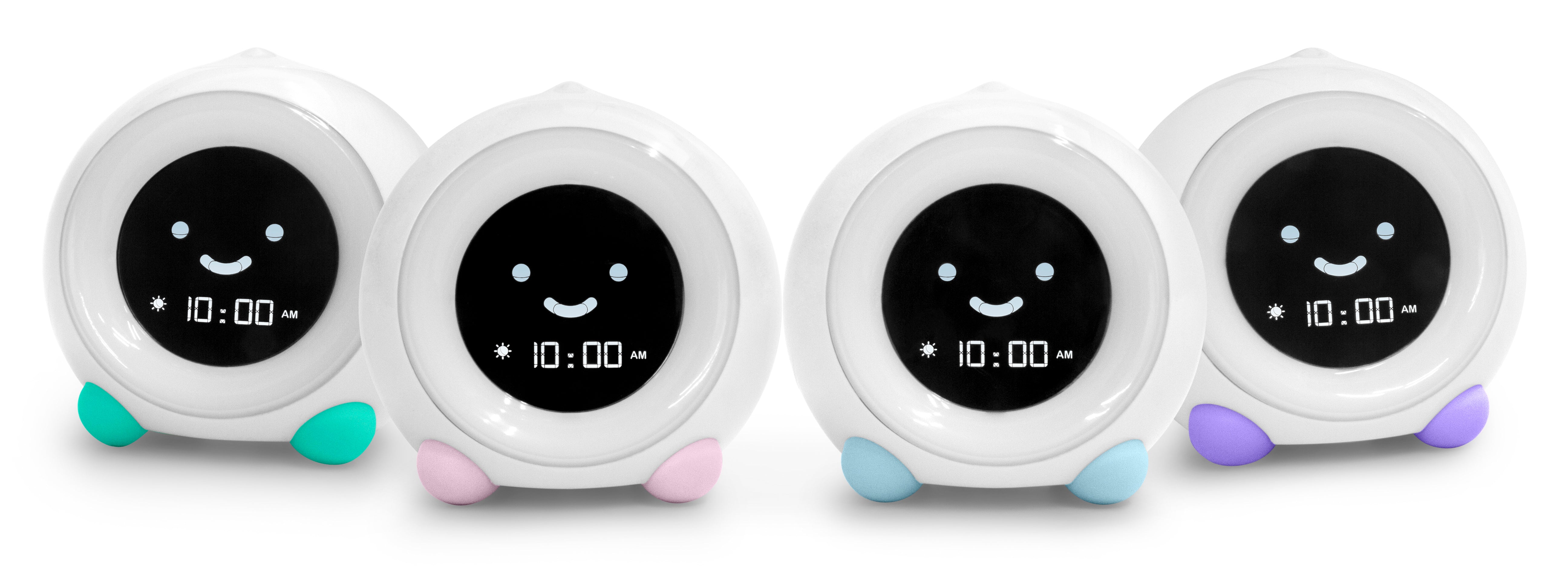
Making the object brought its own sequence of practical work. By December 2017, assembly was underway, and the company was preparing electronic instruction manuals in French, Italian, Spanish and German for international backers. These details rarely make a founding legend. They are particularly helpful for understanding a product company: the design must become components, components must become an object, and someone must be able to use it.
By July 2018, Lai could report that MELLA had launched and that backer rewards had been fulfilled by the promised deadlines. Customer feedback had already led to revisions, including stronger internal components and assembly. The company was considering wider distribution carefully, with an explicit concern about growing beyond what it could handle. Lai’s enthusiasm came with attention to the company’s capacity, a practical consideration alongside the pleasure of getting an object out into the world.
The revisions were specific. Customers could choose a green light at the end of a timer instead of an audible alarm. A new color, Tropical Teal, joined the range. These were changes to an existing product, made after people had brought it into their homes and started using it.
Liu went on to serve as LittleHippo’s president as well as co-founder. He describes the company as bootstrapped and self-funded. LittleHippo’s retail channels have included Target and Walmart. The earlier retailer had selected other people’s products. Here, the work included taking responsibility for a product that other retailers could sell.
A date stamped on a drawing
On March 24, 2026, a clock design patent was granted to LittleHippo. The named inventors were Stephanie Lai and Dennis Liu. The filing had been made in April 2024. Its scope was the clock’s ornamental design, a precise record of work on an object rather than a claim about an entire business.
There is a satisfying continuity between that drawing and the earlier choices. Liu has helped sell activities, helped select merchandise, and helped build a company making children’s products. In each case, the offer had to survive contact with an actual customer. The objects changed. The work kept returning to what belonged in front of the buyer, what it should cost, and how to get it there.