A chest X-ray can be taken long before anyone qualified has time to read it. That interval is DeepTek’s territory. In a hospital, it becomes a reporting backlog. In a tuberculosis screening program, it can become a person leaving before the next test is arranged. The image exists; the useful decision is still waiting.
- Read: Genki flags chest X-rays for TB screening; CXR Analyzer assists radiologists.
- Route: Augmento connects images, AI tools and reporting workflows.
- Fund: New access terms give eligible programs unlimited scans for a fixed fee.
The specialist who is not there
DeepTek works on the distance between taking a picture and doing something with it. Its customers include hospitals, diagnostic centers and public health organizations. Some want more efficient reporting. Others need screening where specialist interpretation is scarce. Both face a version of the same problem: an imaging machine cannot, by itself, finish a clinical encounter.
In January 2021, NTT DATA and Microsoft supported an initiative through DeepTek targeting free TB diagnostic-imaging access for 100,000 people in India. Technology and cloud services were supplied to improve access. The target describes the intended reach of that initiative, rather than a verified count of completed diagnoses. It also reveals why distribution belongs in this story: useful software needs an institution willing to put it in people’s path.
Two founders, one unfinished report
Founded in 2017, DeepTek brought together Ajit Patil, a technology entrepreneur, and Amit Kharat, a radiologist with research and teaching experience. Patil had previously built Vertex Software, which exited to NTT DATA. Kharat knew the work on the other side of the screen. Between them sat a promising question: which parts of an imaging service could software help move along?


Kharat later described the 2019 Greater Chennai Corporation TB screening project as a defining moment. It put the company’s chest X-ray AI into a municipal health task, rather than leaving it as a demonstration. Early backing from NTT DATA was followed by a $10 million Series A announced in March 2022, led by Tata Capital Healthcare Fund II, with Pentathlon Ventures and GHV participating.
A score needs somewhere to go
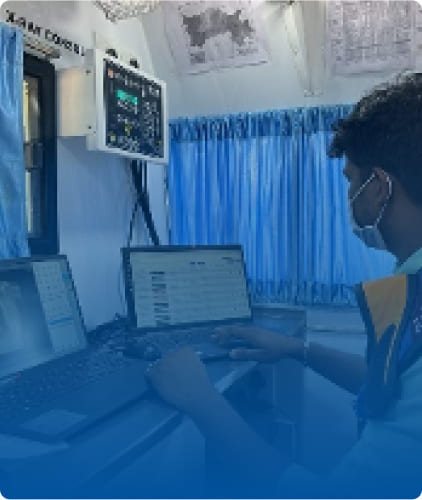
Genki is DeepTek’s public health screening tool. It supports online and offline analysis, alongside patient registration, symptoms, AI results and sputum data. Its dashboards help programs organize screening information. For a mobile clinic, offline processing matters: the availability of a network connection should not decide whether a scan can be analyzed.
Augmento handles the institutional side. It combines a cloud picture archiving and communication system, or PACS, with AI orchestration, structured reporting and collaboration. Models can come from DeepTek, a hospital or an outside vendor. CXR Analyzer, meanwhile, highlights suspicious chest findings with bounding boxes and sends results into existing imaging systems. Those boxes still need a clinician’s interpretation.
- 01AcquireChest X-ray
- 02FlagAI suspicion score
- 03EvaluateDiagnostic follow-up
- 04ActClinical care
DeepTek also sells human teleradiology, charging for reports across X-ray, CT, MR and PET-CT. Its advertised service includes round-the-clock coverage and quality review. A hospital can buy help completing reports as well as software for managing them. That gives the company practical exposure to the very workload its products seek to improve.
The bill became part of the bottleneck
By July 2026, the access problem had acquired a renewal bill. Unitaid and CHAI described screening programs struggling with donor funding disruptions and expiring licenses. Their agreements with DeepTek and Delft Imaging introduced fixed annual access fees. This is a procurement change with a clinical consequence: an affordable renewal can keep a screening service running.
Unlimited scans. Public and nonprofit buyers in 138 eligible countries. Optional hardware is separate.
The Genki package includes remote installation and training, software updates, support and access to the Augmento dashboard. These are negotiated terms for eligible buyers, rather than a price every private hospital can claim. For managers, the attraction is predictable spending. A fixed device fee also makes each additional scan cheaper on average as utilization rises.
“TB is curable, but only if you catch it.”Dr. Neil Buddy Shah, CEO of CHAI · July 2026
A separate 2025 Indian health technology assessment estimated Genki interpretation at ₹22 per case, against ₹100 for its radiologist comparator. Those figures use historical costing assumptions and manufacturer or secondary inputs. They are not current quotes, and they do not buy an X-ray examination, confirmatory testing or treatment. Cheap interpretation is one component of an affordable pathway.
Singapore makes room for outside models
Singapore’s AimSG platform offers a different test: can multiple AI models work inside a shared health system? Deployed in 2023, the vendor-neutral platform is described by Synapxe as an imaging AI “app store.” DeepTek participated in the collaboration with Synapxe, SingHealth, NTT DATA Singapore and CARPL.ai. The opportunity is infrastructure that lets institutions adopt models without rebuilding the whole workflow each time.
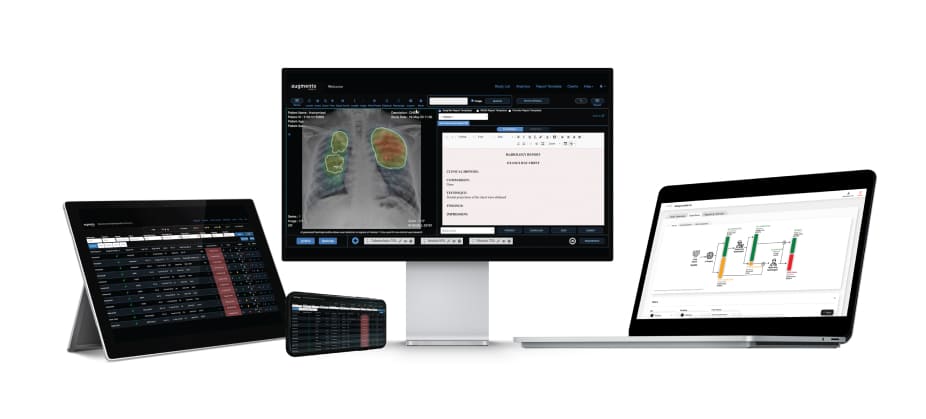
DeepTek occupies several layers of this market. Qure.ai, Delft Imaging and Lunit offer alternative chest imaging tools. DeepTek also supplies the surrounding workflow and reporting service. Its November 2024 Blackford partnership distributes CXR Analyzer through another enterprise AI platform. A company can build its own platform and still benefit from reaching customers through someone else’s.
Keep watching after the installation
Augmento received FDA clearance in April 2023. DeepTek announced CE MDR Class IIb certification for its chest X-ray AI in April 2025; WHO’s 2025 evaluation included Genki Edge v3.4.2 among products meeting TB CAD performance standards. These are specific regulatory and evidence milestones, not permission to treat every suspicious image as a confirmed diagnosis.
The practical lesson is to buy the whole working pathway. WHO’s TB CAD recommendation covers people aged 15 and older. Programs need suitable images, diagnostic follow-up and local screening thresholds. DeepTek’s Responsible AI module monitors performance, demographic differences and drift after deployment. That acknowledges an inconvenient fact about clinical software: installation is the beginning of supervision.
For anyone copying this approach, start with the waiting step. Decide who receives the flag, who orders the next test and who pays when the license comes due. Then watch those handoffs in ordinary use. A fast answer matters most when the patient can reach the next appointment.