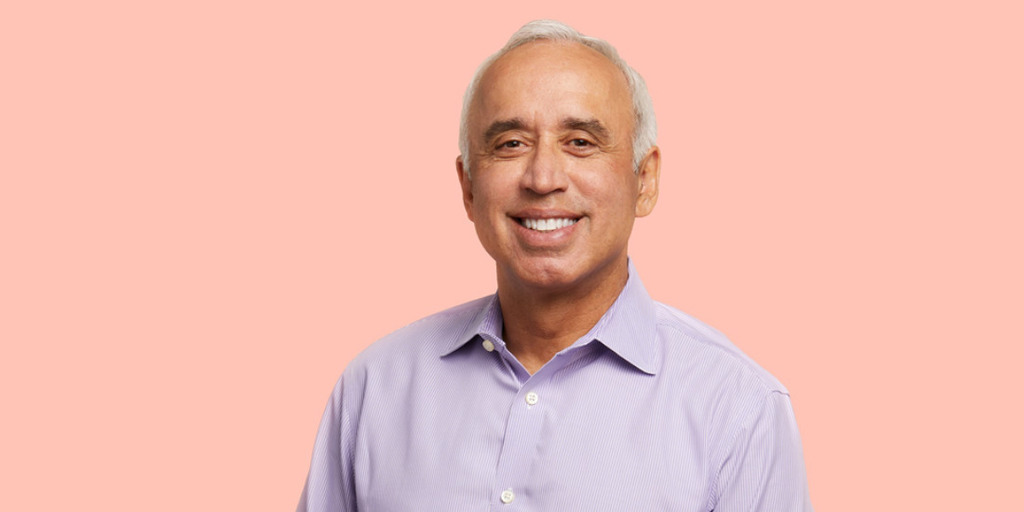
Profile
The man who bets early and waits forever
In 1999, when most investors were chasing dot-com fever, Deepak Kamra wrote a check into ON24 at a $12 million valuation. The company was "an Internet broadcast network for online investors" - not exactly a world-beater pitch. He stayed through the crash, through a pivot, through another pivot, through years when the name barely registered in any conversation. In 2021, ON24 went public at roughly $3 billion. He published the original 1999 investment memo. The move was almost a taunt: here is what I saw. Here is what "a lot can change" actually looks like.
That is Deepak Kamra in one story. He is the General Partner at Canaan Partners who has spent more than three decades betting on things before they have names. Micro-satellites when they were "dorm-fridge sized." Peer-to-peer car sharing before Uber existed. Enterprise webinars before enterprise anything was interesting. He has been at the same firm since 1991, which in venture capital is like being at the same restaurant since the menu was printed on a stone tablet.
"A lot can change."
- Deepak Kamra, reflecting on 22 years of the ON24 journey
He grew up in India, moved to Halifax, Nova Scotia at age 10, then Ottawa, then Harvard Business School, then Silicon Valley. The immigrant arc is not an incidental detail. It informs the way he invests - looking for founders operating outside the default assumptions, people who built mental models in different contexts. It informs the way he lobbies. He testified before the U.S. House Judiciary Committee arguing that America's immigration policy was effectively telling talented people: we do not want you here. He was not speaking abstractly.
Before Canaan, he was on the startup team at Aspect Communications, a call center technology company that IPO'd in 1990. That first exit did what first exits do - it made the next chapter obvious. He joined Canaan in 1991 and has not left. In that time, he has backed DoubleClick before Google needed an ad network, Match.com before online dating had a stigma to overcome, SuccessFactors before SAP was shopping for cloud HR, and Acme Packet before Oracle was collecting VoIP infrastructure. He backed Skybox Imaging when the idea of dorm-fridge-sized spy satellites sounded like a science fair project. Google bought it for $500 million.
The space thesis is instructive. Kamra watched the unit economics of imaging satellites collapse - from hundreds of millions for government spy satellites to under five percent of that cost for commercial micro-satellites. Then Capella Space came along, applying synthetic aperture radar to a cube-sat form factor. SAR works through clouds and in darkness. Most satellite imaging does not. It was the obvious next step in a thesis he had already stress-tested. He backed it. It was later acquired by IonQ.
"Carleton University started me on my path towards innovation and entrepreneurship. With this new scholarship I am glad to have a chance to help start other students down that path."
- Deepak Kamra, on establishing the Kamra Family Scholarship at Carleton University
The Forbes Midas List called him one of the top technology investors in 2008 and 2009. The list is competitive enough that appearing once is notable. Appearing twice in consecutive years is a pattern. The harder credential, though, is longevity. Venture capital is a business where firms churn through partners with some regularity. Canaan Partners was founded in 1987 via a management buyout of GE's venture capital division. Kamra joined four years later. He is still there. That is not stubbornness - it is alignment. The firm manages over $6 billion in assets, roughly split 60/40 between technology and healthcare. His patch has always been the technology side, with a particular focus on seed and Series A rounds in the $1 million to $20 million range.
Current portfolio companies include Turo, the peer-to-peer car sharing marketplace where he sits on the board, and World View, a stratospheric balloon aerospace company. The through-line is marketplaces and hard tech. Not fashionable enterprise SaaS. Not the next social app. Platforms that change the physics of an industry.
There is a second career running parallel to the investing work. Kamra chairs the Investment Committee for Deutsche Bank's Global Commercial Microfinance Consortium, which raised $85 million to finance startups in the Global South. He is a Founding Board Member of SIMA Funds, which backs projects delivering both financial returns and social impact in developing nations. He joined the International Rescue Committee's Board of Advisors in 2022. He has been a patron of Child Haven International - a charity supporting children and women globally - since 1995. Not 2015. 1995. Before the Midas List. Before the billion-dollar exits.
At Carleton University, where he earned his B.Comm. in 1978, he established the Kamra Family Scholarship in Innovation in 2021. Sprott School of Business dean Dana Brown described him as someone who "embodies the principle of living and working with purpose." It is the kind of praise that lands differently when the recipient has been doing the work for 26 years before anyone made a plaque about it.
Outside the firm and the nonprofits: he plays bass in a local band. His social handles are "sixpak" - a nod, presumably, to the attitude and not the abs. He rides bikes. He has been to more than 80 countries. His self-description, when he bothers to give one, runs three words: VC, biker, bass player. In that order, which tells you something about how he ranks things.
The rarest quality in any investor is not the ability to identify winning companies early. It is the ability to stay in them when they are not winning yet. Deepak Kamra invested in ON24 in 1999 and did not see his thesis validated for 22 years. He was not wrong about the company. He was just early - which, in this business, is the same as being right, provided you have the patience to wait for everyone else to figure it out.