At a Hall of Fame ceremony in Oroville, California, Debi Hammond shared the stage with her former Taco Bell manager. For a founder whose work involves deciding which details deserve attention, it was a useful detail to remember. Someone had believed in her before there was an agency, a client list or a chief executive’s title.
The October 2025 occasion honored her place in the Oroville Union High School District’s history. Hammond had attended Las Plumas High School, fitting night and weekend shifts around academics, athletics and student government. Returning for the induction, she singled out the old manager as part of what made the evening matter. The career had acquired rather more sophisticated stationery. The gratitude remained recognizable.
Hammond now leads Merlot Marketing, which she founded in 2001. Much of her working life has been spent helping other people make an impression. Her own story is held together by an unfashionably durable subject: what happens when people pay attention to one another, and keep doing so after the first introduction.
A very small headquarters
Merlot began in a bedroom office in Sacramento. The setting has the appealing lack of ceremony common to actual beginnings. Before that, Hammond had earned a bachelor’s degree in advertising, with a marketing minor, at San Jose State University and worked in corporate marketing and public relations. The bedroom was a place to start putting that experience to work on her own terms.
By 2020, the agency had ten people and a practice spanning advertising, public relations and brand strategy. That year, Hammond was recognized among Sacramento’s Women Who Mean Business. The number belongs to that moment in the firm’s history; the more interesting development was the distance between a room at home and a business capable of serving clients nationally.
She saw no requirement to exchange Sacramento for a more obvious advertising address. She liked the region, enjoyed hiking and appreciated avoiding flights through Los Angeles. There is a certain entrepreneurial freedom in discovering that the place you want to live can also be the place you work. The agency could follow its clients’ ambitions without requiring its founder to adopt another city’s.
A new agency.
An early mentor remembered.
Still making decisions.
The pig in the luxury kitchen
Consider one piece of work for Dacor, the luxury appliance brand. The familiar approach would have been another handsome photograph of food. Hammond’s team wanted something with a little more personality. In the creative discussion, truffles led to pigs, the animals associated with finding them. The finished advertisement featured a close-up of a pig’s snout.
There is something cheering about a luxury kitchen campaign allowing a pig into the room. The association carried a particular idea about the customer: someone interested enough in cooking to care about the provenance of an ingredient. It gave the audience a small story to complete. The campaign went on to receive a MarCom Award and a Gold Addy.
Hammond has argued for bringing different perspectives into those creative conversations. The anecdote gives that preference a practical shape. Someone needs to be free to suggest the unexpected thing. Other people need to hear enough promise in it to pursue it. A company culture becomes visible in the ideas that survive the meeting.
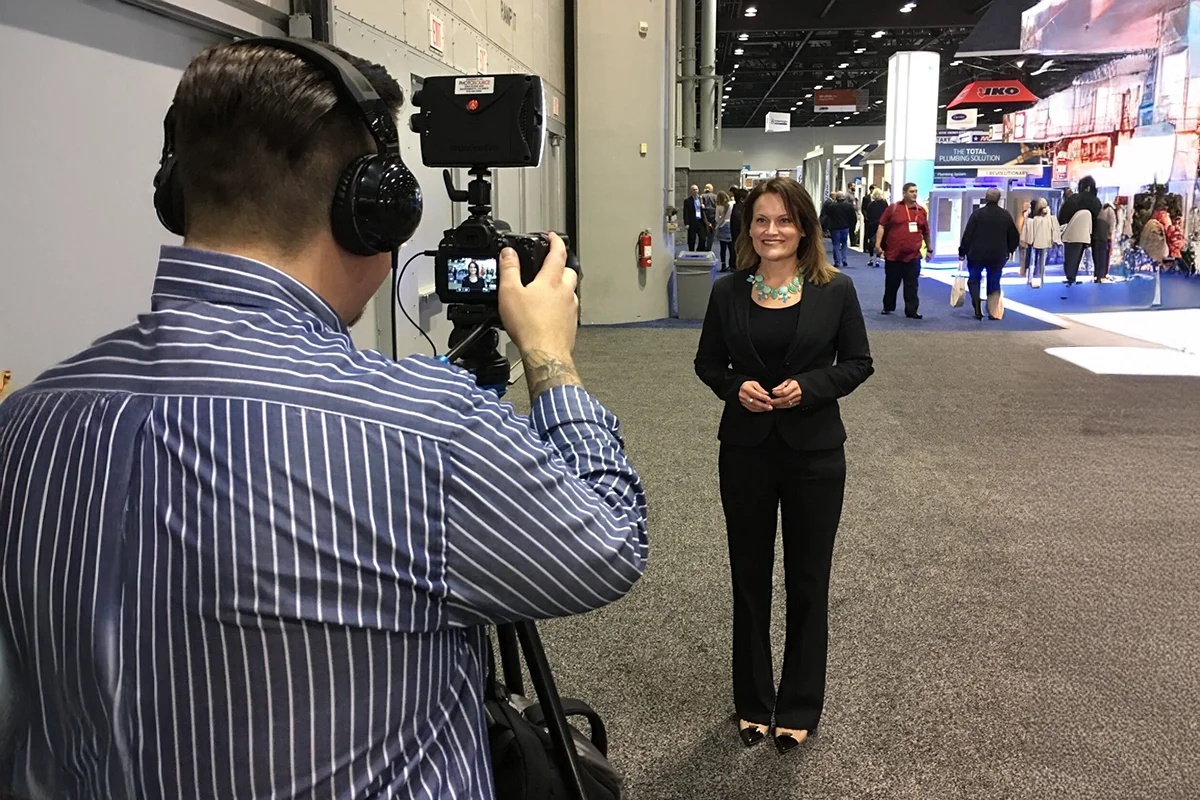
The other side of this work is less photogenic: arranging appointments, understanding editors’ interests and making sure a good opportunity does not vanish in a crowded exhibition hall. In January 2016, Merlot’s team went to the Kitchen & Bath Industry Show and International Builders’ Show with five national clients, including Dacor, True and Walker Zanger. Their remit brought editorial meetings, social media and on-site support together.
That combination helps explain the agency’s PR.0 approach. A campaign involves several places where a story can be discovered and passed along. The creative idea needs a route to the people who might care. On a trade-show floor, that route can be as ordinary as an appointment kept and a camera ready at the right moment.
Optimism, with the arithmetic included
Running the agency has required a different kind of creativity. In a September 2026 essay, Hammond described the recession-era decisions that helped Merlot adjust: reviewing services, tightening operations and selling a building the company had invested in. Leasing allowed the business to change its space with the market.
It is a revealing choice for a founder to discuss. Property can make success feel pleasantly solid. Letting it go requires considering what the business needs next, even when that answer complicates the earlier plan. Her account makes optimism sound like a working habit, something that helps a person evaluate a difficult situation and act.
She also writes about the responsibility to give employees clarity when business becomes uncertain. People want to understand the challenge and see what their leader intends to do. Confidence has to contain information. A bright expression, by itself, is a somewhat limited business plan.
“I’ve learned that purpose starts with people.”
Debi Hammond, on leading an agency
Her public advice about communicating difficult news has a similar practical streak. She has written that delivery and presentation matter when a leader has something uncomfortable to say. The audience inside a company deserves consideration, too. Employees experience a brand through decisions and conversations long before anyone approves the external campaign.
The long way to a useful introduction
In an April 2026 essay about partnerships, Hammond recalled meeting a marketing intern at a Southern California company while she was in her twenties. They remained loosely in touch as their careers developed. Eventually, the connection became both a client relationship and a place in Merlot’s Strategic Alliance Network.
Another alliance began with an urgent need for a videographer. A last-minute client event required someone who could arrive prepared and work comfortably with the people involved. The person Merlot hired did exactly that. A decade later, Hammond described him as a trusted partner whose understanding of the client environment mattered alongside his technical ability.
Both examples give her relationship advice a timescale. An introduction may take years to become commercially useful. A brief assignment can reveal how someone behaves under pressure. The habits she recommends are correspondingly ordinary: ask thoughtful questions, follow through, give credit and discuss expectations clearly. There is no particularly efficient shortcut to finding out whether someone does what they said they would.
AN ALLIANCE, IN THREE ACTS
- 01A last-minute needAn urgent client event calls for a videographer.
- 02Preparation earns trustHe arrives early and works well with the team.
- 03A decade of collaborationOne assignment grows into a strategic partnership.
From Hammond’s April 2026 account of building business alliances.
Her emphasis on explicit expectations keeps the idea from drifting into pleasant vagueness. A partnership still needs agreed responsibilities, timelines and direct conversations when something goes wrong. Good intentions leave plenty of room for misunderstanding. Someone has to describe the work.
A faster machine, the same human question
She was already encouraging businesses to experiment with social platforms in 2009, when her writing discussed blogs, online video and the possibilities of publishing directly. Merlot offered a four-hour social media training session for marketers and executives. Teaching clients how to use unfamiliar channels was part of the job. The tools that now feel ordinary once needed an introduction, a little confidence and somebody prepared to explain them.
By 2015, she was writing about personalization and the growing resistance to a hard sell. That sequence gives her current position some history. She has spent years encouraging businesses to learn new ways of reaching people while considering how the encounter feels from the receiving end. The audience has a say in whether a message earns another moment of attention.
Hammond’s concern with the human part of communication predates the current arguments about artificial intelligence. In 2017, she welcomed the ability to measure marketing more precisely while warning that excessive reliance on data and automation could weaken its connection with an audience. Better information was useful. Understanding the person receiving the message remained necessary.
Her July 2026 writing carries that question into agency economics. Merlot uses AI for research, ideas, drafts and operational tasks. Hammond’s argument is that easier production makes an agency’s judgment more consequential. Clients still need experienced people to assess timing, risk, context and the meaning of what they plan to say.
That position also runs through her public speaking. In April 2025, she addressed the Agricultural Council on AI and storytelling, exploring their use in communication between agricultural businesses and their communities. The setting broadens the picture of her work: the same questions about clarity and trust arise well beyond a luxury kitchen showroom.
A 2025 interview about CAHP Credit Union makes the point especially concrete. Discussing how to communicate with California peace officers and their families, Hammond paired respect for the organization’s purpose with practical information about opening hours and available services. It is an appealingly earthbound requirement. A moving brand story should still help somebody work out when the office is open.
Who gets remembered
Hammond’s professional life now includes a role supporting other communicators. In September 2025, Merlot announced her appointment as Director-at-Large for PRSA Montana. The work includes professional development, networking and support for people at different stages in their careers. It gives the importance she attaches to relationships a place on the calendar.
She continues to write, too, extending a practice that included contributing to the Sacramento Business Journal from 2006 to 2019. The subjects have changed with the business: personalization, difficult conversations, partnerships, AI. Across them, she keeps considering how people make decisions and what they owe the people affected.
The old Taco Bell manager belongs at the beginning of this story because he also belongs in its later chapters. At her hometown ceremony, Hammond remembered an early act of confidence in her. Years of leading an agency had given her plenty of other things to talk about. She made room for that one.