David Regn’s first business education came with a bakery counter. At fourteen, he got a job in a grocery store. He started as a bagger, moved into the bakery and spent five years helping its weekly revenue grow from $300 to $3,000. Long before he had an agency to run, he had a small, measurable commercial problem: give people a reason to buy something.
It is an appealingly literal beginning for a career in growth. Bread has limited patience for a strategy presentation. The customer either takes it home or leaves it behind. Regn would eventually work with advertising software, manufacturers and private equity investors, but the bakery gives his later career a useful starting scale. A business is small enough to understand before it becomes large enough to impress.
He left the grocery job when he started college. An internship helped convince him that he wanted to build a business of his own. In 1996, while still a student, he and his friend Jason Brennan founded the company that became Stream Companies. The ambition had acquired a name. An impressive office would have to wait.
Weekly bakery revenue in Regn’s recollection. A tenfold increase, years before Stream.
Two friends and a phone-book advertisement
The partnership preceded the agency. Regn and Brennan had sold T-shirts in high school with Kevin Camp. Their first commercial adventures were close to home, built around people they knew and things they could actually make or arrange. There is a certain advantage to beginning before anyone expects an origin story.
Regn graduated from Great Valley High School in 1993. He went to Cabrini, played lacrosse and graduated in 1997. Brennan became the enduring business partner. The two founded Stream in 1996, giving the enterprise a start date that belongs to the era of phone books, printed brochures and explaining why a business might need the internet.
One early advertisement went into the Yellow Pages. The business address was Regn’s mother’s home. An early marketing deck found its way to a Motorola vice president and brought further work. These were modest routes into consequential relationships: an advertisement in a directory, a piece of work passed along, someone deciding the two young founders deserved a conversation.
In the lean years, Regn has recalled cutting grass and plowing snow to keep going. The details are useful because they restore the untidiness that successful companies tend to edit out of their beginnings. A founder can believe in the future and still need a fairly immediate way to pay for the present.
The friendship has lasted through a substantial change in scale. Their names still belong to the same company three decades later. Plenty of businesses can buy a new piece of software. A working relationship that survives the repeated revision of a business is a more particular asset.
A founder learns to share the table
By April 2019, Stream had grown into a marketing business serving automotive manufacturers and dealerships. Sverica Capital Management invested, and Regn and Brennan continued to lead it. The attraction included both the agency’s services and its proprietary FullThrottle software. A company that had once made brochures was developing tools other businesses could use.
Outside investment also changed the practical setting for decisions. There were new partners, a larger team and software development to support. Sverica described plans to accelerate the products, expand the team and strengthen Stream’s position in digital media. The founders were bringing another set of capabilities into a business they had spent more than twenty years building.
The distinction matters in Regn’s story. Starting a company makes its founder responsible for almost everything. Continuing to run one requires deciding which responsibilities to share. New capital does not answer those questions by itself. It gives the questions a larger budget.
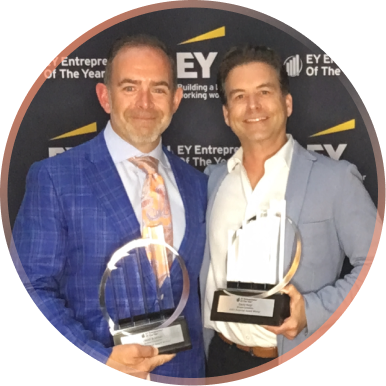
Recognition followed across several institutions. EY identifies him as a 2022 regional Entrepreneur Of The Year winner. In 2023, he and Stream executive Sarah Throne appeared in the Philadelphia Titan 100. Philadelphia Business Journal included him among its 2024 Most Admired CEOs. The dates tell a story of sustained participation in a regional business community, alongside the company’s national work.
In January 2025, Sverica announced a continuation fund transaction led by RCP Advisors and Churchill Asset Management. Stream’s co-founders and management teams rolled over a substantial equity stake. Regn remained invested in the next stage, with priorities including a broader client base, more automotive market share, acquisitions and further development of fullthrottle.ai.
The holding company brought Stream Agency and fullthrottle.ai together. Services and software had become two connected parts of the enterprise. The 2026 Inc. 5000 lists Stream at No. 4,974, with 13 percent growth over three years. That is a specific recent measure of a business whose founding year now sits thirty years in the past.
- 1996Regn and Brennan start Stream.
- 2019Sverica makes its first investment.
- 2025The founders roll equity into the next chapter.
- 2026Stream returns to the Inc. 5000.
The customer already in the database
The software work had been developing for years. In a May 2020 conversation with automotive marketing specialist Brian Pasch, Regn discussed using website visitors’ activity to improve advertising efficiency for dealers. The problem was recognizable: a business attracts people to its site, yet only some turn into opportunities it can pursue. Building technology around that gap brought the agency closer to the mechanisms behind the advertisement.
That shift also changed the kinds of conversations Regn could have. A campaign could lead to a question about data, which could lead to a question about the customer’s next interaction with the business. The agency’s remit widened as it followed the problem. A better advertisement was one possible answer among several.
For all the machinery surrounding advertising, Regn often brings the conversation back to a familiar person: the customer a business already has. At the 2024 NADA Show, he discussed loyalty with Kayla Kody of Richmond Ford. The subject was the relationship after a car has been sold, when a dealership has information that could make its next communication more useful.
Regn described a vehicle wallet: a monthly message that combines information about the customer’s vehicle and ownership cycle. Service needs, lease timing and other relevant details can appear together. The alternative he described was a pileup of messages from different systems. A customer does not organize a life around a dealership’s software subscriptions.
The idea makes his approach to technology concrete. The information has to become something the recipient can use. A database can be enormous and still produce an irritating email. Integration earns its keep when it reduces the work of being a customer.
His automotive perspective also includes being a buyer himself. He purchased his first electric vehicle in 2021. Discussing the market the following year, he stressed the importance of the customer experience as dealers faced newer competitors and more online shopping. The sale, in this view, belongs to a much longer sequence of encounters.
“Don’t fall in love with your own ideas.”
David Regn, on sustaining growth
Permission to change his mind
That line comes from Regn’s writing about the pivot. It is brisk advice for anyone who has spent years persuading other people to believe in an idea. Success gives a founder confidence. It can also supply an excellent collection of reasons to keep doing something after its usefulness has expired.
Regn argues for recognizing when an idea is failing or circumstances have changed, then using that information to make the next decision. He compares sustained business performance to sport: adjustments matter because flawless execution is unavailable. The argument gives experience a job beyond defending the past.
There is an everyday discipline inside that view. A company has to notice what a customer needs now, even when the answer complicates its existing offering. Regn’s work has crossed traditional advertising, digital media and software. Keeping those activities connected requires a willingness to reconsider the method while staying attentive to the commercial problem.
His 2026 conversation with Tony Lael also distinguished a business built around its owner’s preferred lifestyle from one designed to scale. Each demands choices. Leaving that choice vague can make the company serve two incompatible sets of expectations. After thirty years, Regn still finds useful questions in the basic architecture of a business.
Another kind of return
Today, his work includes mentoring founders, agency owners and CEOs of businesses backed by private equity. The topics fit the decisions he has lived through: teams, strategy, growth and what comes after a founder has built something substantial. Experience becomes useful to another person when it helps make a decision clearer.
There are other parts to his life. He and his wife, Kellie, have two children. His reading recommendations move between business strategy and literature: Good to Great, The Republic, The Grapes of Wrath and The Great Gatsby. A shelf that accommodates both management advice and Gatsby leaves room for ambition and its complications.
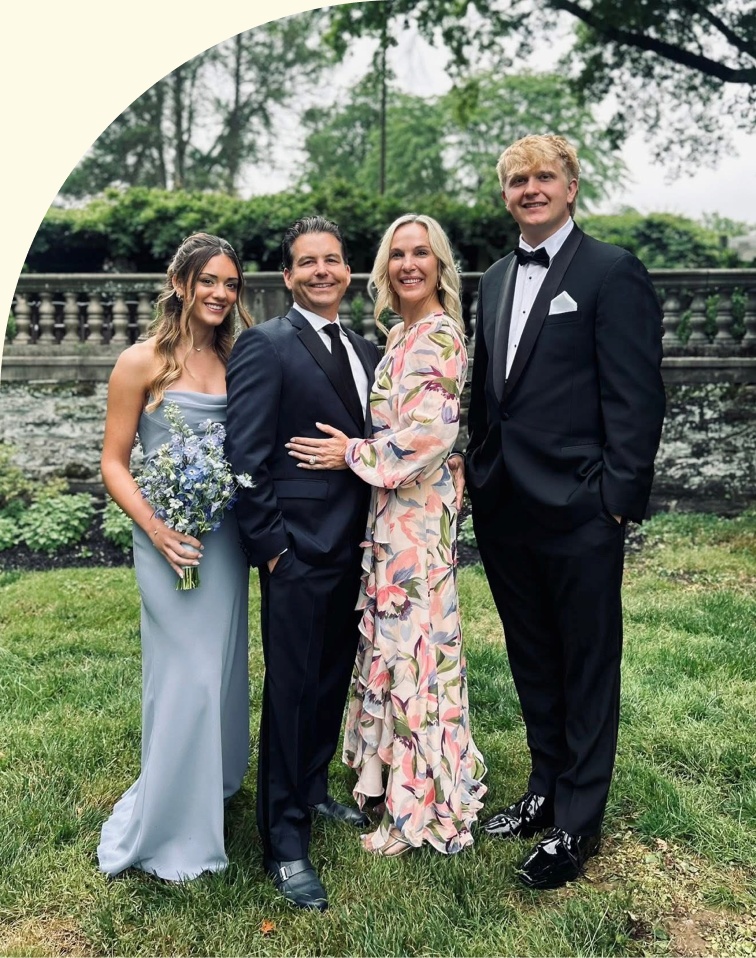
In May 2026, he described entrepreneurial freedom as the ability to keep doing his work while evolving through it. “The true enjoyment is climbing the mountain,” he said. For a founder whose company has outgrown its first address many times over, the appeal remains tied to having another problem worth solving.
The bakery is a useful place to leave him. There was a customer, a product and a result he could observe. The business around him has become far more complicated. The habit of looking closely at those three things still gives the next day’s work somewhere to begin.