Twelve days is barely enough time to settle into a new routine. For David Gentile, it was the interval between entering federal prison on November 14, 2025, and receiving a presidential commutation on November 26. His sentence had been seven years. The investment business that put him there had spent years selling something much more reassuring than an early exit: a dependable monthly payment.
Gentile founded GPB Capital in 2013. He came from accounting, a profession whose attraction is that the numbers are supposed to behave themselves. His firm bought stakes in businesses with tangible operations, including car dealerships and waste management. Customers bought cars. Trucks collected rubbish. Investors were offered distributions from the cash these businesses generated. The proposition had the comforting texture of work happening somewhere.
Then the question changed. It became less about whether a payment arrived and more about where that payment had come from. That distinction took Gentile from the role of founder and chief executive to a Brooklyn courtroom, and eventually into the argument over presidential clemency. It also explains why his release could happen in a fortnight while the financial aftermath continued into 2026.
The accountant’s circle
Gentile’s earlier professional world was built around businesses and their owners. Before GPB, he worked at Gentile, Pismeny & Brengel, a New York accounting practice co-founded by his father. His clients included small businesses seeking advice on expansion. Two people he met through that practice, Jeffry Schneider and Jeffrey Lash, would later become central to GPB’s story.
His own professional biography described 25 years in corporate advisory and accounting, covering cash flow, acquisitions, restructuring and business growth. He earned a Bachelor of Business Studies in finance and accounting from Queens College. These were useful credentials for someone proposing to buy and manage operating companies. The sales proposition could rest on a familiar argument: an accountant who had advised entrepreneurs would understand their businesses from the inside.
In a 2018 interview, Gentile named accountant Nat Erlich as his first mentor and recalled a compact piece of advice: “make your clients your friends.” Friendship, in that telling, belonged inside the machinery of business. There is an obvious appeal to the idea. Clients want someone who remembers them; owners want advice from people who understand what is at stake. A good relationship can make difficult conversations possible.
“Make your clients your friends.”
David Gentile, recalling his mentor’s advice, 2018
The difficulty arrives when a relationship becomes a substitute for checking. Gentile’s later history gives that old advice an uncomfortable second reading. A friend can reassure you. An account should still reconcile. The two services are quite different, however pleasantly they are packaged together.
Eight percent, arriving monthly
GPB managed investment partnerships that acquired private businesses. Schneider’s Ascendant Capital served as the exclusive placement agent, helping sell the investments. Lash oversaw dealership investments during the firm’s early years. Gentile and Schneider were involved in pitching brokers and investment advisers as well as in fund operations and investment decisions. The founder was part of both the financial apparatus and its public presentation.
The distribution target was memorable: 8 percent annually, paid in monthly installments. There was also the prospect of money coming back when investments were ultimately realized. This gave private equity a regular rhythm. A business might be complicated; a monthly payment was easy to recognize. For an individual investor, that rhythm could feel like evidence that the whole arrangement was working.
The three funds in the criminal case were GPB Holdings I, GPB Holdings II and GPB Automotive Portfolio. Together, they raised approximately $1.6 billion. The broader civil case covered more funds and approximately 17,000 retail investors. Those figures describe different scopes; neither is a count of Gentile’s personal wealth. Money raised by a fund is money entrusted to it, carrying obligations to the people who supplied it.
The decisive promise concerned the source of distributions. Investors were told the payments would be covered by the operations of portfolio companies. A bank deposit, however, does not announce its ancestry. Without accurate financial reporting, a recipient cannot tell whether a payment represents business earnings or the return of capital dressed in more flattering clothes.
The destination looked the same. The route mattered.
A schematic of the criminal case’s central mechanism. The second route covered a significant share of distributions, not every payment.
When the paperwork became part of the performance
The fraud involved more than optimistic expectations. When operating results failed to support the distributions, investor capital filled the gap. Backdated documents helped make the accounts look better. The regular payment could therefore continue to suggest success while the underlying explanation had become false.
In 2015 and 2016, fraudulent performance guarantees were used to inflate reported income at dealership-related funds. They purported to show that Lash had agreed to cover operating shortfalls. Gentile also routed money from another GPB fund through Lash’s accounts, creating the appearance that a guarantee had been paid. The documents entered audited statements. Accounting, supposedly the sober guest at the party, had been recruited into the entertainment.
The proven conduct involved about $100 million in investor capital used to sustain distributions. The scale matters, but so does the mundane mechanism. This was a story about payments, statements and dates. The appearance of consistency depended on moving money and supplying an explanation for it. Each monthly distribution could then reinforce the story investors had already been told.
A business can miss its targets. Its owners can tolerate disappointing results if they know what has happened. Concealing the source of payments deprives them of that choice. In Gentile’s case, the distinction between weak performance and deception became the center of the prosecution.
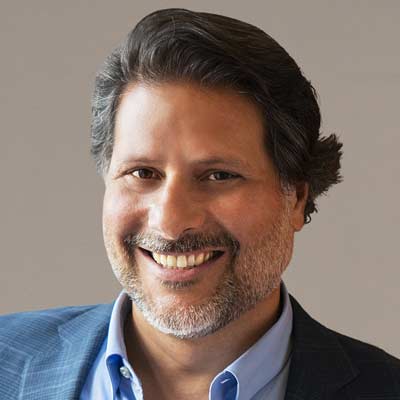
Image reproduced by The Scientology Money Project.
The founder loses the chair
Federal charges were publicly announced on February 4, 2021. The SEC filed a parallel civil action. Gentile stepped down as CEO and sole manager the following day. A monitor was appointed to oversee the business. The person who had built the firm no longer occupied its chief executive’s chair, although ownership and managerial authority would continue to generate disputes.
Those distinctions produced a second, less cinematic story. Gentile pursued access to company books and records and sought payment of certain legal expenses in Delaware litigation. Tax returns, membership rights and legal bills occupied space alongside the criminal case. Corporate ownership can survive the loss of a job title, and the resulting disputes can last long after an executive’s departure.
On August 1, 2024, after an eight-week trial, a federal jury convicted Gentile of securities fraud, conspiracies to commit securities and wire fraud, and two counts of wire fraud. Schneider was also convicted. On May 9, 2025, Judge Rachel P. Kovner sentenced Gentile to seven years in prison and Schneider to six. Gentile’s journey from adviser to fund founder had now acquired a criminal judgment.
The calendar takes a turn
Gentile surrendered on November 14, 2025. Twelve days later, President Donald Trump commuted his entire sentence to time served. The grant also removed further fines, restitution, probation and other conditions. The presidential action changed the punishment. It was a commutation, and the conviction remained.
The White House defended the decision by pointing to disclosures that investor capital could be used for distributions and challenged the prosecution’s account. That defense must be read alongside the jury’s verdict. Clemency did not constitute a new trial or a judicial finding that the financial representations had been accurate. The government’s case and the administration’s explanation remained sharply opposed.
The decision brought political scrutiny of its own. In July 2026, Senators Richard Blumenthal and Ruben Gallego requested an inspector general investigation into reports of possible improper payments connected with the commutation and interference with a federal inquiry. These were allegations and requests for investigation, rather than findings of a further crime. Todd Blanche disputed assumptions behind the questioning and declined to discuss the existence of investigations.
The distinction is essential in a story already crowded with legal vocabulary. A conviction establishes an outcome. A commutation alters a sentence. An allegation asks to be tested. Putting all three into the same verbal drawer makes the history easier to sensationalize and harder to understand.
The investors’ clock
For investors, the relevant calendar remained the one governing recovery. GPB’s receivership continued after Gentile’s release. Its first-quarter 2026 report listed approximately $705 million in cash at the receivership entities as of March 31. All of those assets were subject to investor and creditor claims. A large cash balance was therefore a stage in the process, rather than a promise of a particular repayment to any individual.
Claims needed review. Settlements had to be accounted for. Checks needed reissuing. In July, the receiver extended the deadline to resolve or object to claims to September 11, 2026. Meanwhile, a March 31 New York court decision had rejected an attempt by Gentile and other defendants to revisit the lifting of a stay in the state’s civil action. The machinery continued to turn.
Gentile’s public story contains two kinds of confidence: the confidence a founder asks investors to place in his judgment, and the confidence the legal system asks people to place in its outcomes. His commutation compressed one timetable dramatically. The investors’ timetable stayed tethered to accounts, claims and available assets.
At the beginning, the reassuring object was a monthly payment. At the end of this chapter, the meaningful object is a recovery check. Between them sits the question that follows Gentile’s career more closely than any job title: whose money was it, and what happened to it?