At the 2006 air-show circuit, David Ellison had an unusually persuasive publicity tool: an aerobatic airplane. He was promoting Flyboys, a First World War aviation film in which he played an American volunteer pilot. Rather than merely explain the attraction of flying, he could take a reporter upstairs and demonstrate it. A press junket generally promises access. This one supplied altitude.
Ellison was 23, a film-school dropout, an aspiring actor and the son of Oracle co-founder Larry Ellison. He could fly a real airplane with considerably more confidence than his character could manage a fictional one. Hollywood offered a less predictable set of controls. Flyboys disappointed at the box office, and the career that followed took him away from the camera, toward the decisions that determine whether a camera rolls at all.
Twenty years later, his name sits over a company containing Paramount and Warner Bros. The distance between those two positions is the story: a young enthusiast who wanted a part in the movie gradually acquired responsibility for the machinery around it. Family capital made that journey possible. Repeated partnerships, an appetite for familiar screen worlds and a succession of larger deals determined its route.
The birthday promise
Born in 1983, Ellison grew up in Northern California. His mother, Barbara Boothe, and his father occupied very different worlds from the ordinary film-school household. His younger sister, Megan, also became a producer, founding Annapurna. The family eventually supplied Hollywood with two recognizably different tastes: David gravitated toward action and large-scale entertainment; Megan became associated with filmmaker-led dramas.
Before either sibling had a production company, there were movies to watch. Ellison has recalled seeing Terminator 2: Judgment Day with his mother at eight. James Cameron's film helped turn an audience member into someone who wanted to make pictures. Years later, he would help produce another entry in that same franchise. Childhood enthusiasm can be a surprisingly durable development department.
Flying arrived through a promise. His parents had told him he could learn when he turned 13, and he remembered. His father joined him for that first lesson. In his early interviews, Ellison described the appeal with the cheerful specificity of someone who had spent considerable time thinking about airplanes. At the 2006 Oshkosh air show, he was flying a Cap 232 decorated to promote Flyboys.
“My two passions are flying and acting.”
David Ellison, 2006
For a moment, that combination seemed to have supplied his career plan. Director Tony Bill knew him through the aviation world and wanted a genuine pilot in the film. Ellison had attended USC's film school; he left to pursue the project. An aircraft, a movie and a willing investor had met in the same person. The arrangement was unusually convenient. Audience approval was another matter.
A western changes the flight plan
The consequential turn came in 2010, when Skydance established its financing relationship with Paramount. Ellison assembled $350 million in equity and credit to co-finance films. That moved the business beyond the fortunes of an actor's debut. Instead of staking everything on a single production, he could participate in a slate, sharing expensive bets with an established studio.
One early selection was the Coen brothers' True Grit. A western might seem an odd launchpad for an executive now associated with jets, spies and futuristic machines. It was useful precisely because it demonstrated something broader than a taste for flying. Skydance could back experienced filmmakers, work within a studio arrangement and reach a substantial audience. The film earned ten Academy Award nominations.
There was a practical education inside that arrangement. Paramount already had distribution, relationships and recognizable properties. Skydance supplied capital and increasingly participated in production. Ellison's name appeared alongside Mission: Impossible, Star Trek and World War Z. The young company became a recurring partner in pictures whose ambitions required both creative coordination and financial nerve.
- 2006Actor & investor
Flyboys - 2010Studio partner
Paramount financing - 2022Producer
Top Gun: Maverick - 2025Chairman & CEO
Paramount - 2026Combined company
Skydance
The inherited advantage deserves a plain sentence: his father helped finance the enterprise. Access to that money gave Ellison room to continue after an unsuccessful start, and later to contemplate acquisitions unavailable to almost every other independent producer. It also made each professional achievement subject to a second argument about who had paid for the opportunity. The films still had to be made. The opportunity to keep making them was exceptionally well funded.
The company around the movie
As Skydance grew, Ellison brought in executives with experience he did not yet possess. Dana Goldberg joined in 2010 after working at Village Roadshow. Their partnership became central to the company's filmmaking. In a 2015 conversation, they described a working culture in which disagreements could be direct and returning collaborators mattered. A successful production could earn a sequel; a successful relationship could earn several more productions.
Ellison also pointed to Pixar as an influence. Steve Jobs, a friend of his father's, had been a mentor, and Ellison had watched the animation company develop while growing up. What interested him was the candor among filmmakers: people giving one another useful criticism before the public delivered its own. It is a sensible aspiration in a business where polite agreement can become remarkably expensive.
The company widened its range. Television launched in 2013, bringing Skydance into the recurring rhythm of series rather than opening weekends. Grace and Frankie, Altered Carbon and Jack Ryan placed its work on different streaming platforms. Interactive followed in 2016; an animation division was announced in 2017. A sports business launched in 2021. Each added another way to develop and distribute entertainment.
That expansion helps explain his later interest in owning a larger company. A producer working for streaming services gains routes to viewers but relies on someone else's storefront. Building series, films, animation and games created a wider production business. Acquiring Paramount added the networks, distribution infrastructure and direct relationships with audiences that an independent supplier did not control.
A familiar cockpit, a different credit
For all those changes, an airplane still supplies the most satisfying loop in Ellison's professional life. Top Gun: Maverick reached cinemas in 2022, with Ellison among its producers. Tom Cruise returned to the role that had made aviation a pop-cultural obsession decades earlier. Ellison's attachment to flying had survived his move into management. This time, his contribution did not require playing a pilot.
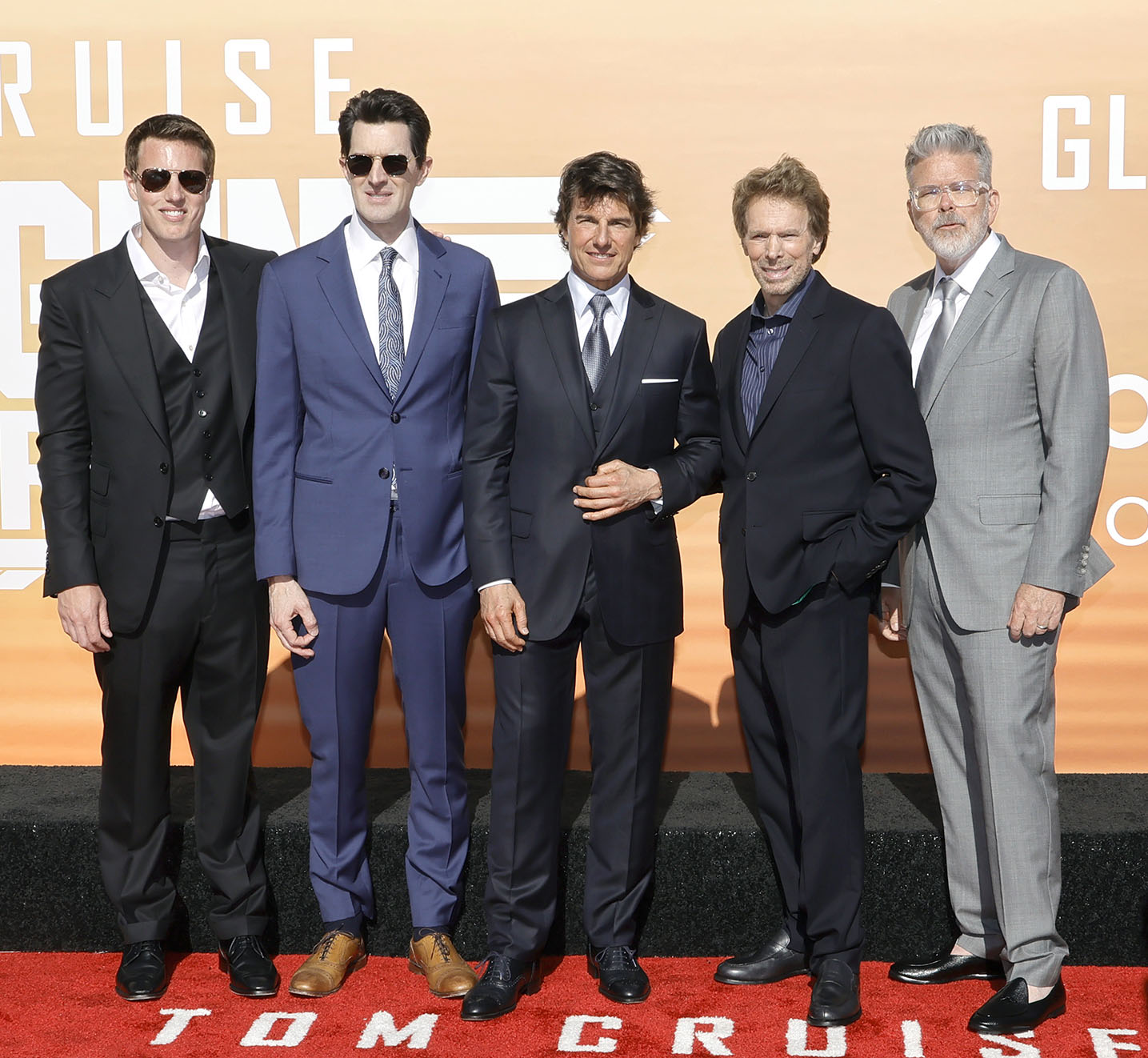
The film took nearly $1.5 billion worldwide. At the 2023 Academy Awards, Ellison shared its best-picture nomination with Cruise, Christopher McQuarrie and Jerry Bruckheimer. The distinction matters: a producer's Oscar nomination is an individual credit attached to a collaborative work. After years of being introduced through his surname and financing, he had a place on the Academy's list.
A hit of that size can invite an overly tidy account of everything preceding it. Skydance also made films that failed to meet expectations, including entries in the Terminator franchise. Repeating a beloved title creates expectations as well as awareness. Ellison's record contains both the attraction of established worlds and the difficulty of giving audiences a reason to return to them.
Buying the partner
On August 7, 2025, Skydance and Paramount completed their merger. Ellison became chairman and CEO of the combined Paramount business. The deal involved the Ellison family and RedBird Capital Partners, including the purchase of controlling shareholder National Amusements. A relationship built on financing individual films had become ownership of the institution that released them.
The new job included CBS, cable networks and streaming operations as well as the film studio. Different businesses carried different demands. A movie producer can concentrate on a handful of creative partnerships. A media chief must also answer for technology spending, advertising, distribution and the handling of news. The size of the organization changed the meaning of his decisions.
Ellison's public plan emphasized investment in content and technology. At Bloomberg's Screentime conference in October 2025, he described the opportunity in terms of established companies adapting to disruption. His ambition was to improve Paramount's creative output and streaming capabilities together. It was an argument that familiar entertainment assets could acquire a different future through better execution.
Then came the next acquisition. Paramount pursued Warner Bros. Discovery, competing with Netflix before the latter withdrew. By October 6, 2026, the transaction had closed, and the combined company took the Skydance name. The modest production credit had become the corporate identity above two longstanding movie studios. Ellison leads it as chairman and CEO, with former Mattel chief Ynon Kreiz as co-CEO.
The promise after the purchase
The October leadership announcement set out an ambition to release at least 30 films annually while preserving the Paramount and Warner Bros. studio names. The combined portfolio now includes HBO and CNN alongside CBS and Paramount+. For Ellison, the challenge extends from making entertainment people choose to managing institutions whose work people depend on.
Scale also brings difficult arithmetic. Management has targeted at least $6 billion in synergies and acknowledged that integration will affect the workforce. Those are plans with consequences for the people making the programs. The quality of the resulting company will be judged through its output, its decisions and the space it gives its creative and journalistic teams.
The opening image of Ellison in a publicity airplane remains appealing because the feedback was so immediate. A passenger could tell whether the flight had been memorable. Running a media company offers fewer immediate answers. The capital is committed, the studios have been combined, and the opening announcements are over. Ellison now has to keep giving audiences a reason to show up.