Will Ferrell plays the chief executive of Mattel as a suit with a problem: Barbie has escaped the box. In the real world, Ynon Kreiz had helped approve the escape. His company’s name was on the movie, his own name was in the credits, and the fictional boss was providing an excellent argument for keeping executives away from dialogue.
Kreiz’s response to being lampooned was brief: “Embrace self-deprecation.” It was a useful instruction for a company hoping to earn a place in the cinema. The audience had bought tickets, after all. They were entitled to something more entertaining than a quarterly presentation wearing pink.
That willingness to become part of the joke is one of the more revealing details of his Mattel years. Kreiz arrived in 2018 with a background in television, online video and investing. He brought an operator’s appetite for restructuring and a media executive’s interest in what people would actually watch. Those two instincts would have to share an office.
The candidate who was holding the list
Long before Barbie, there was a recruitment problem. Working with Haim Saban, Kreiz was helping search for someone to launch the European children’s television business. The candidates weren’t quite right. Saban suggested the person assembling the list should take the job himself.
Kreiz accepted. Instead of returning to Los Angeles from a trip to New York, he continued to London, staying in a hotel while the business took shape. It is a better career anecdote than most carefully polished accounts of professional development: the search committee accidentally found its candidate sitting beside it.
His preparation included an economics and management degree from Tel Aviv University and an MBA from UCLA Anderson, completed in 1993. His longest earlier stretch of work, he has recalled, was a year teaching windsurfing. Saban took a chance on someone whose practical management experience had involved a rather different kind of board.
Fox Kids Europe, which Kreiz co-founded, became his first extended lesson in taking entertainment across borders. He moved to London in 1996 and led the company as chairman and chief executive. It went public in Amsterdam in 1999; Disney subsequently acquired the majority stake. A business that began with a borrowed opportunity had acquired a stock-market listing.
“Embrace self-deprecation.”
Ynon Kreiz, on Mattel’s portrayal in Barbie
Different screens, familiar questions
The career that followed moved through several versions of the entertainment business. From 2005 to 2007, Kreiz was a general partner at Benchmark Capital Europe, later renamed Balderton. From 2008 to 2011, he ran Endemol, the television production group associated with Big Brother and Deal or No Deal.
Endemol gave him experience with programming that could travel and formats that could be remade. The company also carried substantial debt from its 2007 buyout. Popular programmes and an easy balance sheet are separate achievements. Entertainment executives have plenty of reasons to remember the distinction.
Then came Maker Studios. Kreiz invested, became chairman in 2012 and took the chief executive role in 2013. Here the talent was distributed across YouTube channels rather than assembled behind a television network’s schedule. When Disney announced its purchase in March 2014, Maker counted more than 55,000 channels, 380 million subscribers and 5.5 billion monthly views.
The terms were $500 million, with up to $450 million more tied to performance. That second number matters: the deal was frequently described by its possible ceiling, but a conditional payment is a promise with homework attached. Disney was buying a route into short video, along with technology and knowledge about how audiences discovered it.
By then, Kreiz had worked with children’s channels, television formats and online creators. The distribution changed. The recurring commercial question was how to help creative work reach people at enough scale to support a business. Mattel would put that question inside a company with factories.
- 1996Fox Kids EuropeChildren’s television
- 2008EndemolGlobal programme formats
- 2013Maker Studios CEOYouTube and short video
- 2018MattelToys meet entertainment
- 2026SkydanceStudios, streaming and integration
First, the unglamorous arithmetic
Kreiz became Mattel’s chief executive on April 26, 2018, and chairman the following month. He was its fourth CEO in four years. An audience for Barbie already existed; the company still had to repair its finances. Recognition in a toy aisle does not, by itself, settle an invoice.
The early work was severe. In July 2018, Mattel announced plans to eliminate more than 2,200 positions, representing 22 percent of its global workforce outside manufacturing, and sell manufacturing sites in Mexico. The company was dealing with the liquidation of Toys “R” Us, a major customer, while pursuing an existing $650 million savings programme.
By the end of 2019, that Structural Simplification programme had delivered $875 million in annual run-rate savings, exceeding its original target. These were recurring savings measured at a point in time, rather than a pile of cash or a figure for profit. The distinction is less cinematic than a premiere and more useful for understanding a turnaround.
The reductions also meant jobs and factories were involved. Any account that begins and ends with the pink carpet misses the people affected by the operating decisions underneath it. Kreiz’s entertainment ambitions developed alongside a contraction in parts of the business, with all the practical consequences that implies.
Annual run-rate savings from Mattel’s Structural Simplification programme.
Same programme; annual savings, not revenue.A filmmaker’s freedom, a company’s nerve
The other half of the plan required people who could make a film worth leaving the house for. Mattel’s eventual Barbie credits tell a story of shared authorship: Greta Gerwig directed and wrote the screenplay with Noah Baumbach; Margot Robbie starred and produced; Robbie Brenner was among the producers. Kreiz served as an executive producer.
The choice of talent mattered more than the mere existence of a famous doll. A familiar name can attract attention before release. It cannot write a scene, find its rhythm or decide how much embarrassment a fictional chief executive should endure. Those are creative decisions, and a brand owner who commissions filmmakers still has to let them make some.
Kreiz and Robbie had met at the Polo Lounge at the Beverly Hills Hotel. He also used the venue to discuss the film division with Brenner. Corporate transformation, in this instance, involved the same restaurant more than once. Hollywood likes a fresh idea, provided someone knows where to book lunch.
The permission extended to criticism of the brand itself. Gerwig’s film could acknowledge the arguments around Barbie and make Mattel look ridiculous. For Kreiz, the commercial purpose was tied to making entertainment people chose to see. A company looking for affection had agreed to risk a little discomfort.
Barbie passed $1.4 billion at the worldwide box office in 2023. It earned eight Academy Award nominations, including Best Picture, and won for original song. These were achievements of the filmmakers, cast and wider production as well as a consequential result for the company that owned the doll.
In 2024, Kreiz received Cannes Lions’ Entertainment Person of the Year award and appeared on the TIME100 list. J.J. Abrams wrote the accompanying tribute, describing both Kreiz’s commitment to creative partners and his enthusiasm for kitesurfing. The former windsurfing instructor had kept finding reasons to get out on the water.
The audience already in the toy box
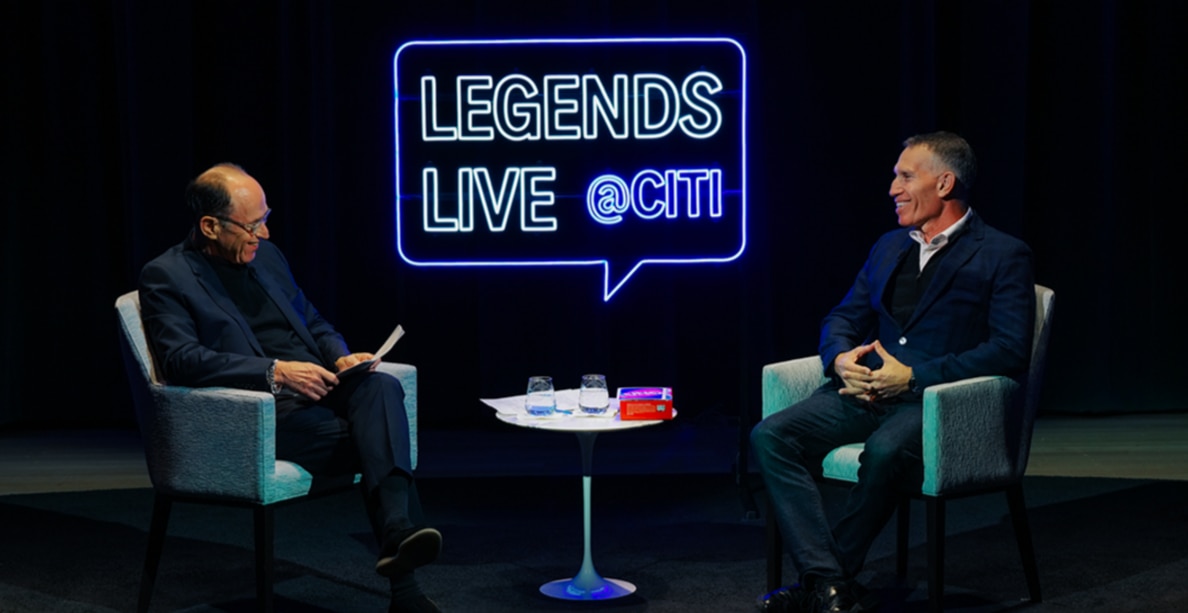
By January 2026, Kreiz was discussing the model at Citi, with projects involving Hot Wheels and Magic 8 Ball among the examples. The broader Mattel offering stretched into television, games, consumer products, publishing and experiences. A childhood object could supply a starting point for several kinds of entertainment.
There is an obvious temptation to treat a successful film as an instruction manual. Yet Barbie brought together a particular director, a particular star and a character carrying decades of public argument. Another property arrives with different material. The repeatable part of the approach is the work of choosing collaborators and understanding an audience; the outcome still has to be earned.
Kreiz’s ambition also carried a practical attachment to toys. In a 2022 interview, he described their emotional connection with children and the opportunities beyond the toy industry. That makes the film strategy easier to understand. The objects already had relationships with people. The business was exploring where those relationships might lead.
The next office has a larger screen
On October 2, 2026, Kreiz stepped down as Mattel’s chairman and chief executive. Roger Lynch was named his successor. Kreiz joined Paramount on October 5; the next day, following the combination with Warner Bros. Discovery, he and David Ellison addressed employees as Skydance’s co-CEO and chairman and CEO.
The division of work is explicit. Ellison leads long-term strategy, creative direction and technology. Kreiz oversees daily management and integration. After years helping a toy company work with Hollywood, he now has responsibility inside the combined entertainment business itself.
Their October 6 message sets out ambitions across film, television, streaming, games and technology, including a commitment to at least 30 theatrical movies a year. Those are stated plans. Integrating businesses and sustaining creative work will supply the evidence of how well they travel beyond the announcement.
Kreiz’s career offers a small, recurring scene: someone else has an idea, and he has to decide how much room to give it. Saban once gave him room to launch a business. Gerwig received room to make a film that teased its sponsor. His new job brings the question back at a much larger scale. Somewhere between the operating plan and the opening credits, the people making the work still need space.