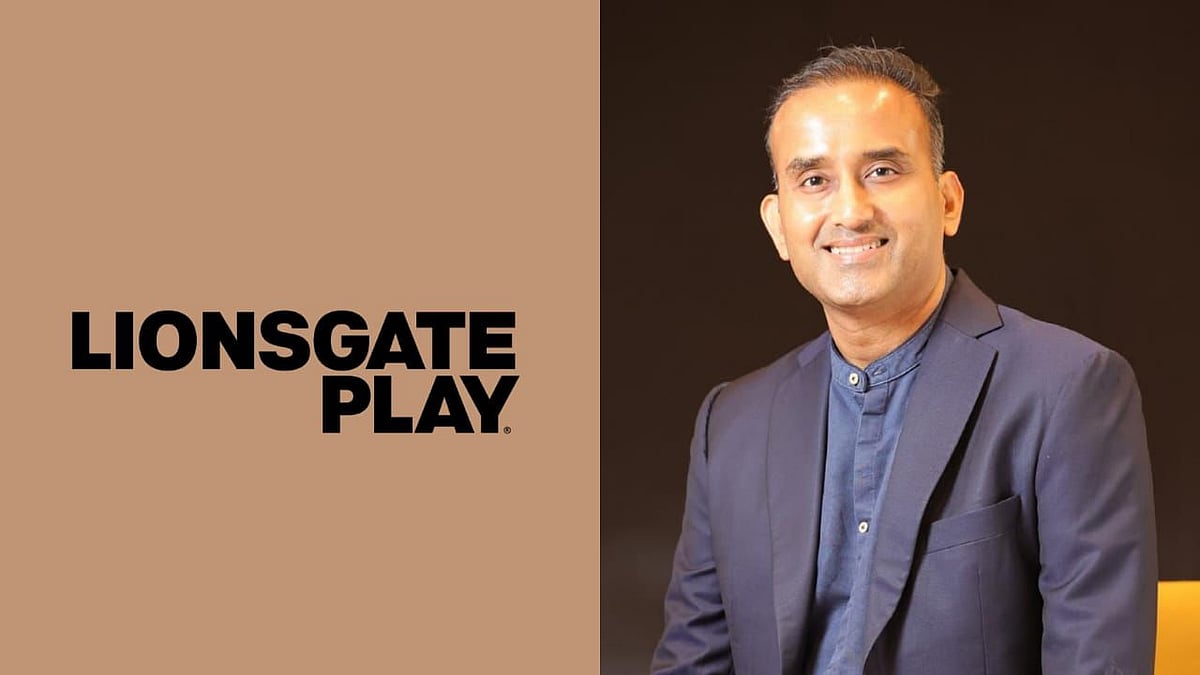
Rohit Jain was supposed to help his employer find an exit. He ended up finding himself an entrance. In January 2026, Lionsgate sold its streaming operation in India and Southeast Asia to the executive who had spent eight years building it. Jain left the studio to take ownership of Lionsgate Play. After years of answering for the business, he would answer for it with his own name on the other side of the transaction.
There was a pleasing complication. The service would keep its name. Lionsgate would continue licensing its brand and supplying films and television through a multiyear agreement, while retaining its other film and TV operations in the region. Viewers could keep opening the familiar app. Behind it, the arrangement had changed. A corporate career had become an ownership story without requiring everyone to learn a new password.
By October, Jain had given that story another title: Tiger TV, a service for Hindi and Punjabi entertainment, launched on October 15. The executive associated with bringing Hollywood into Indian homes was now making a more explicit pitch for Indian stories overseas. The direction of travel had acquired a return ticket.
The accountant before the opening credits
Jain’s professional background begins well away from a premiere. A commerce graduate and an All India rank holder in chartered accountancy, he worked in financial consulting at Deloitte and PricewaterhouseCoopers, then in business leadership at Hewitt Associates, later part of Aon. His assignments included work in Gurgaon and Singapore. Finance, business performance and the practical differences between markets supplied an education that continued after the examinations.
His own account of entrepreneurship begins earlier and less ceremoniously. At 21, he started an accounting firm. It failed. He describes his lower-middle-class upbringing as part of the reason he is willing to take risks. When he started that first venture, people thought him too young; by the time of his streaming buyout, he says, people were telling him he was too old. The business world is generous with advice about the correct age to begin. It seldom agrees on a number.
“My first start-up was when I was 21.”
Rohit Jain, October 2026
That experience sits behind a career usually described through large organizations. The consulting years put him inside questions of capital and performance. His subsequent work would add programming, partnerships and distribution. Entertainment, seen from this angle, involves a great many decisions that happen before anyone dims the lights.
Eighteen million connections to the living room
At Videocon d2h, Jain spent seven years as deputy CEO. His remit stretched across strategy, alliances, content, finance, legal and supply chain. His executive biography credits the business with adding more than 18 million subscribers during that period. The scale came with the less visible work of putting a television service into homes and giving those households reasons to keep paying for it.
He helped orchestrate Videocon d2h’s Nasdaq listing in 2015 and the announcement of its merger with Dish TV India in 2016. By the time Lionsgate appointed him to head its new Mumbai office in October 2017, he had worked through both expansion and corporate transactions. The studio was hiring someone acquainted with what happens between an attractive opportunity and an operating business.
Nasdaq listing
Mumbai appointment
Standalone India app
Then Tiger TV
The Mumbai brief was broad: license the studio’s films and series, work with theatrical partners, develop local production and explore opportunities in the Indian market. Jain recalls beginning the operation from Starbucks in 2017, before there was an office in 2018. It is an appropriately modest location for the start of a business devoted to elaborate imaginary worlds.
The route mattered as much as the catalogue
Lionsgate Play initially reached Indian viewers through distribution partners. Telecom relationships, including Vodafone Idea and Airtel, gave the service routes into existing customer bases. The standalone app arrived in December 2020. Jain’s work depended on understanding the companies already connected to the audience, as well as the films that audience might want.
Language was part of that work. In 2020, he described making Hollywood films available in six Indian languages: Hindi, Marathi, Telugu, Tamil, Kannada and Bhojpuri. The offering combined recognizable films with a practical accommodation to how people preferred to watch them. A catalogue may cross a border quite easily on paper. Its appeal still has to make the journey.
His responsibilities widened in December 2020 to cover South Asia and networks in emerging Asian markets. Partnerships stretched across telecommunications, broadband, device makers and streaming platforms. By 2023, he was president of Lionsgate Play Asia. The titles changed as the work expanded, but the recurring problem remained close to his television years: how to connect programming with paying viewers.
A Hollywood service learns local dialogue
The move into Indian originals had begun years before Tiger TV. In November 2021, Lionsgate Play released Hiccups & Hookups, directed by Kunal Kohli and starring Lara Dutta and Prateik Babbar. Its family arrangement, centered on a woman, her brother and her teenage daughter, gave the service an Indian story with which to introduce its original programming.
Jugaadistan followed in March 2022. Directed by Akarsh Khurana and Adhaar Khurana, it went into campus politics and the compromises of college life. Jain spoke about showing a grittier university world than the nostalgic, romantic version familiar from popular culture. Both productions made local storytelling a visible part of a service carrying Hollywood films.
The announced slate also reached toward gaming. In 2022, Lionsgate Play unveiled Gamer Log, a coming-of-age sitcom about professional esports players, with Abhinay Deo and Neeta Shah producing. The subjects varied from family conversations to campus maneuvering to competitive games. These were attempts to identify particular lives and audiences within the much larger phrase “Indian content.”
Jain also took on an industry role, becoming chairman of IAMAI’s Digital Entertainment Committee for 2022-2024. The appointment placed him among the people working across streaming companies, industry associations and regulators. Running a platform had brought him into the wider business of helping a young sector decide how to operate.
The business he knew became the business he owned
The January buyout changed Jain’s relationship with the operation. Lionsgate Play could continue its association with the studio while Jain concentrated on running the streamer independently. The continuity mattered: the transaction preserved access to a name and programming relationship that audiences already knew. Ownership gave the next phase a different center of decision-making.
He has also worked as an angel investor and co-founded Exponential Capital. The management buyout, however, put him in a particularly direct position. Here was a business whose regional development he had overseen, now becoming his responsibility as an owner. Familiarity with its machinery offered experience; it did not remove the work ahead.
“We want to transform from streaming to multi-platform distribution.”
Rohit Jain, May 2026
His stated ambition after the transaction reaches beyond an app. He wants content to earn across cinemas, television and digital distribution, with plans to expand the release slate. The thinking reflects his career’s recurring concern with the economics of delivery. A story can have several commercial lives. Organizing those lives is part of the business he wants to build.
Tiger TV changes the direction of travel
Tiger TV brings that ambition into a more specific frame. Its initial focus is Hindi and Punjabi entertainment, especially comedy, drama and romance, alongside an announced slate that also includes the Hindi crime thriller Daanav, starring Angad Bedi and Pooja Gor. The first phase covers 12 markets, including India and countries with Hindi- and Punjabi-speaking diaspora audiences.
The distribution arrangement varies by place. In Asia, Tiger TV lives within the Lionsgate Play app and requires a separate subscription. In the United States, United Kingdom, Canada, Australia and New Zealand, it uses a standalone app. The language connects the audience; the application strategy accommodates the different markets.
in year one
More than ₹500 crore in content IP planned over three years. These are announced ambitions, not completed results.
There is a consistent idea beneath the change in programming: identify people who could be better served, then make a recognizable destination for them. Tiger TV’s claim on Hindi and Punjabi viewers will depend on the titles arriving and the habit they create. A launch supplies a date. A service has to keep supplying reasons to return.
His personal writing gives the international strategy a distinctly local attachment. In September 2026, Jain described having had five opportunities to build a life outside India and choosing to stay. Over time, he wrote, the pull of home had become as important as his reading of the market. He has also written about the feelings a Kishore Kumar song can bring back, and his interest in stories that leave a memory after they finish. For an executive discussing distribution across countries, those reflections keep returning to the experience of belonging somewhere.
The coffee between chapters
Amid the transactions and launches, Jain offered a quieter account of 2026. In August, he wrote about taking his son Yuhaan to the Carl Benz School of Engineering at KIT in Germany. There were forms, bedding and cables to organize. There was also the same café, visited repeatedly, and coffee allowed to go cold as he looked for reasons to delay goodbye.
He connected raising a child with building a company: the years of attention, the private worries, and the eventual need to trust what can stand independently. He also acknowledged how much of the parenting his wife had carried while he built his career. His daughter teased him about finally looking like a stay-at-home father. Family, it turns out, can provide a rather efficient performance review.
That moment gives the ownership story a human scale. Jain was helping his son begin elsewhere while preparing to return to his own unfinished work. For someone whose career has involved finding routes into millions of living rooms, the small errands of one family made an absorbing assignment. Then there was a company to get back to, and another opening day to prepare.
Keep watching
Interviews, personal writing and the next releases.