Buying into Univision left Wade Davis with an unusual item on the executive to-do list: learn the language of the programmes. When the purchase was announced in 2020, the former Viacom finance chief was learning Spanish. The gap invited an obvious question about who should lead a broadcaster whose connection to its viewers was so bound up with language. Davis was proposing to buy into a cultural institution while still acquiring some of its vocabulary.
His investment argument was more fluent. Univision had a recognisable brand, programming relationships and an audience. Davis believed those assets could support a different business. Through ForgeLight, the company he had founded in 2019, he joined Searchlight Capital Partners in acquiring a 64 percent stake. Televisa retained its existing 36 percent interest. The purchase closed in December 2020, and Davis took the operating job himself.
That last decision matters. An investor can explain what management ought to do from a comfortable distance. Davis became responsible for the programmes, the advertising pitch and the next set of results. In March 2021, appearing with new advertising chief Donna Speciale, he described an agenda to “amplify and modernize” Univision. The phrase was economical. The assignment was considerable.
Before the camera, the balance sheet
Davis’s route to that chair ran through Williams College, where he studied philosophy and economics, earning degrees with distinction and honours. It is a pleasing academic pairing for someone entering media: one discipline asks what something is worth; the other permits an argument about the question. His working life would require plenty of both.
He worked in technology and media investment banking at firms including Wasserstein Perella and Lazard. Education was another early interest. He co-founded AdvancePath Academics, which operated technology-based programmes for students who had left high school, and served as executive vice president of operations at America’s Choice. His experience of building businesses began outside television.
At Viacom, he moved through mergers and acquisitions, strategic planning and corporate development before becoming chief financial officer in November 2012. He stayed in that role until December 2019. The work placed him inside a company with brands including MTV and Nickelodeon as the routes between programmes and viewers were changing. He also helped oversee the acquisition of the free streaming service Pluto TV.
By the time he founded ForgeLight, he had worked on transactions and lived with their consequences inside an operating company. ForgeLight’s stated focus on media and consumer technology gave him a vehicle to combine those experiences. Univision became an opportunity to commit capital and then take responsibility for the business it bought.
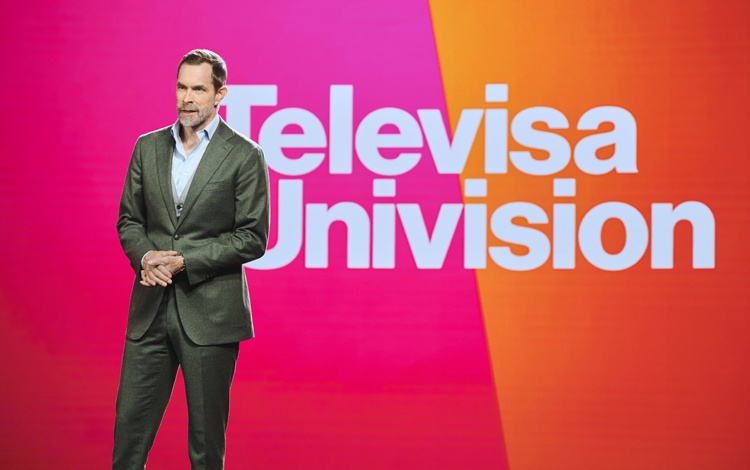
The border ran through the business
Televisa and Univision were already connected before Davis arrived. The Mexican producer supplied programming to the American broadcaster and held an ownership stake. Yet the production operation and the business reaching American viewers remained in separate companies. Combining the content assets offered a way to bring more of that chain under one roof.
The transaction announced in April 2021 valued Televisa’s contributed content assets at approximately $4.8 billion. Its financing included investment led by the SoftBank Latin America Fund, with participation from Google, the Raine Group and ForgeLight. Davis would lead the combined company; Alfonso de Angoitia would serve as executive chairman. This was a group undertaking, with existing relationships doing much of the structural work.
The combination closed on January 31, 2022. TelevisaUnivision brought together a library of 300,000 hours and a continuing production operation. The scale gave the streaming proposal something more substantial than a launch date: programmes to show, rights to exploit and a pipeline that could keep supplying new material.
Davis’s argument in a 2021 interview was that Spanish-language content could be the organising principle of a service. He contrasted that focus with global platforms whose broader offerings included programming in Spanish. The distinction was the basis of his competitive pitch. Whether viewers would reward it remained a question for the viewers.
December 2020
January 2022
ViX, Q2 2024
A button on the remote
ViX’s free, advertising-supported tier launched on March 31, 2022. A paid tier followed in July. The launch proposition brought entertainment, news and sport into a service intended for the United States, Mexico and Spanish-speaking Latin America. Giving free viewing a substantial place in the plan meant the business could seek advertising revenue alongside subscriptions.
The distribution work was less glamorous than a merger announcement and just as necessary. A March 2022 agreement put ViX on Roku across the United States and Latin American markets. It also provided for a dedicated ViX shortcut on Roku remote controls in Latin America. For a company assembling hundreds of thousands of hours of programming, reducing the journey to one button was a useful bit of editing.
There were people behind the product as well as a library. Pierluigi Gazzolo worked on the transformation, while Rodrigo Mazón joined from Netflix to lead the subscription offering. Speciale’s team had the task of turning audience attention into advertising commitments. The strategy depended on their execution, along with the work of producers, engineers and distribution partners.
When ViX was unveiled in February 2022, Davis put particular emphasis on the technology team. Michael Cerda brought experience from the launch of Disney+, and Daniel Sanders had worked on Pluto TV’s engineering. Davis said the company had hired hundreds of engineers and specialists and pointed to Google’s infrastructure support. The detail helps explain the move he was attempting. Owning programmes would give ViX material to offer. Delivering them through an app required a different set of skills, including people who had already built streaming products elsewhere.
Davis also showed some restraint about programming expenditure. At SeriesFest in Denver in May 2023, he said ViX needed time to mature before making its largest content bets. He pointed to the time Netflix had spent learning its audience before commissioning originals. For all the haste involved in entering streaming, he was acknowledging that a new service still had things to learn.
- December 2020Control of Univision
- January 2022Content combination closes
- March 2022ViX free tier launches
- September 2024Davis moves to vice chairman
The audience can answer back
Viewers of a broadcaster are also citizens, and Univision’s news operation carried expectations that reached beyond programme selection. In November 2023, its interview with Donald Trump brought those expectations into a public dispute. Enrique Acevedo conducted the interview, which aired across the company’s television and streaming outlets.
Advocacy groups wrote to Davis, de Angoitia and Bernardo Gómez to challenge the network’s treatment of Trump. They argued that its decisions favoured a candidate and threatened its relationship with the community. These were allegations from critics of the coverage, directed at an institution they had regarded as a partner.
Davis defended the interview in a staff memo and said the network would give Democrats, Republicans and independents an equal voice. His response asserted independence; the critics questioned how that independence was being exercised. The disagreement exposed a responsibility that came with the operating chair: answering for the judgment attached to the company’s name.
“not a tool of any party or organization”
Wade Davis, staff memo, November 2023
When the numbers arrived
ViX supplied a different kind of scrutiny. In the second quarter of 2024, its free tier exceeded 50 million global monthly active users. That was a measure of reach, distinct from paid subscriptions. TelevisaUnivision’s total quarterly revenue rose 3 percent to about $1.3 billion, while adjusted operating income before depreciation and amortisation declined 3 percent. Audience growth and financial pressure could appear in the same report.
On September 19, 2024, Daniel Alegre succeeded Davis as chief executive. Davis became vice chairman and remained on the board’s executive committee. The announcement described a planned succession, with the next phase focused on integration and optimisation. A business created by combining companies still needed to be run as one.
In October, TelevisaUnivision reported that its direct-to-consumer business had achieved profitability in the third quarter, which included the leadership handoff. The full-year results later showed $1 billion of DTC revenue and positive adjusted OIBDA for 2024. That measure excludes items included in net income. It was evidence of progress in the streaming operation, with a specific accounting meaning.
The timing makes shared credit unavoidable. Davis had led the acquisition, combination and launch. Teams had built and sold the service. Alegre inherited the operating responsibility before the quarter ended. A neat story might finish at the merger signing. The results kept arriving after the photograph.
The next screen is beside the road
In February 2026, Clear Channel Outdoor announced an agreement to be acquired by Mubadala Capital in partnership with TWG Global. Davis had partnered on the transaction and was expected to become executive chairman. The announced enterprise value was $6.2 billion, with approximately $3 billion in equity capital committed. The plan included greater financial flexibility and continued investment.
When the acquisition closed on October 14, Davis also became chief executive, succeeding Scott Wells. John Halley was named to join as chief commercial officer. Davis’s new assignment puts him in outdoor advertising, where digital displays, measurement and advertiser relationships shape a business people encounter away from the television set.
The setting has changed, but the choice to take the operating job is familiar. Davis again helped arrange an acquisition and then accepted responsibility for what followed. At Univision, that choice led through a cross-border combination, a streaming launch and arguments about what an audience deserved. At Clear Channel, the deal has closed. The next set of decisions now belongs on his desk.