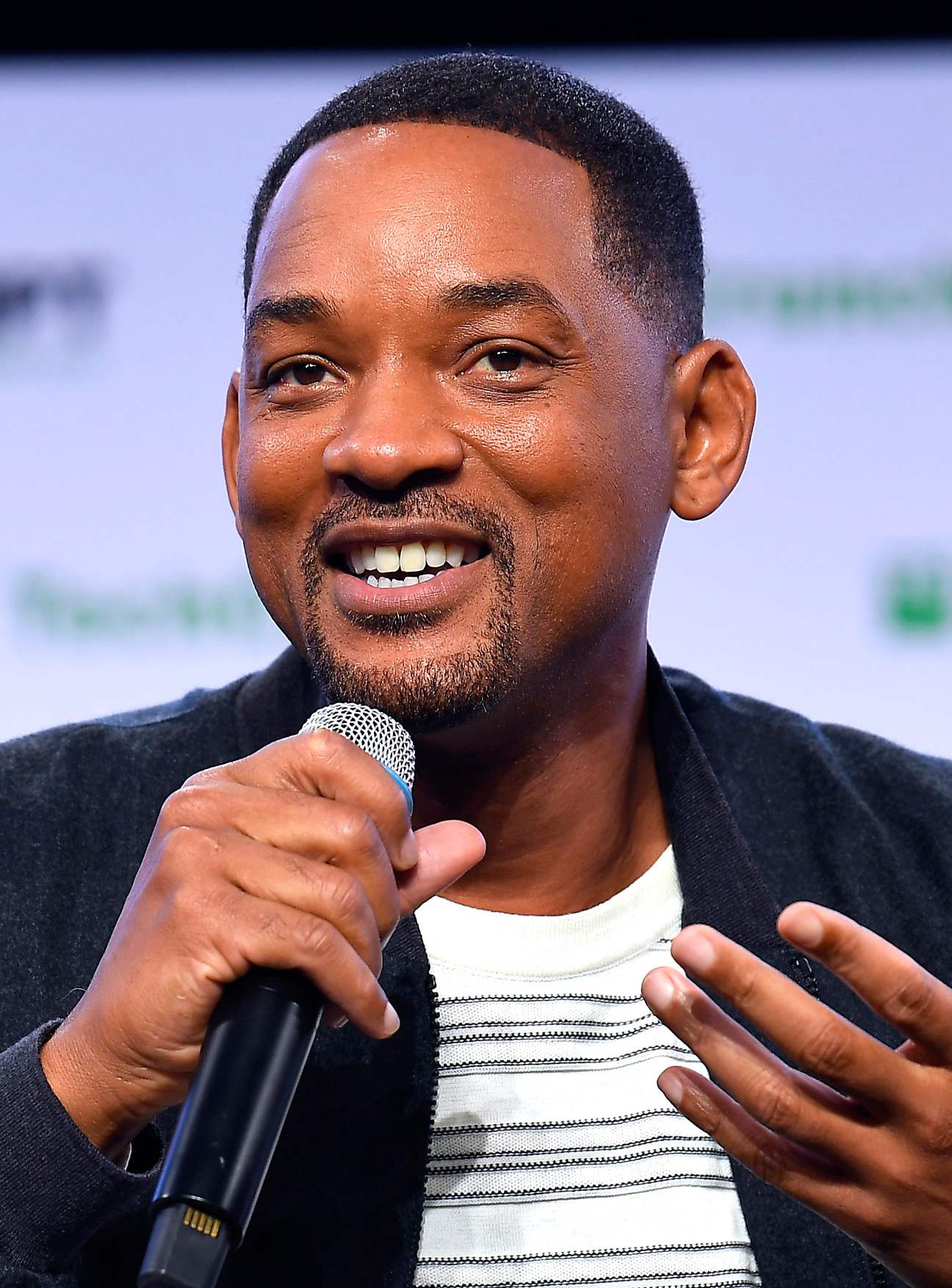
The same year he invented a category, he was broke. The record advance had vanished on jewelry, cars, and a lifestyle built on a hit that hadn't finished paying out yet. He owed $2.8 million. The government wasn't waiting. That crisis - watching your possessions leave through the front door while a gold record is still on the wall - is the story underneath the story of Will Smith. It's the engine that runs everything else.
Willard Carroll Smith II grew up in Wynnefield, a middle-class neighborhood in West Philadelphia where his father ran a refrigeration engineering company and his mother worked in school administration. He earned the nickname "Prince" in high school not for royalty but for the rhetorical gift: the ability to charm, deflect, and navigate any situation with a line that landed. He scored high enough on the SAT to qualify for MIT. He chose DJ Jazzy Jeff instead. He never regretted it.
At 18 he was a millionaire. At 21 he was in debt. By 28 he was the most bankable actor in Hollywood. Six consecutive films debuted at #1. Not most films. Six consecutive ones. He mapped the territory between comedy and action with such precision that by 1997 - Men in Black, 9x Platinum album, two Grammys already in hand - the whole entertainment industry had a new template, and his name was on it.
The performance machine ran hot. For two decades, Will Smith operated at a level where failure was almost structurally impossible. Independence Day ($817M, 1996's #1 film). Aladdin ($1.051 billion, his personal peak). The Pursuit of Happyness - shot with his actual son, earned his second Oscar nomination. Men in Black alone launched a franchise that printed money across three decades. He was, by every metric the industry understands, the thing itself.
Then came 2021. King Richard. He played Richard Williams - Venus and Serena's complicated, visionary, difficult father - with a precision that had nothing performative about it. He won the Academy Award for Best Actor. He became the fifth Black actor in history to receive that award, following Sidney Poitier, Denzel Washington, Jamie Foxx, and Forest Whitaker. He cried at the podium. The audience gave him a standing ovation.
Eleven months later, the same stage. Different night. Very different moment.
The Oscars slap of March 27, 2022 became the single most-discussed live television moment of the decade. Chris Rock made a joke about Jada Pinkett Smith's shaved head - she has alopecia areata. Will Smith walked up and slapped him. He sat back down, shouted twice, won Best Actor forty minutes later, and cried again at the podium. He was banned from all Academy events for 10 years. He resigned from the Academy first.
What happened next is the actual story. Not the slap - the response to it. He didn't disappear. He kept working. Bad Boys: Ride or Die, released June 2024, grossed $405 million. He released his first solo album in twenty years. He showed up at the Grammys in February 2025 - his first major awards appearance since that night. A street in Philadelphia was named after him in March 2025. Pole to Pole, a National Geographic travel series, launched on Disney+ and Hulu in January 2026. An I Am Legend sequel with Michael B. Jordan was confirmed the same spring.
Will Smith is 57. He has a 10-year Oscar ban that expires in 2032. He has a production company, a music label deal, a European concert tour, and the kind of filmography that doesn't disappear because of one night. His memoir, co-written with Mark Manson, is called Will. In it, he describes the constructed character of "Will Smith" as something he built deliberately, a persona of charm and optimism layered over a childhood marked by fear and a father's difficult love.
The boy from Wynnefield who talked his way into everything is still talking his way through the hardest thing he's faced. And if the arc of his career suggests anything, it's that he usually figures it out.