The records were public. The fortune took more than a year to assemble. In the autumn of 2011, David Barboza began finding corporate documents connecting relatives of China’s premier, Wen Jiabao, to billions of dollars in assets. The work involved following companies through changes of name and address, then establishing who stood behind them. Somewhere between a shareholder list and the next filing, a political story acquired a paper trail.
After publication, a more cinematic explanation circulated: enemies of the premier must have delivered a box of documents. Barboza’s account was less accommodating to the screenwriter. “I requested documents and followed the money.” He even called members of the family. They stayed on the telephone. The surprise, in his telling, included that last detail.
Years later, he would become the co-founder and CEO of WireScreen, a business that organizes corporate relationships. The connection between the two jobs begins with that unglamorous verb: assemble. A fact can be available, correctly filed, and still remain practically invisible to anyone who has not put in the time to connect it.
A class that changed the destination
Barboza’s interest in China preceded the posting, the investigation and the software. At Boston University, where he graduated with a history degree in 1990, he took a course called Reporting the Revolutions: China and Vietnam. It helped direct his ambitions toward foreign correspondence. The teaching assistant was Hugo Shong, who later endowed an award for reporting on Asian affairs. In 2006, Barboza received it. A syllabus can have a surprisingly long afterlife.
By then he had been reporting in China for two years. Receiving the award, he recalled having imagined a foreign correspondent’s life for nearly two decades, possibly at The New York Times, possibly in China. The imagined combination had become his actual job. His purpose was to help readers understand a country undergoing rapid change, with enough freedom to travel and examine different industries.
His route there had included the stock market and the American Midwest. He joined the Times as a staff writer in 1997, then worked as its Chicago-based Midwest business correspondent. China followed in 2004; he became Shanghai bureau chief in 2008. The assignments supplied different settings for a recurring question: what are businesses doing, and what do their activities reveal about the people around them?
Ten thousand pages, and a consequence
The Wen family investigation appeared in October 2012. It traced at least $2.7 billion in assets linked to relatives of the then-premier. Establishing the relationships required more than recognizing a surname. Barboza examined village gravestones and circulated government identification photographs to confirm identities. The investigation accumulated ten thousand pages of documents. Even paperwork, it turns out, sometimes requires fieldwork.
The response extended well beyond a disputed article. Chinese officials pressured the newspaper to stop publication. The Times temporarily moved Barboza to Japan. Access to the paper’s English and Chinese websites was blocked in mainland China after the first article appeared. The reporting earned him the 2013 Pulitzer Prize for International Reporting. Its recognition came attached to consequences for the institution that published it and the people doing the work.
That year also brought a shared Pulitzer for Explanatory Reporting as part of the Times team behind the iEconomy series. Those stories examined Apple and the global system behind consumer technology. The two awards belonged to different reporting projects, but both involved looking behind a familiar public face: a political leader in one case, a product and its maker in the other.
The notebook after the deadline
Another question had been bothering Barboza during his newspaper years. What should happen to the notes and documents once an article was finished? A published story might draw on months of collecting and sorting, yet most of that material would never appear in print. As someone trained in history, he wanted to keep it available for historians and future reporters.
He admired Robert Caro’s determination and his use of archives. Barboza wanted to bring archival thinking back into a working newsroom. In a 2020 account of starting his business, he described contributing a substantial portion of his savings. His proposition had a practical financial dimension: information collected in the course of reporting might eventually help pay for more reporting.
The work had an earlier institutional foothold. In 2016, he became a Knight Visiting Nieman Fellow at Harvard. His announced project was specific: develop new investigative tools for China, including a business and financial database of Chinese companies. That description is a useful marker in his career. The desire to build tools was already a declared project before the company existed.
WireScreen was founded in 2019. Sequoia dates its partnership with the company to 2020, listing Barboza and Lynn Zhang as founders. A reporter’s accumulated frustration was taking the form of an organization, with investors and a product to build. The archive now needed to work for people who had never sat beside its creator.
“Each country is different.”
David Barboza, on investigating across jurisdictions
The hard part is knowing who is who
Zhang brought a different professional history to the partnership. WireScreen’s co-founder and chief operating officer had worked in private equity and spent years analyzing corporate data. She studied chemistry and finance in China and Japan. Their backgrounds met at the documents: a reporter trying to establish relationships and a financier accustomed to examining companies.
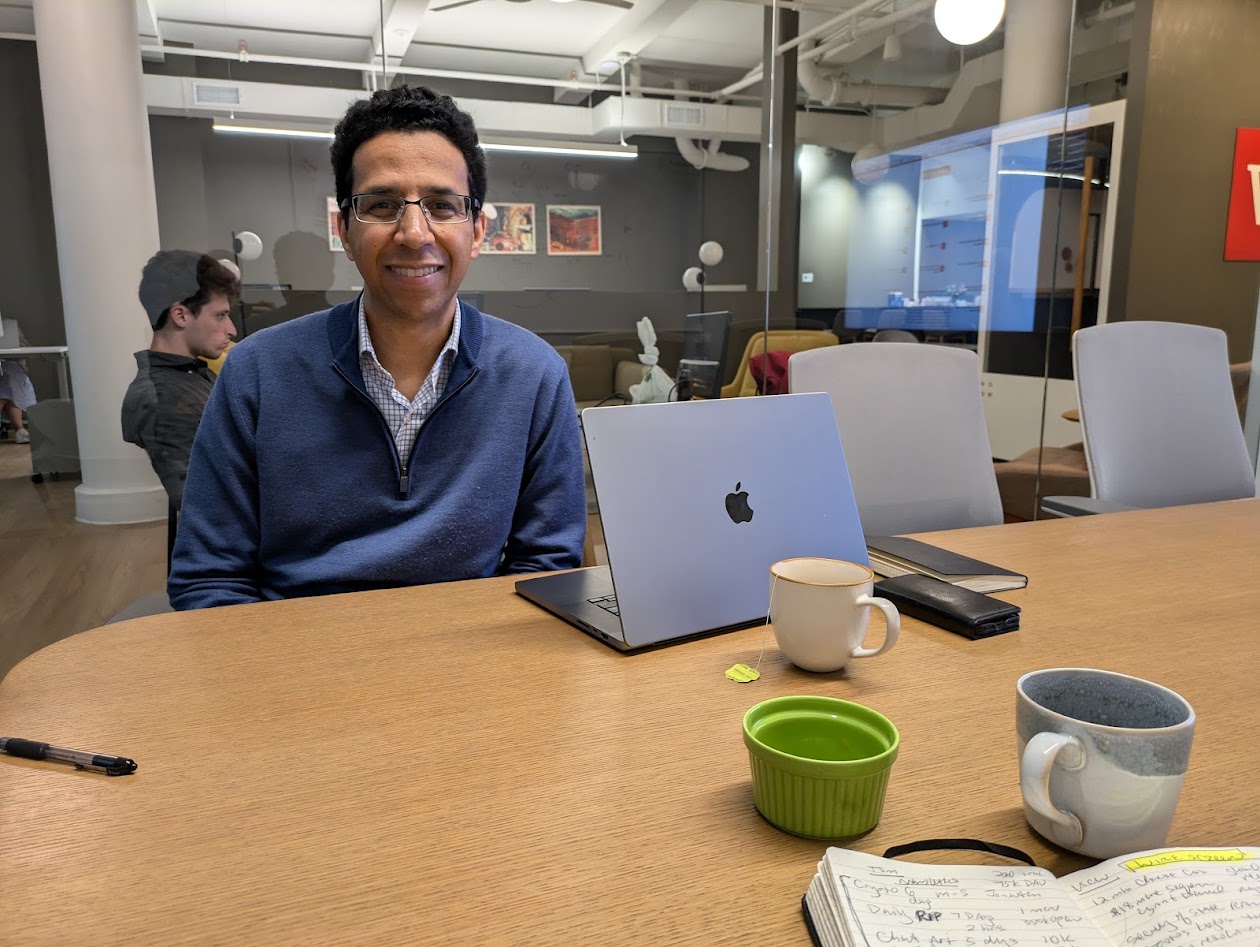
By October 2024, Barboza was explaining the business from an office in midtown Manhattan. A visitor, former Bloomberg product executive Ted Merz, was offered espresso and nuts. They had first discussed a China information business in 2018. Six years later, there was a company to visit. The hospitality was immediate; the product had taken rather more preparation.
Barboza identified a central difficulty as entity resolution: working out which person or company a record actually refers to, then determining how the records connect. A database can contain many names without establishing many reliable relationships. Merz congratulated him on the distance traveled. Barboza’s response was that there was still a long way to go.
Today, WireScreen describes a platform built from business registrations, ownership records, procurement notices, patents, court filings and regulatory disclosures. It begins with China and maps relationships across borders. Those materials can answer different questions, which helps explain the company’s move beyond the single investigative story that helped inspire it.
A bookshelf beside the database
The news publication remained part of the enterprise. The Wire China launched in 2020, covering China’s economic rise and its influence on global business. Its companion data project had been part of the plan from the beginning. In a conversation that May, Barboza discussed selling access to information generated by journalists, researchers and engineers alongside publishing investigations.
There is a recognizable reporter in the publishing choices that followed. In October 2023, China Books Review launched with Barboza and Orville Schell as co-publishers and Alec Ash as editor. The collaboration between The Wire China and Asia Society created a place for reviews, essays, excerpts, interviews and reading lists. The remit extended into history, society and culture.
The opening issue paired contemporary writing with older work. It included Perry Link reflecting on decades of observing China, a review by Zheng Churan, and a republished John King Fairbank essay. At the launch event, Barboza was scheduled to interview Ian Johnson. For a founder associated with corporate networks, it is a useful reminder that his interests also include the people who write books about them.
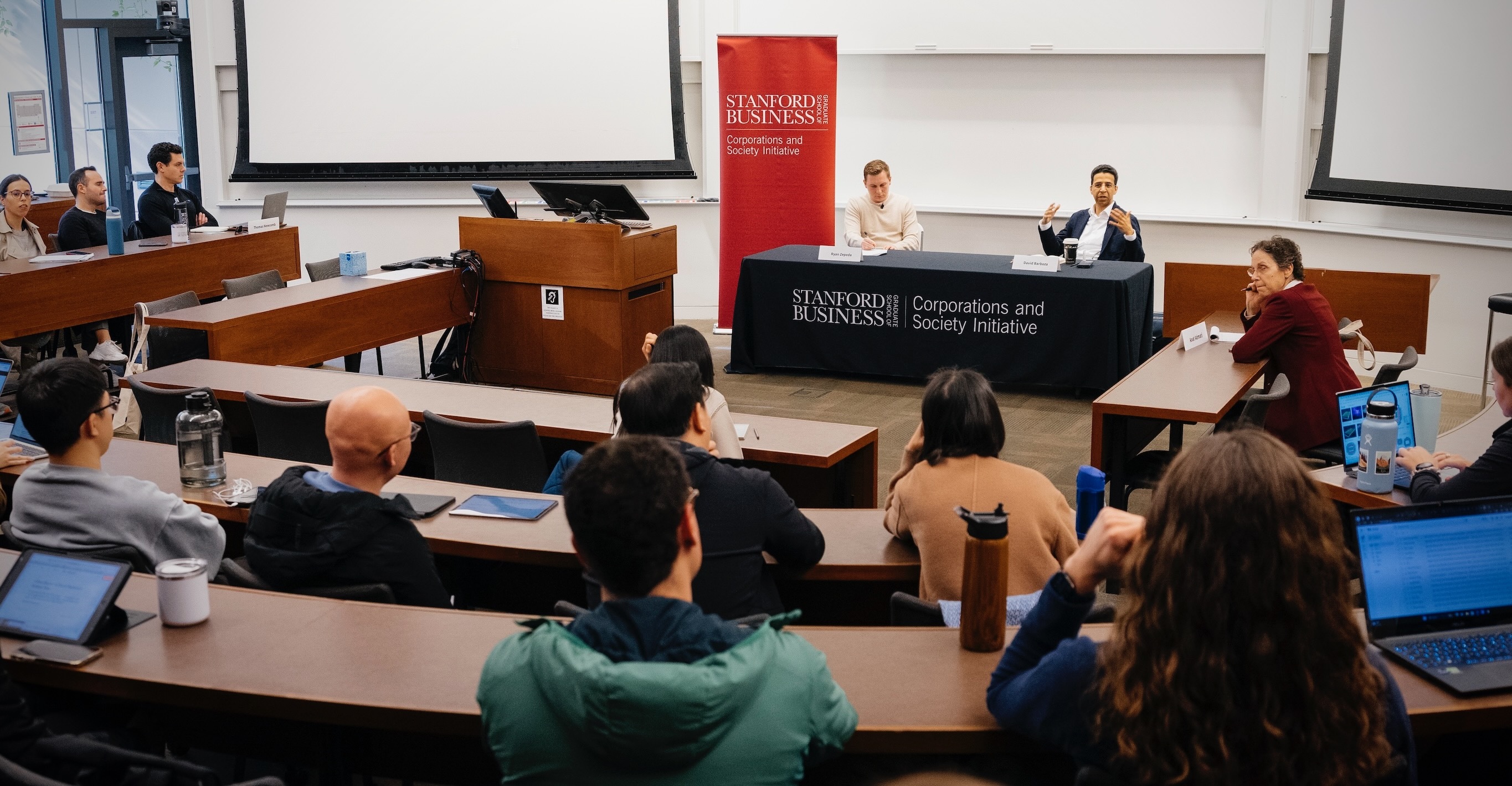
At his 2024 Stanford conversation, Barboza looked back at the China he had arrived in twenty years earlier. Manufacturing, outsourcing and integration with the global economy had dominated the picture. Over time, Chinese companies developed their own technological capabilities. Electric vehicles and artificial intelligence had become part of a different competitive landscape. A reporter who stayed with the subject had to keep revising the frame.
That perspective helps connect his earlier assignment to the company he now runs. The firms being examined have changed, as have the questions customers bring to the records. The need to understand their relationships has continued. His career contains a change of profession alongside a long commitment to the same subject.
Still following the connections
His public conversations increasingly take place where business and national security meet. In February 2026, he joined WireScreen colleague Bradley Martinez on Crossing the Valley to discuss how the company’s reporting origins developed into an intelligence platform serving government users. The audience had changed from newspaper readers, but the underlying work still involved reconstructing corporate networks from dispersed evidence.
At Stanford in January 2026, he described an economic relationship between China and the United States that remains deeply interdependent even as technological competition intensifies. Semiconductors, robotics, research and talent were central to the discussion. He resisted easy assumptions about a complete separation of the two economies. Supply chains contain connections that political language can make sound simpler than they are.
He also described the need to test information against other evidence and adjust confidence to the kind of record being examined. That is a continuing discipline for someone whose company makes information easier to search. Ease of access cannot settle every question about what a document means. Judgment still has work to do.
His stated ambitions include extending WireScreen’s analysis into other countries with useful corporate and trade records. The practical details differ by jurisdiction. The habit behind the project is familiar: keep the documents, identify the people, examine the connections. Barboza once needed that process to finish a story. Now he is building a business around helping the next person begin.
Keep following the trail
More writing, conversations and places to find his work.
- WireScreen
- The Wire China
- Twitter / X
- China Books Review
- Watch: Power to Truth
- Listen: Crossing the Valley, February 2026
- Read: Follow the Money
- Read: The archive and the startup
- The Pulitzer-winning reporting
- A visit to the WireScreen office
- The college course and the China posting
- The 2016 Nieman project
- Barboza at Stanford, January 2026
- The Wire China’s early plans
- China Books Review’s first issue
- WireScreen’s founding milestones