Dave Sifry’s wife had a prediction about retirement. Leave him on a beach long enough, she told him, and he would start selling umbrellas to the other tourists. It is a useful warning for anyone who mistakes a founder’s exit for an ending. Sifry told the story himself, years after starting Technorati, the blog search engine that turned an engineer’s curiosity about his readers into a way of watching the web talk.
The umbrellas remain hypothetical. The urge to build has proved rather more durable. In 2026, Sifry is running Warmstart, working on tools for AI coding agents, and turning up at a San Francisco hacker house to discuss what comes next. The projects have changed. The problem underneath them feels familiar: there are people out there, doing interesting things, and finding the right connection should be easier than this.
A small question with a million links
On November 27, 2002, Sifry introduced Technorati on his blog. His explanation was pleasantly unceremonious. He had made some services he wanted to use himself. One, called Link Cosmos, let someone enter a web address and discover which blogs were linking to it. His database already contained more than a million links after roughly a week of collecting them.
There was a social intuition inside the software. If people he respected linked to something, perhaps it deserved a look. Follow those people’s links in turn, and the web became a trail of introductions. A writer could discover a reader who had written back elsewhere, even when nobody had clicked through and left a trace in the writer’s traffic logs. The conversation had been happening all along. Now it had a doorbell.
Other tools tracked changes in Google rankings. Watchlists bundled monitoring and daily updates into an experiment priced at $5 a year. He was already asking whether people would pay for convenience, and what the appropriate price might be. The announcement reads like a working notebook: here is something useful, here is what it costs, tell me what you think.
Technorati’s original watchlist experiment offered automated alerts and tracking. A small price attached to a very recognizable desire: tell me when something changes.
Before the basement, Kobe
Sifry was born on Long Island in 1968 and graduated from Johns Hopkins in 1991 with a computer science degree. His early working life included Mitsubishi Electric in Kobe. He describes being the first foreign engineer in 17 years at a factory employing more than 4,700 people. By the time he returned to the United States in 1994, he had acquired some Kansai dialect along with his engineering experience.
Those are unusually concrete coordinates for a Silicon Valley biography. Before the search engine and the venture funding came a Japanese factory, an unfamiliar workplace, and the business of learning how other people did things. His later career would keep taking him between technical work and the less programmable task of getting people to work together.
In 1998, he co-founded Linuxcare with Arthur Tyde and Dave LaDuke. The company sold support and services around Linux and open source software. Sputnik, another venture he co-founded, worked on managed Wi-Fi. These were practical businesses built around technologies whose usefulness depended on someone making them easier to adopt. There is plenty of engineering in that work, and plenty of explaining.
He would later advise and invest in other companies, with Mozilla, Causes, Xola, and Readme among the names he lists. The recurring role is a translator’s: between an engineer and a customer, an idea and an organization, something that works on a machine and something that works in somebody’s day.
The web starts keeping time
By April 2007, Technorati was tracking more than 70 million weblogs. Its index was seeing about 120,000 new blogs a day and roughly 1.5 million daily posts. Sifry’s periodic reports made the scale legible. The web had acquired a population that kept publishing, answering, recommending, and arguing. Counting it became part of understanding it.
He also counted the nuisances. Spam blogs were arriving by the thousands. Growth was slowing as the numbers became larger. Japanese and English accounted for similar shares of posts in the report’s main language analysis. This was a messy, multilingual place, with its own rhythms and incentives. A single impressive total could only tell part of its story.
In a radio interview that spring, Sifry explained the distinction through time. Google helped someone consult the web as a reference library. Technorati followed what people were saying now. The important change, he argued, was participation: people could make things and publish them. As photographs, podcasts, and video joined text, the conversation spread into more forms than a blog search alone could describe.
That idea explains why the company mattered to its founder. Searching the web could help a person locate another person’s response, or notice a discussion while it was still unfolding. Time and relationships belonged inside the product. His phrase for the wider activity was the Live Web. It remains a rather good name for a place that refuses to sit still.
A founder learns to count differently
Sifry stepped down as Technorati’s CEO in August 2007 and moved to a board role. Eight employees were laid off at the same time. It was a difficult turn in a company whose growth had made it a familiar name among bloggers. Building a service that people cared about had not removed the ordinary pressures of running a business.
When he later spoke at ZURB, he was candid about the product lessons. His own enthusiasm had too often supplied the argument for another feature. The team needed a firmer way to establish whether a change helped customers take the actions the business depended on. A founder’s taste could start a project; it could also become a very expensive voting system with one voter.
“In the web, if you’re going beyond six months out, you’re just guessing.”
Dave Sifry, speaking at ZURB
Offbeat Guides, his next venture, personalized travel information and delivered it electronically or as printed books. A trip has dates, preferences, and a destination. An undifferentiated pile of information is only the beginning. The work lies in choosing what will be useful to the particular person who is going. For a founder associated with search, a book you could carry away was an agreeable plot twist.
The digital homesteader’s magic button
There is another Sifry in the old blog: a photographer noticing the light on Union Street, a driver celebrating 150,000 miles in a 1995 Toyota 4Runner, a person wondering what to call a camera-phone photograph taken at arm’s length with friends. He tried names including “Friendshot.” The web is full of grand predictions. An unresolved naming problem can be more endearing.
In 2013, he described keeping his own domain and infrastructure as being a digital homesteader. He joked about watching younger people on hosted services from an old log cabin, then invited them to pull up a lawn chair. Even the grumbling came with seating arrangements. Owning a little patch of the internet suited someone who liked both building things and hearing back.
That August, he wanted a different convenience: photograph a rough paper sketch, press a magic button, and receive a usable HTML and CSS starting point. He considered how optical character recognition and human designers might help. The attraction was specific. The computer should shorten the distance between an idea on paper and something a person could actually try.
Read beside his current work, that wish has a long memory. Before his public experiments with coding agents, he was already impatient with the repetitive work between imagining an interface and testing it. A sketch was enough to express the intention. Why should so much clerical effort stand between it and a first version?
From product teams to public consequences
His later executive roles included engineering leadership at Interana, product and engineering at Lyft, and revenue products at Reddit. At Lyft, his work included research and prototyping for Transit, bringing other forms of transport into the product. The jobs took him inside organizations with existing customers, teams, and competing demands. Starting from an empty repository was no longer the whole assignment.
At the Anti-Defamation League, he led the Center for Technology and Society. On October 28, 2021, he appeared before the Senate Homeland Security and Governmental Affairs Committee at a hearing on social platforms and the amplification of domestic extremism and other harmful content. The same broad questions about discovery and distribution had acquired a sharper public consequence. What gets found, recommended, and spread affects people beyond the screen.
Still room for another conversation
Warmstart, founded in 2024, returns him to a familiar territory: relationships obscured by too much information. The product helps people reconnect with professional contacts. Its public introduction describes connecting Gmail, suggesting people to contact, and preparing drafts for review. The underlying opportunity is sitting in correspondence that already exists, waiting for somebody to remember it.
By 2026, Sifry was also publishing open source tools for coding agents. His GitHub projects include metaswarm, an orchestration framework, and goodtogo, which checks whether pull requests are ready. In September, he published an evaluation of AI code review with public methods and limitations. It compared workflows as well as models. The old lesson about measuring a product’s behavior had followed him into a new set of tools.
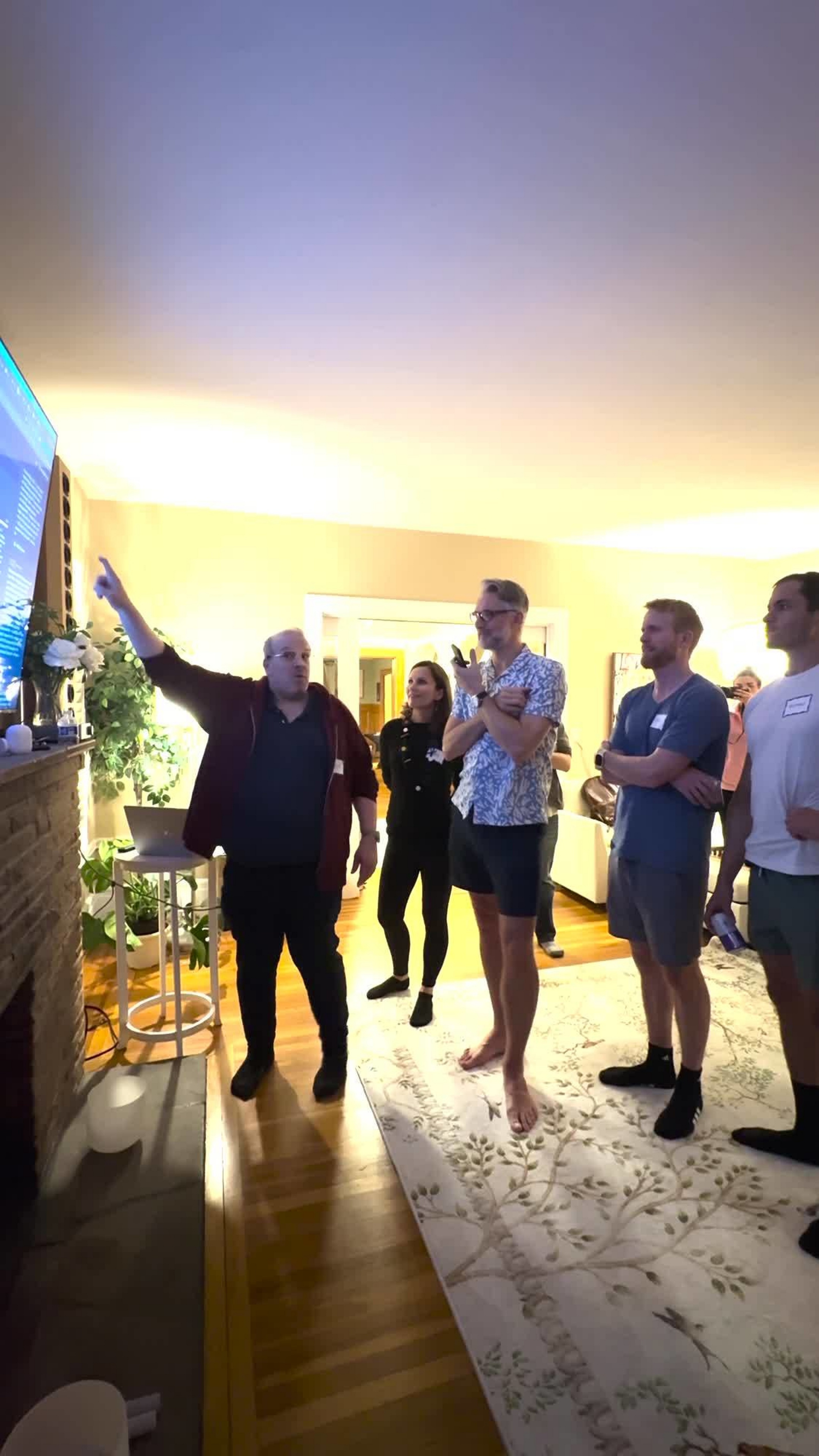
He visits Vibe House SF, a gathering place for founders, without living there. He has said the atmosphere reminds him of earlier San Francisco hacker houses. Experience has also made him less inclined to let a company occupy his entire life. The appetite to build survives alongside a different idea of how much room a business should take.
The career has traveled from Linux support to blog links, travel books, transport, platform accountability, and AI. Through it runs a persistent practical question: what would help somebody use this? Sometimes the answer has been a search result, sometimes a better process, sometimes a reminder to write to an old acquaintance. Sifry keeps finding reasons to make the next version. The beach umbrellas may have to wait.
Keep following the conversation
Personal website · Sifry’s Alerts · LinkedIn · Twitter / X · Facebook · GitHub · Photography
The original Technorati announcement
The State of the Live Web, April 2007
Listen: product lessons at ZURB
Listen: Letting the Customer Lead
Watch on YouTube: Building in the Age of AI
Read: the founders gathering at Vibe House SF
Explore: Sifry’s AI code-review evaluation
Warmstart · Technorati profile