Before Taranjeet Singh wanted software to remember people, he helped his father sell them watches. His father had a watch shop; Singh helped run it. There is no need to turn the counter into a business school, or pretend a family shop contained a blueprint for an AI startup. It is simply a pleasing place to begin a story about someone who would spend years working out what people want, what they will use, and what makes them come back.
Today, Singh is the co-founder and CEO of Mem0, a San Francisco company building memory infrastructure for AI applications. Its premise begins with an annoyance small enough to recognise immediately. You have already told the assistant your preferences. You return, and it needs the explanation again. An impressive vocabulary loses some of its charm when the conversation keeps returning to introductions.
Singh arrived at that problem by a winding route: engineering jobs, product work, open-source projects, a GPT app store, and seven applications to Y Combinator. The seventh succeeded. A career contains rather more information than its final job title suggests.
A shop, a quiz, a decision
At school, Singh took part in quizzes. Between 2007 and 2011, that habit led him into reading about Silicon Valley: Dropbox, Airbnb, and the people building companies there. Before he had a startup, he had a set of names and possibilities to investigate. The attraction travelled a considerable distance without requiring him to leave India.
By 2012, he had decided he would start a company. He did not yet know what it would make, where it would be based, or how he would begin. He recalls the conviction plainly: “I will start my own company.” The certainty concerned the occupation. The business plan remained open to suggestions.
That distinction matters. Founder biographies often make an eventual product look inevitable, as though someone spent childhood preparing for a particular software category. Singh’s own account is more interesting. The wish to build something came early. The thing worth building took longer to identify. His subsequent career gave him several ways to test the difference.
Learning how a product gets used
Singh studied computer science at JSS Academy of Technical Education, completing his engineering degree in 2015. His early technical interests included a tokenization module for Hindi, a project concerned with breaking language into pieces software could handle. Years before Mem0, he was already working close to the awkward boundary between human expression and machine processing.
He began his software engineering career at Paytm. Later came engineering roles at Gradeup and Inclusys, and then Khatabook, where he joined as the first growth engineer and became a senior product manager. It was a useful change of vantage point. Writing a feature and getting someone to discover, understand and keep using it are related jobs, but they ask different questions.
Open source supplied another education. Singh collaborated with Deshraj Yadav on EvalAI, a platform for evaluating AI models. Their working relationship therefore predates Mem0 and the current enthusiasm for agents. Yadav would bring experience leading AI infrastructure at Tesla Autopilot; Singh brought engineering alongside a growing familiarity with distribution and product decisions.
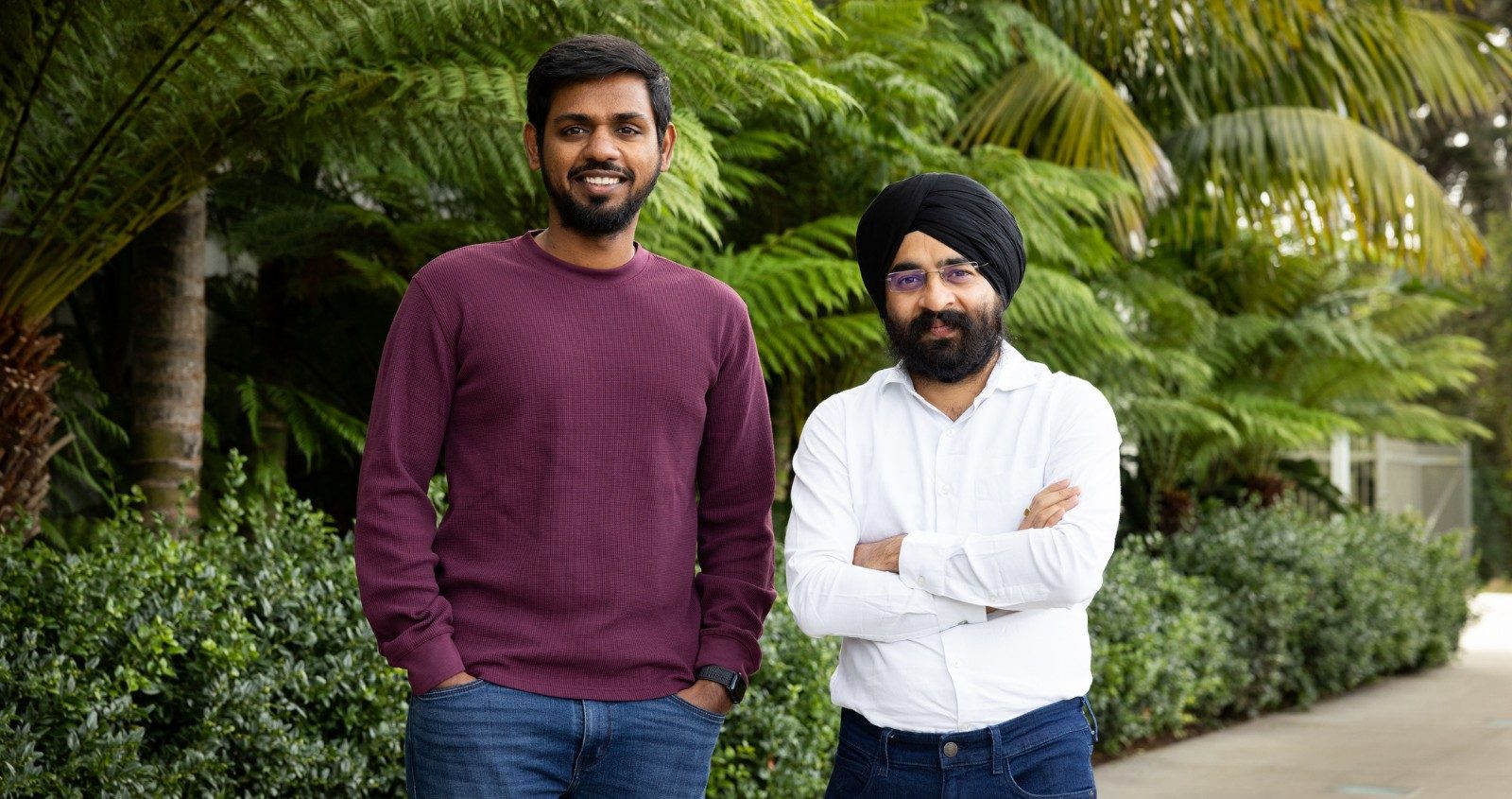
Singh also wrote about technical work and contributed a chapter on industrial applications of natural language processing in search to the O’Reilly book Practical Natural Language Processing. His public writing ranges from Django and Elasticsearch to the costs and mechanics of AI applications. The recurring interest is how a system works once someone actually has to build with it.
The complaint that survived the launch
Cookup AI, the GPT app store Singh built before Mem0, reached more than a million users. His GitHub biography credits search engine optimisation for that growth without marketing spend. It was an exercise in making emerging technology discoverable: giving people a route into tools they might otherwise never encounter.
With Yadav, he also worked on Embedchain, an open-source framework for building applications around external data. Its appeal was practical. Developers could connect information to an AI application without assembling every component themselves. In December 2023, Singh promoted a challenge to deploy a RAG application in 30 minutes, with free pizza attached to failure. Few infrastructure pitches improve when made hungry.
Yet getting an app into people’s hands exposed a different difficulty. Singh recalls users of an AI app complaining that it did not remember them. The complaint was about continuity. Fetching the right material to answer a question did not automatically give an application an accumulating understanding of the person asking.
By December 2023, the founders were looking closely at that gap. A conversation could have context within a session while the wider application still lacked a dependable way to retain useful information between encounters. The issue followed the user through the door even after the developers had solved other parts of the experience.
- 01 / ListenA conversation contains useful details.
- 02 / SelectExtract the facts worth retaining.
- 03 / ReviseUpdate context as information changes.
- 04 / RecallBring relevant context to the next exchange.
An illustrative view of persistent memory, rather than a complete architecture diagram.
Application number seven
Mem0 joined Y Combinator’s Summer 2024 batch. Singh had applied seven times. That count has the satisfying rhythm of a persistence story, but he describes a change in perspective as well. He came to see the rejections as encouragement to attempt a larger problem. Repetition alone would have produced another version of the same application.
The problem had expanded. Instead of solving one application’s forgetting in isolation, the founders could build infrastructure that other developers used. The irritation stayed recognisable; the potential customer changed. A memory component could serve many products whose builders were separately discovering how much work remembering required.
Investors at Kindred Ventures met Singh and Yadav in early 2024, before the YC batch. Their interest grew from conversations about a problem the founders had encountered while building Embedchain. In July 2024, Singh published his announcement about the transition to Mem0. The sequence helps explain the company better than a tidy tale of a single sudden revelation.
“the core theme was to think bigger.”
Taranjeet Singh, reflecting on his YC applications
There is also a particular kind of discipline in carrying an old ambition into a revised plan. Singh had wanted his own company since 2012. Getting closer to that wish involved being willing to change what the company was for. The destination acquired its shape through work, collaborators and complaints.
The work behind remembering
In April 2025, Singh appeared among the authors of Mem0: Building Production-Ready AI Agents with Scalable Long-Term Memory, alongside Prateek Chhikara, Dev Khant, Saket Aryan and Yadav. The paper describes extracting, consolidating and retrieving relevant information from conversations. Its emphasis makes the job sound appropriately active. A growing pile of transcripts is only the beginning of the engineering.
Consider an illustrative case: someone changes their preferred coding framework. An assistant that keeps repeating the old preference has successfully stored a fact and unsuccessfully served a person. A memory system has to handle revision, conflicting details and retrieval. More saved information can mean more opportunities to bring back something unhelpful.
For Singh, that complexity is the reason to make memory a component developers can integrate. The small interface makes a large promise: teams should be able to spend their time on the experience they are building while a separate layer handles the continuing work of managing context. Simplicity at the point of use creates obligations behind it.
Mem0 enters YC’s Summer batch.
Singh co-authors the Mem0 research paper.
Combined Seed and Series A announced in October 2025.
On October 28, 2025, Mem0 announced $24 million across its Seed and Series A rounds. Kindred Ventures led the Seed; Basis Set Ventures led the Series A. Peak XV Partners, GitHub Fund and Y Combinator also participated. The distinction between the two rounds matters: the headline number describes combined company funding, rather than a single round.
A small team, a longer obligation
Singh’s public approach to hiring keeps returning to evidence of work. A recruitment post for engineers in India asked applicants for traces of how they built with AI tools: planning, debugging and shipping. The question he posed was direct: “How do you build with AI?” It is an unusually literal invitation to show the working.
His broader ambition is for memory to remain neutral between models and portable between applications. That ambition creates a useful tension. A product benefits from learning about a user; the user benefits when that learning does not have to be reconstructed elsewhere. Making those interests work together is part of the task Singh has chosen.
In January 2026, Y Combinator featured Mem0 in a video about the AI memory problem. For Singh, the public story had moved from trying to enter the accelerator to explaining the company through it. The longer arc still contains the watch shop, the quizzes, the engineering jobs and the applications that failed.
The detail to carry away is the complaint. People had tried the software and wanted it to remember them. Singh listened long enough to make that missing piece his company’s work. An assistant can have plenty to say. Being spared another explanation is a quieter pleasure, and a perfectly reasonable thing to build a business around.