Dave Otten spent 17 years building a company whose name belonged, in part, to somebody else. The JW in JW Player stands for Jeroen Wijering, the Dutch creator of the video player around which Otten, Wijering and Brian Rifkin built their business. It is a useful detail to keep in mind. This is a story about recognizing what another person has made, bringing something of your own, and staying at the table long enough for both contributions to change.
By March 2025, Otten was ready to leave the chief executive’s chair. JW Player had merged with Connatix the previous October, and he had become the combined company’s first CEO. Now John Nardone would take over. Otten would remain an adviser. The business would later acquire the shorter name JWX; its outgoing leader was giving himself room for a different beginning.
He had spent years helping publishers answer a deceptively awkward question: once somebody presses play, how does this become a business? His next venture, Keld, asks a related question about AI. Once a company has paid for all that computation, what work has it actually bought? Different screen, familiar invoice.
A player looking for a business
Before video, there was the commercial machinery of the early web. Otten worked at About.com and Nielsen/NetRatings, then managed a network of 6,000 affiliates at AzoogleAds. His education combined an undergraduate business degree from Georgetown with an MBA from Harvard Business School. His professional background put distribution, measurement and revenue close together long before they became the central ingredients of JW Player.
The beginning was suitably ordinary. Rifkin remembered a breakfast conversation at a diner near his home. Otten, coming out of business school, wanted to start something. They knew each other from About.com and began exploring video advertising. Their early solution put display advertising into video. When Wijering’s player kept appearing on sites they wanted to work with, they went looking for its creator.
Initially, they wanted help integrating their advertising product. The relationship became a partnership around the player itself. In their later account, the company’s formation, the player transaction and the financing came close together in 2007. That sequence matters: the commercial idea and the technical product developed separately before becoming one enterprise. The founding team had to make the relationship work as well as the software.
Creator of the player. Co-founder alongside Dave Otten and Brian Rifkin.
What happens after “play”
A video player has the apparent modesty of a door handle. People notice it chiefly when it fails. Yet behind that small interface sit questions about delivery, advertising, audience behavior and whether the publisher earns enough to keep producing what viewers came to watch. Otten’s commercial career increasingly occupied that space behind the button.
In 2014, JW Player raised $20 million in Series C funding. Its plan included an open video ecosystem: connected players supplying anonymous information that could help publishers and advertisers understand engagement. The company said its player reached more than 900 million people each month across over two million sites. Those were company figures at that moment, rather than a timeless measurement of the internet. They explain why data had become part of the investment case.
The appeal to a publisher was practical. A familiar player could deliver a clip, but the surrounding information could help explain what audiences wanted and how the inventory might earn more. The product was becoming a way to make decisions. Software that merely appears on a page has one sort of relationship with its customer. Software involved in the customer’s revenue has another.
The screens also multiplied. JW Player announced Chromecast support in April 2014, giving publishers a route from phones and computers to television while retaining control over branding and advertising. The promise was ease: a customer should not need to invent an entirely new business every time the audience discovered another place to sit.
Growing into the chair
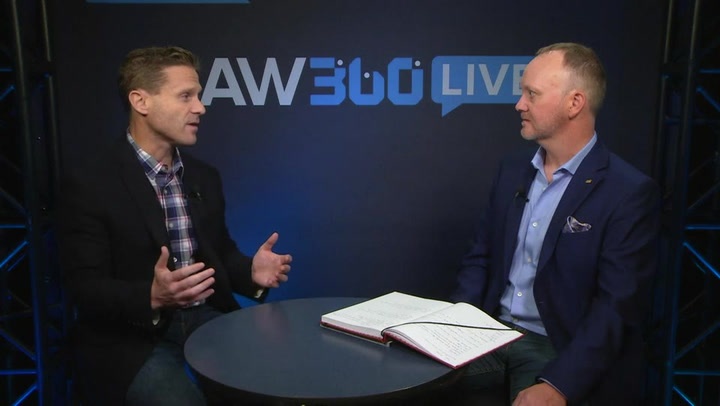
In 2015, Otten, Rifkin and Wijering sat down together for a public conversation about the difficult parts of building their company. They discussed conflict and leadership, including an episode when Otten’s position as CEO had been questioned. The conversation supplied a useful counterweight to the smooth language of funding announcements. The team’s continuity had required work.
There is a temptation to read a long founding partnership backward, as though its survival had been obvious. Their willingness to revisit difficult decisions complicates that picture. Being able to describe the friction together was itself revealing. They had stayed in the relationship long enough to examine it in public, with the company still growing around them.
By January 2016, another $20 million financing round was supporting more data-informed software and international expansion. JW Player said it had doubled SaaS revenue in 2015 and increased employee numbers by 60 percent. Growth on those terms changes a founder’s daily work. More customers require more people; more people require clearer responsibilities. The organizational chart begins demanding as much attention as the product roadmap.
The company ranked 248 on Deloitte’s 2017 North America Technology Fast 500, with reported revenue growth of 381 percent over the measured period. Otten tied that progress to publishers’ need for larger, more engaged audiences and better advertising opportunities. The explanation was consistent with the business he had been building: more viewing mattered when it improved the customer’s economics.
Geography followed. In 2019, JW Player opened a Singapore office and appointed Marc Irwin to lead its Asia-Pacific expansion. A platform distributed across the web still needed people close to its customers. The internet may be indifferent to time zones; a commercial relationship generally is not.
The audience is more than a number
Otten’s interest in measurement came with a qualification. Discussing television’s move toward impression-based advertising in 2021, he stressed the differences between one view and another. Duration, engagement and completion mattered. Counting a video’s appearance could not, by itself, describe its value.
“All impressions are not equal.”Dave Otten, 2021
He also emphasized the education required as broadcasters and advertisers adopted more direct measurement. New data could offer flexibility and precision, but buyers still had to understand and trust it. This was an operator’s concern as much as a technical one: an improved measuring instrument is useful only if people can agree what its readings mean.
In June 2021, JW Player raised $100 million from LLR Partners. The round followed its acquisition of VUALTO, which added live and on-demand streaming and digital rights management capabilities. The intended uses included product development, a wider commercial presence and investment in the team. The player had become one component of a broader infrastructure business.
In a conversation that month, Otten discussed the choice of private financing rather than a SPAC or IPO, alongside his interest in live video, subscriptions and connected television. The range of subjects showed how far the job had traveled from placing an advertisement inside a player. Customers wanted an operating business around their video, with several ways to reach audiences and get paid.
Two businesses, then a handoff
The October 2024 merger with Connatix brought that progression into a single transaction. JW Player contributed streaming and video-management capabilities; Connatix brought content and advertising technology. Otten became CEO, while Connatix founder David Kashak became chairman. The proposed combination joined systems that customers needed to work together.
Otten said the companies had been discussing a combination for more than a year. Integration would include bringing product and engineering teams together before combining the products. There was an organizational cost as well: overlapping roles would mean some departures. Merger logic can look elegant on a slide. Carrying it out requires decisions about actual teams and actual work.
Five months later came the leadership transition. Nardone’s appointment was announced on March 24, 2025. Otten’s departure message thanked colleagues and his founding partners, and described a wish to put his energy into something different. His explanation included a preference that sounds particularly consequential after such a long tenure: he liked operating beyond familiar ground.
“I have always been at my best when I am out of my comfort zone.”Dave Otten, on stepping down in 2025
By December 2025, the merged business had become JWX under Nardone. A change of name and a change of chief executive marked separate stages in the same combination. For Otten, stepping back from daily operations made room to start another company.
Another bill to make sense of
On October 7, 2026, Keld announced that it was emerging from stealth. Otten was its co-founder and CEO, working with Federico Enni and Doug Shore, both fellow JW Player veterans. Its subject was AI inference: the computation involved when models perform work for users and businesses.
The founding argument concerned visibility and buying. Keld Atlas, announced in private beta, was intended to connect AI spending to the business work behind it. The proposed marketplace would match buyers’ requirements for cost, quality and timing with providers. Those were the venture’s aims at launch, with early buyers and model providers involved; a new market still had to be built.
The connection to Otten’s earlier work is an editorial reading of his career, but a fairly direct one. Both businesses sit beneath a visible experience and ask how its economics can be understood. A publisher wants to know what a view earns. A company using AI wants to know what its spending produces. Otten is back among co-founders, working on the machinery underneath. The play button has given way to a prompt. The question of value remains.