A publisher’s most revealing question is sometimes the least literary. In 2013, while working in business development at Conduit, David Kashak kept hearing it: “What’s the CPM?” Cost per thousand impressions. Behind that abbreviation sat an awkward reality. A publication could attract readers to a phone and still earn disappointingly little from the small banners surrounding its work. Attention existed. The machinery for turning it into money was wanting.
- Connatix connects video content, playback and advertising demand.
- Its contextual tools examine what happens inside a video.
- A 2024 merger with JW Player added streaming infrastructure.
- The combined company, now JWX, is moving into content transformation and social distribution.
The question beneath the video
Connatix began with that gap. Kashak and Oren Stern founded the company in 2014. They had met at a marketing technology company and tried to arrange a deal that failed. The transaction disappeared; their discussion about publishers persisted. It is a pleasing origin for an advertising business: the conversation turned out to be worth more than the proposed contract.
The initial product was a native exchange. In 2016, Connatix pivoted toward video. Video introduced another set of chores: finding content, hosting it, placing a player, selling advertising and understanding whether anybody watched. Connatix gradually assembled those functions together. Its customer was the publisher trying to run a video business with something less than a television network’s resources.

A baseball site, three practical changes
Consider FanGraphs, the baseball analytics publication. Its problem was specific. It wanted video to improve revenue and advertising rates, but had limited video experience and resources. JWP Connatix’s support team worked on the setup, added demand partners and improved player placement and viewability. Its built-in ad server and exchange connected with Amazon TAM and Prebid.js.
The company’s case study reports a 47% increase in total ad revenue. That figure belongs to this engagement, rather than every publisher who installs a player. The mechanism is more instructive than the percentage: put the video where readers can see it, give advertisers more opportunities to compete, and make the separate parts cooperate.
This is business software with an advertising market attached. Publishers use video tools and monetization services; advertisers and agencies buy access to inventory and targeting. The relevant economics include software and infrastructure charges, advertising proceeds and the commercial terms connecting them. For a publisher, the useful number is what remains after costs. A handsome advertising rate can be a surprisingly vain statistic.
The ad knows what the video is about
Connatix’s other bet concerns information. A webpage’s headline gives an advertiser a clue. The video embedded in it contains more: spoken words, visible objects, brands and shifting topics. Deep Contextual analyzes audio, text, metadata and imagery to classify that material. Tested with selected advertisers from 2020, it became available to all advertising partners in June 2022.
General Motors offers a concrete example. Its campaign sought people in selected local markets watching content about competing automotive brands. The company’s case study reports 77% video completion and 70% viewability. Those are attention and delivery measures, not evidence that 77% of viewers bought a car. The practical attraction is the moment: a viewer already considering automobiles is encountering an automobile advertisement.
Illustrative flow: content signals inform targeting; campaign measurement tests the result.
The player also supplies engagement signals, including starts, pauses and completion. Combining those observations with contextual information creates a feedback loop between the editorial experience and the advertising decision. Context need not replace other targeting. Its usefulness depends on the campaign, the available inventory and the quality of classification.
Two halves of the same problem
By 2023, Axel Springer had signed a long-term partnership, beginning with German brands including WELT and BILD. The agreement brought Connatix’s player, ad server, exchange and contextual targeting into a large publisher’s video operation. The same underlying proposition could serve a baseball statistics site and a multinational news group, though their implementations would differ.
Expansion required capital. Volition Capital led a $15 million growth-equity investment in October 2017. Court Square Capital Partners made a significant investment in 2021, supporting international growth, acquisitions and product development. In October 2024, Connatix merged with JW Player, pairing its advertising capabilities with live and on-demand streaming infrastructure.
The pairing made commercial sense: streaming customers could gain advertising demand; advertising customers could gain workflow tools. Integration also carried a human cost. At the announcement, incoming CEO Dave Otten told AdExchanger that a small number of employees with overlapping skills would be let go. Joining platforms involves more than joining their names.
When the audience stops coming to you
In December 2025, under CEO John Nardone, JWP Connatix became JWX. Nardone described publishers facing declining search referrals and attention scattered across platforms. His formulation was blunt: “The old battle was reach. The new battle is relevance.” Monetizing an article page becomes harder when fewer readers arrive there.
“The old battle was reach. The new battle is relevance.”John Nardone / December 2025
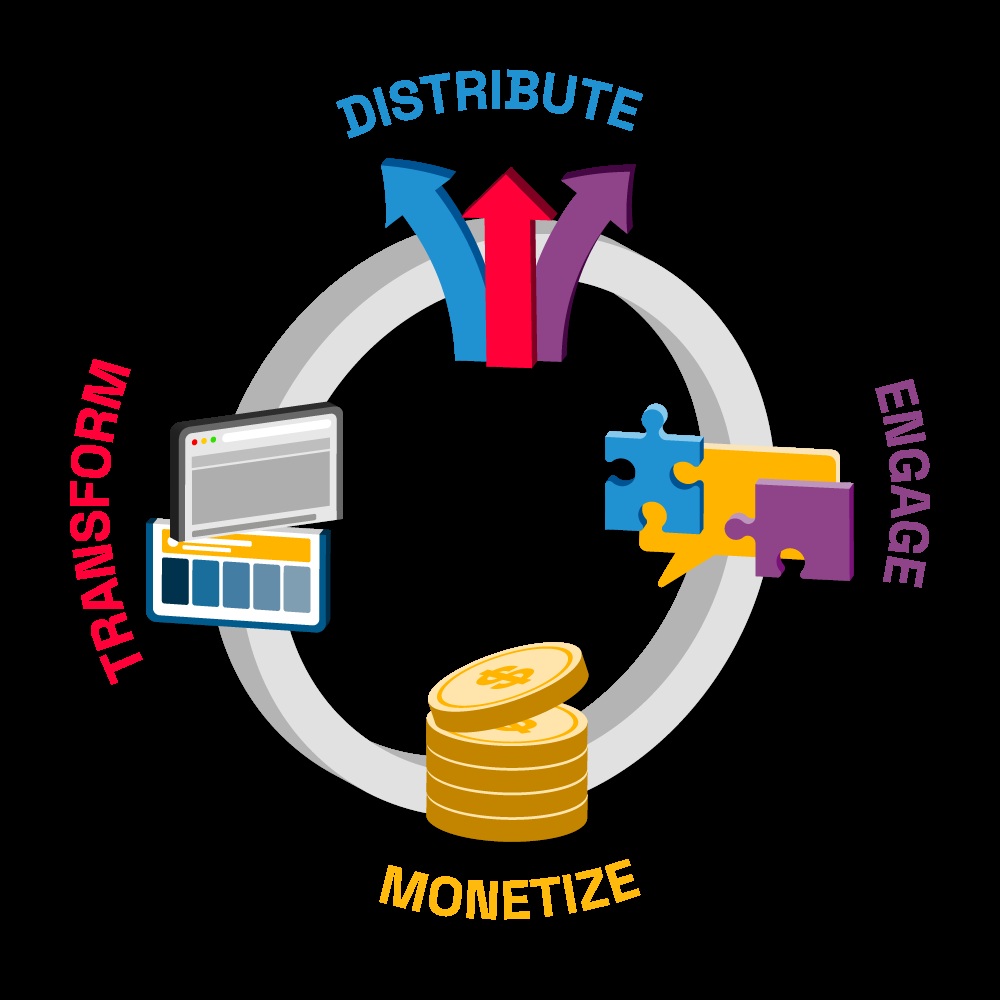
The response extended upstream. JWX acquired Aug X Labs in January 2026, adding AI-assisted content transformation. In April, it announced its acquisition of True Anthem, adding automated social publishing. Content Hub followed in August, connecting a central video library with transformation, distribution, engagement and monetization. An article can become video; a long video can become shorts; distribution can take those versions beyond the publisher’s own page.
Steal the diagnosis
Brightcove, EX.CO and Primis offer overlapping video capabilities. Connatix’s distinctive proposition is the connection among content, player, advertising demand and contextual signals, now expanded within JWX. A buyer should evaluate that connection against its existing systems, rather than mistake a longer product menu for a better fit.
The copyable lesson is to locate the constraint. Test placement and viewability before commissioning more video. Compare net revenue per visit, alongside engagement and editorial workload. A publication without useful content, adequate audience demand or acceptable unit economics will struggle to make this chain pay. Automation can distribute a story; the story still has to deserve someone’s time.