An eight-week stay can look perfectly reasonable in an accelerator proposal. It looks rather different on a family calendar. When Dave Blanchard was designing what became Praxis, conversations with the people he hoped to serve exposed that difference. Founders could use advice, introductions, and time with peers. Disappearing from home for two months was another proposition.
He changed the format. The early program took shape around three main events across a year. Before Praxis had much of a record helping entrepreneurs, it had a small record of taking their lives seriously.
Blanchard had been a principal designer at IDEO. He and his collaborators spoke with about 150 entrepreneurs, donors, and social investors while developing the program. Listening had consequences. A prospective participant could alter the design rather than merely occupy a place in it.
“Knowing that need comes down to listening.”
Dave Blanchard
That makes an unusually practical beginning for an organization with a large spiritual ambition. An accelerator would have to accommodate the people it meant to accelerate. The family calendar had made a persuasive presentation.
A name found between Evanston and Chicago
Blanchard came to this work with experience of starting things himself. He had co-founded and sold two businesses in the music industry before Praxis. He studied entrepreneurship at Babson College, then earned an MBA and a master’s in engineering management at Northwestern. His career brought together the commercial question of whether an organization could work and the designer’s question of whom it would work for.
At IDEO, those questions belonged to a professional practice. At Praxis, they would also belong to his understanding of Christian faith. Today he lives in New York City with his wife and three sons. The organization he leads supports founders building both businesses and nonprofits, allowing the work to cross a legal boundary that can dominate conversations about doing good.
For a while, the venture had the working name 1522 Lab, a reference to Proverbs 15:22 and its emphasis on counsel. Blanchard remembers buying a beaker icon for ten dollars. A laboratory had its logo; the founders still needed a name they wanted on a business card.
He recalls the word Praxis arriving during his train commute from Evanston to Chicago. He looked it up on his phone and found the connection between thought and action that he wanted. He and co-founder Josh Kwan settled on it before their April 2011 launch with Q in Portland. The eventual organization acquired a name with philosophical ancestry and the useful advantage of fitting on stationery.
The field guide includes the plumbing
One way to understand Blanchard’s work is through the book he helped write. From Concept to Scale, co-authored with Steve Graves and Josh Kwan, follows an organization through concept, launch, proof, and scale. Its territory includes financing, partnerships, governance, organizational culture, and time management.
Those subjects have limited glamour. They also decide whether a promising idea becomes something people can rely on. A founder’s purpose eventually encounters a board meeting, a product decision, or a shortage of money. The field guide gives those encounters room.
Its recurring practices include empathy and prototyping. Readers are invited to test ideas and relationships as they build. In that approach, an organization develops through contact with the world around it. The first description of the idea begins a conversation; experience supplies revisions.
Blanchard’s early account of the book connected faith with the details of an enterprise, including supply chains, marketing, and the original concept. His argument treated the organization as a collection of choices with moral consequences. A venture could communicate a worldview through how it bought things and what it invited customers to desire.
That position makes the founder’s task more demanding. A worthy intention leaves plenty of decisions unresolved. The work continues in the structure of the business, the expectations placed on its employees, and the ways it earns money. For Blanchard, those are places where belief becomes observable.
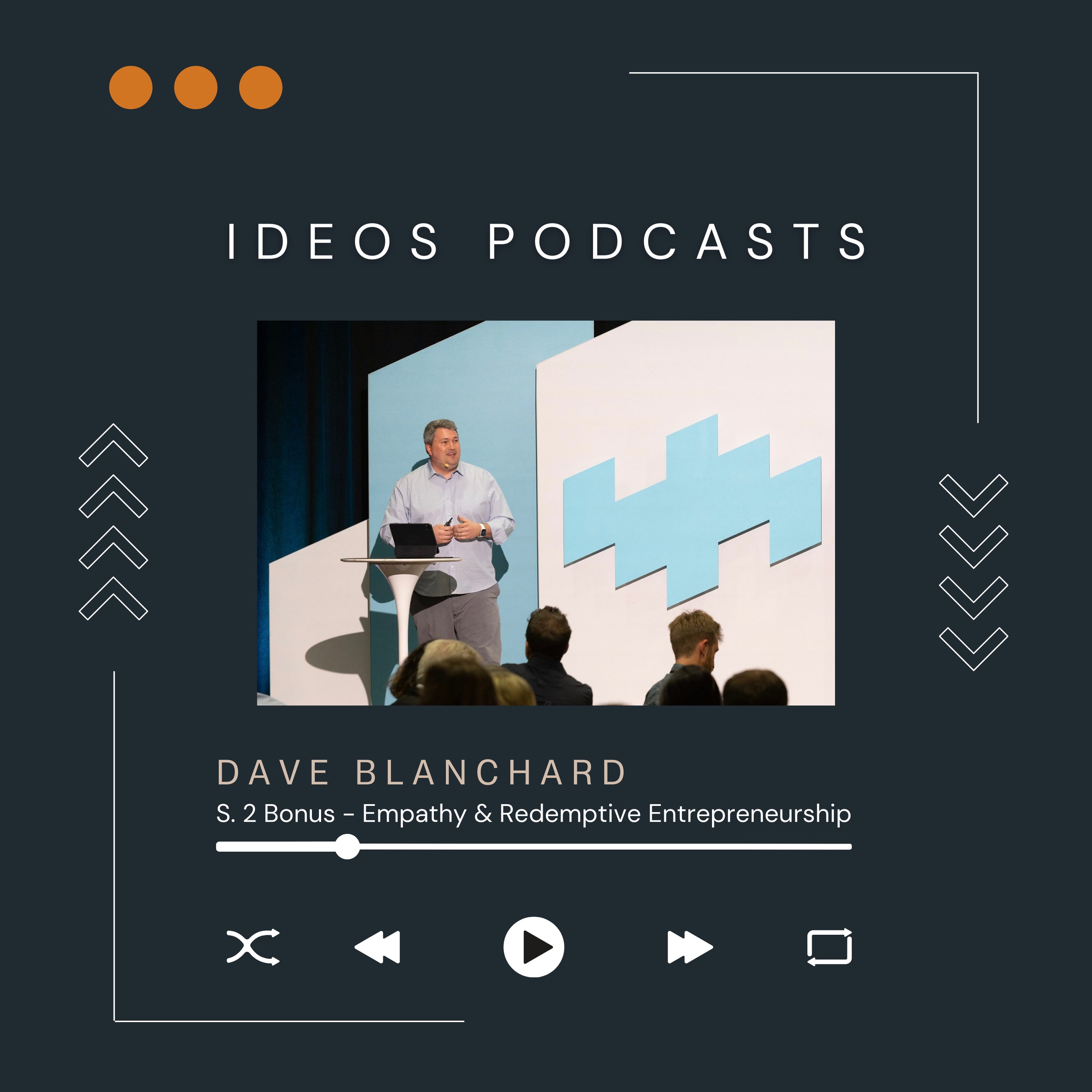
His conversation with Amar Peterman for The Empathy Table addressed empathy’s place in the movement from exploitation toward redemption. It is a fitting subject for someone whose founding program changed when he heard what participation would cost. Empathy becomes useful to an institution when another person’s circumstances can affect what the institution does.
The calendar has a vote
Praxis describes its Christian commitments openly. Its stated purpose connects entrepreneurial work with service, cultural renewal, and human flourishing. Businesses and nonprofits sit within the same venture-building community. Capital, mentorship, and the formation of leaders belong to that project together.
Blanchard has helped give this work a vocabulary: exploitative, ethical, and redemptive. The distinctions ask people to consider what their ventures create, how they operate, and why their leaders pursue them. The questions travel into decisions that a mission statement cannot settle by itself.
He has also described an arrangement with rather less theological terminology: a meeting-free Monday. In conversation with Jordan Raynor, he recalled the team being overtaken by meetings and creating a weekly competency day for focused work. Flexible Fridays left room for collaborative design work.
In the same conversation, he described himself as roughly 75 percent vision and 25 percent operations. Working with Sajan George allowed complementary strengths to shape leadership. Blanchard recognized that his own management could become a bottleneck. A founder who asks others to change needs some means of noticing when he is in the way.
Community carries a similar practical weight in his thinking. In a conversation with John Marsh, he discussed the difficulty of pursuing redemptive work as a solitary hero. People can bring experience, perspective, and encouragement that an individual venture cannot manufacture internally.
There are quieter clues to his imagination, too. He recommends Elton Trueblood’s Alternative to Futility, published in 1949, and has described snorkeling as a particular passion. Underwater beauty, he says, points him toward the extravagance of creation. His reading and recreation both leave room for a world larger than the next organizational objective.
An editorial reading of the thread through Blanchard’s work.
Success comes with another assignment
In his writing about redemptive quests, Blanchard challenges an appealing destination for an entrepreneur: reaching enough success to become permanently cautious. Experience can improve a person’s ability to attract money, collaborators, and attention. He asks what that increased capacity makes them responsible for attempting.
Drawing on an argument by Trae Stephens and Markie Wagner, he uses the language of a player level. The comparison borrows from games, but the obligation is serious. More resources can make harder, worthwhile problems available. He also allows for patient steps toward a substantial objective. The quest is judged partly by what it seeks to accomplish and whom it serves.
His 2024 reflections made that argument more specific. An interest in a sector, he proposed, should develop into a thesis about its future. A founder needs a view of where things are going and where their work might help them go. The distinction asks for research, judgment, and an intended contribution.
He also urged people to invest where they have proximity. Mike Bontrager’s work in Kennett Square offered an example of commitment to a particular place over time. The scale of the world’s problems can encourage distant commentary. Proximity gives a person something to understand, relationships to honor, and work they can begin.
These arguments resist an easy reading of entrepreneurial ambition as a succession of larger organizations. A demanding project may involve staying with a place, choosing a neglected problem, or changing the terms on which a venture operates. The relevant question concerns what a person is willing and able to put into the work.
Fifteen years into a thirty-year idea
By his 2025 community address, Blanchard was describing Praxis as a moral ecology. The phrase concerns the surrounding relationships and habits that make particular choices possible. He emphasized generosity, meaningful risk, and the priority of people in a community accustomed to building projects.
He also offered a useful distinction between the major issues of the time and those of the moment. An organization can chase each new argument and remain very busy. A community taking the long view needs ways to hold its attention on work whose importance survives a change in public fashion.
That concern now reaches into artificial intelligence. Blanchard advises Sprout AI Studio directly. The studio places human connection at the center of its venture-building question. His involvement gives a current technological setting to a familiar interest: the relationship between what people build and the lives their creations encourage.
In June 2026, he looked back on fifteen years of Praxis as the midpoint of a thirty-year vision. He reported a $25 million Quest Fund completed in 2025, within $75 million committed to Praxis across its history. He also outlined the Redemptive Imagination Project, with new venture partners organizing work around specific issues.
Praxis’s Quest Fund, completed in 2025.
Organizational funding; not a measure of personal wealth.The next phase would carry the community’s ideas and practices further, alongside its work with ventures. Growth creates its own design problem: how to extend a way of working that depends on relationships, trust, and attention to particular people.
Blanchard has encountered a smaller version of that problem before. An accelerator plan once met a family calendar, and the plan changed. Fifteen years later, Praxis has more people, more resources, and a longer record. The habit that began the experiment still gives it a useful test: when people tell you what the work requires, does anything change?
Read, watch, follow
- Dave Blanchard at Praxis · LinkedIn · Twitter / X · Writing archive
- The 2011 founding conversation
- The story behind the name Praxis
- Inside From Concept to Scale · An early conversation about the book and business
- Blanchard’s conversation with Jordan Raynor · Redemptive Work Requires Community
- On redemptive quests · On hope, risk, and proximity
- Watch the 2025 community address ↗ · Watch the Faith Driven Entrepreneur interview ↗
- Moral Ecology as a Response to the Moment · The June 2026 community letter
- Sprout AI Studio’s team and advisors · The Empathy Table · About Praxis