Finding Daniel Palestrant in the Sermo office once required a simple navigation system: follow the dogs. In Cambridge in 2008, his two dachshunds waited outside the conference-room door. Inside the company he founded, beanbags and arcade machines shared space with the work of building an online professional network. The office allowed pets because its chief executive had decided it should. A business devoted to conversation had acquired a fairly expressive welcoming committee.
The scene is a useful way into Palestrant’s career. He built Sermo around an ordinary human habit: colleagues talking to colleagues. He had noticed that useful ideas circulated informally, while the people who might benefit from them were often elsewhere. A network could carry those exchanges farther. The difficult part would be keeping people interested, paying the bills, and persuading members that the arrangement deserved their trust.
His office philosophy made room for the untidiness. “And you can’t take yourself too seriously,” he said. It is an economical management principle, especially when somebody’s dachshund has already taken possession of the meeting.
The first company came before the famous one
Palestrant’s route to Sermo included a biology degree from Johns Hopkins, a medical degree from Duke, and training at Beth Israel Deaconess in Boston. Alongside that formal education ran another apprenticeship: building internet businesses. He worked on CIBUR, the CIGNA Internet Based Universal Resource, and founded Azygos in 1998.
At Azygos he raised $2.2 million, delivered the company’s first application, and sold the business to BioNetrix in May 2001. He then joined the buyer as a director. Long before Sermo attracted attention, he had experienced the practical sequence of an entrepreneurial venture: find backing, ship something, negotiate a sale, and work inside the organization that bought it.
That history makes the usual career-change shorthand feel rather cramped. Palestrant brought professional training and experience selling software businesses to the same desk. Sermo gave those two strands a shared problem to work on.
The members who spoiled the demographic forecast
Sermo took shape in 2005 and launched publicly in 2006. Its name came from the Latin for conversation. The ambition was to give physicians a place to exchange ideas beyond the colleagues they happened to encounter locally. Membership had a boundary: this was a professional community with credentials checked at the door.
Once the site was running, Palestrant noticed something that complicated an easy assumption about internet audiences. The busiest users tended to be older. The particularly active members were older still. Youth, apparently, had no exclusive claim on wanting a useful place to talk.
In a November 2006 interview, he described the demand as “a desire for a sense of community.” That answer sounds modest beside the machinery of a venture-backed company. It also identifies a reason to return. A person can admire a software feature once; a conversation with peers can give them a reason to come back tomorrow.
The pattern persisted. In a 2011 interview, Palestrant again pointed to older members as heavy users and suggested that busy professionals appreciated the efficiency. His experience offered a concrete correction to the idea that building an online community mainly meant finding the youngest possible audience. Usefulness had its own demographic.
Older physicians were among Sermo’s heaviest users. The product answered a need for connection that age alone could not predict.
A table in Midtown
In October 2007, Palestrant invited members to dinner at a Midtown Manhattan restaurant. It was part of an effort to meet users around the country. The invitation reached physician blogger Nicholas Genes and fellow Medgadget contributor Joshua Schwimmer. They arrived with questions, including questions about the company’s newly announced commercial partnership with Pfizer.
The gathering included people from different professional settings and age groups. Genes described an older crowd, including a professor in his seventies. Palestrant answered questions using market research, survey findings, and explanations of the legal and programming constraints behind decisions. Genes came away impressed by his willingness to distinguish what he knew from what he did not.
It is an unusually revealing episode in a platform founder’s story. Members of a network are easy to render as a line on a chart. Around a dinner table, they can ask a follow-up question. Palestrant had built a place for other people to talk, and now he was sitting within conversational range himself.
A free room still has rent
Sermo’s original economics gave members free access without conventional advertising. Paying clients bought information products and ways to engage with the community. Financial-services organizations were among the early customers. Palestrant’s task was to connect two kinds of value: the value members found in one another and the value outside organizations found in understanding the conversation.
That arrangement required explanation. An audience could enjoy the room and still have questions about who was looking through the window. The 2007 Pfizer partnership brought those questions into view. Proposed interactions were to be discussed with members, and contributions from Pfizer personnel were expected to be identified as such.
Palestrant also argued against making the space exclusive to a single corporate participant. “They want it on-demand,” he said of members’ appetite for information. The emphasis was on people choosing what they wanted to consult, rather than having another organization dictate the encounter.
These were business choices with social consequences. Who pays? Who participates? How does a member recognize a commercial voice? Every professional network has to decide how clearly it will answer. Sermo made those questions part of its early operating life.
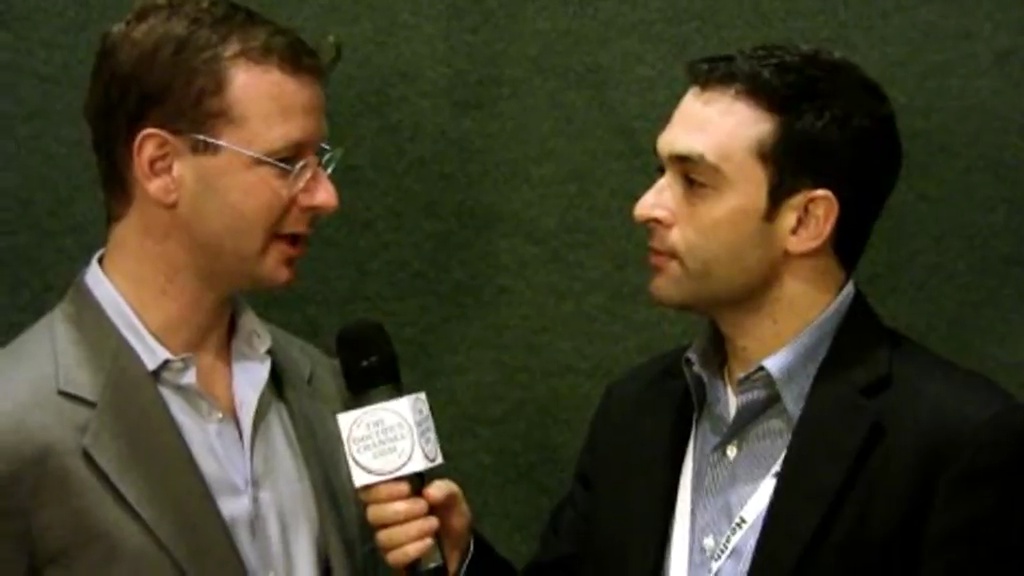
By July 2008, the membership stood at roughly 70,000, and Palestrant described weekly additions of about 1,000 to 1,500. Later that year he was discussing a partnership with Bloomberg. A network that began with colleagues talking among themselves had become interesting to an organization whose business depended on moving information.
When the conversation becomes a product problem
Growth brought another kind of work. In July 2010, Sermo introduced a redesign that had taken more than a year and incorporated feedback from thousands of members. Search, navigation, topic tracking, and posting all received attention. Users could follow activity more easily and find material through filters.
At that point, the community had produced more than 50,000 posts, a million comments, and nearly four million votes. Those numbers describe more than an expanding membership list. They describe an expanding retrieval problem. A conversation can be valuable and still become hard to find once thousands of other conversations surround it.
For Palestrant, this was the less photogenic side of running a social business. The founding insight got people through the door. The next task involved helping them locate the discussion they actually wanted. The bulletin board needed better organization.
That same year, Sermo appeared on Fast Company’s list of innovative companies. Recognition arrived alongside the routine work of maintaining a product that people had already filled with their own contributions. There is a particular entrepreneurial pleasure in attracting an audience, followed by the considerable obligation of being useful to it.
The economist in the next chapter
Palestrant left Sermo in late 2011. WorldOne acquired the company in July 2012, when Sermo had 130,000 members. His next venture, par8o, reunited him with Adam Sharp. The name referred to the Italian economist Vilfredo Pareto, whose ideas about allocating resources supplied the new business with an organizing principle.
The promotional material supplied something less solemn: Palestrant and Sharp appeared in photographs with a cutout of the economist. Few startup mascots arrive with such an established bibliography. The joke made an abstract idea portable, and gave a new company a character people could remember.
The business itself moved toward software for coordinating referrals and matching resources. A January 2015 announcement brought $10.5 million in Series A funding from investors including Atlas Venture, Founder Collective, and CHV Capital. In a subsequent interview, Palestrant discussed how the idea had developed while he was still running Sermo.
The connection between the ventures is visible in their designs. One assembled a professional conversation; the next organized movement between participants. Both depended on understanding connections that already existed, then making those connections easier to use. The customers and products changed, while his attention stayed on the exchanges between people and organizations.
- 1998Azygos founded
Sold to BioNetrix in 2001 - 2005Sermo takes shape
Public launch in 2006 - 2011par8o founded
Acquired by Cloudmed in 2021
There was a financial discipline to the second act as well. In January 2017, Palestrant said par8o had finished 2016 profitable, emphasizing the limited capital used to get there. Cloudmed acquired par8o in December 2021. His company-building record now included another sale, two decades after the Azygos transaction.
The businesses have continued changing hands. In February 2026, NuvemRx announced its acquisition from R1 RCM of the referral-capture business formerly known as par8o. That later transaction belongs to the company’s subsequent history. Palestrant’s documented role in the story is the earlier work of founding and leading it.
Across those chapters, the recurring detail is his willingness to examine an exchange that other people might take for granted. A hallway conversation. A member’s unanswered question. A connection between organizations. Sermo began with an attempt to carry ordinary professional talk farther, and required years of commercial and technical decisions to keep it going. The dogs outside the door were a memorable introduction. Inside, there was work to do.
Continue the conversation
- Sermo website
- Daniel Palestrant on LinkedIn
- Daniel Palestrant on X
- Watch: the Bloomberg partnership interview
- Listen: the 2015 par8o interview
- Read: the Sermo member dinner
- Read: the 2010 platform redesign
- Read: WorldOne’s 2012 acquisition announcement
- Read: par8o’s 2021 acquisition
- Read: the February 2026 company transaction