Daniel O’Day’s first job was landscaping. Years later, asked what he had taken from it, he supplied an answer with the economy of someone who had already done enough digging: it “inspired me to pursue my education.” There are grander ways to begin the biography of a chief executive. Few are as useful. Before the international assignments, the board seats and the carefully worded announcements, there was work that made another kind of work look appealing.
O’Day would go on to spend more than thirty years at Roche, moving through jobs and countries before becoming chairman and chief executive of Gilead Sciences in March 2019. His résumé has the tidy appearance that résumés acquire once the uncertainty has been removed. Read the dates closely, though, and a more interesting pattern appears. He stayed with one employer while repeatedly changing the terms of his working life.
The distinction matters. Long tenure can suggest familiarity, a comfortable chair worn into the right shape. O’Day’s version involved Switzerland, Japan, Denmark and a return to California. The company name stayed put. His surroundings, responsibilities and colleagues did rather more travelling. It is a career that invites a question: how much change can a person fit inside a seemingly stable professional life?
A degree, then a change of subject
He graduated from Georgetown University in 1986 with a bachelor’s degree in biology. He joined Roche in 1987, beginning in commercial and sales roles in the United States. These are useful details to hold together. An education in science preceded a career whose daily demands would increasingly involve people, markets and organizations. The academic subject and the working method were related, but hardly interchangeable.
By 1995, he was a director in human resources. In 1996, his title had shifted again, to director of product marketing. He earned his Columbia MBA in 1997. Look at those three years and the progression becomes less like climbing a single staircase than walking through adjoining rooms: people, products, business education. Each room has its own vocabulary and its own preferred account of what the organization needs.
That sequence offers a practical way to read his later leadership. A person who has worked in sales, human resources and marketing has occupied several positions from which the same company looks different. A sales target, a hiring decision and a strategic plan may sit inside one annual report. They still require different conversations. His early career put those conversations close together.
There is a temptation to turn every successful person’s past into a syllabus written in advance. The dates do not warrant that. They show what he did, rather than a youthful master plan. Their interest lies in the accumulation: a scientific education, commercial experience, a people function, a business degree. The eventual chief executive had been acquiring more than one way to understand a problem.
The employer stayed. The map changed.
In 1998, O’Day moved to Roche’s headquarters in Switzerland. In 2001, he became head of corporate planning in Tokyo. In 2003, he moved to Denmark as general manager. In 2006, he returned to the United States to lead a Roche business in Pleasanton, California. The itinerary makes a neat graphic. Living it is presumably less neat than drawing it.
What can be said with confidence is that he regards those international experiences as formative. When asked about the places he had lived, he described them as shaping both his thinking and who he had become. That is a more personal answer than a list of markets mastered. He was talking about the effect of the assignments on the person doing them.
A headquarters role in Switzerland, a planning role in Japan and a general manager’s role in Denmark also involve different relationships to authority. Planning requires a view across competing demands. General management brings responsibility for an operation. Neither title tells us everything about the work, but together they show why describing this period simply as overseas experience misses some of its texture.
The passport stamps are the visible part. The harder thing to put on a résumé is a revision to one’s assumptions. O’Day’s own account gives that quieter process a place in the story. He does not present the world merely as a collection of destinations at which he arrived already equipped. He credits the experience of working across it with changing him.
- 1987United StatesCommercial and sales roles
- 1998SwitzerlandHeadquarters leadership
- 2001TokyoCorporate planning
- 2003DenmarkGeneral manager
- 2006PleasantonBusiness president and CEO
- 2019Foster CityGilead chairman and CEO
The interview goes both ways
His thoughts on hiring are particularly revealing because hiring is where a leader’s philosophy meets another person’s future. O’Day has spoken about trying to understand what motivates a candidate, and whether that motivation fits the organization’s purpose. Experience matters, but so does the angle from which someone approaches a problem. He values people able to consider more than one.
There is a pleasing lack of theatricality in that approach. No riddle about how many objects will fit inside an aircraft. No invitation to perform genius on demand. The underlying question is more difficult to bluff: will this person find the actual work sufficiently meaningful to keep doing it well? A polished answer in an interview can carry someone only so far into an ordinary Tuesday.
He has also emphasized spending time on the hiring process. That preference belongs alongside his support for autonomy. If people are going to have room to exercise judgment, choosing them carefully becomes part of the design. Delegation requires an earlier act of attention. Otherwise, freedom arrives with a rather expensive instruction manual attached: please somehow become the person we hoped we hired.
These are his stated preferences, rather than a claim that every appointment has worked out. They suggest a leader interested in the relationship between individual motivation and collective work. The organization needs results; the individual needs a reason to care about producing them. A hiring conversation is one of the few opportunities to examine both before the calendar fills up.
Ninety days before the next chapter
Gilead announced his appointment in December 2018, with a start date of March 1, 2019. John C. Martin, then chairman, backed the choice after the board’s search. Gregg Alton would serve as interim chief executive until O’Day arrived. Even a change at the top has a timetable, a handover and people responsible for the interval between announcement and arrival.
By then, O’Day had held senior leadership roles at Roche, served on its corporate executive committee and accumulated board experience. Gilead nevertheless brought a fresh responsibility: leadership of a United States public company. Experience travels with an executive. The authority to understand a new organization still has to be earned.
He spent his first ninety days meeting employees and listening to their views of the company. At Berkeley Haas in 2026, he returned to that opening period and the question of preserving the organization’s speed and agility as it grew. A familiar management problem acquired a personal point of entry: before deciding what to change, he wanted to understand what people thought was worth keeping.
“Innovation, in my opinion, happens at the intersection of those cultural differences.”
Daniel O’Day · Berkeley Haas, 2026
Listening is easy to advertise and harder to give space in a schedule. Ninety days provides a more concrete unit than an adjective such as approachable. It does not establish the quality of every subsequent decision. It does show where he chose to begin. For someone arriving with decades of experience, the first assignment was to hear from people who had been there before him.
The morning has fewer job titles
Away from the organizational chart, O’Day has described family time as a source of happiness and running as a way to explore the cities he visits. His wife is Mara; they have three children. In an international career, a run offers a modestly different relationship with a place. A city can be encountered at pavement level, beyond the meeting room and the journey from the airport.
His family history reaches back to Ennis in County Clare on his father’s side. Born in Texas, he is a third-generation Irish-American. He has spoken of the perseverance of his ancestors as a continuing motivation. The connection gives the globe-spanning résumé a point of attachment. A person can move often and still carry an account of where the family began.
That small landscaping joke belongs here, too. It allows an early job to remain an early job, complete with a reason to seek a different one. Executive biographies often tidy away such details. This one is better for keeping the dirt.
The next opening belongs to somebody else
On October 20, 2026, Georgetown announced a $10 million commitment from Daniel and Mara O’Day for a scholarship fund supporting first-generation students. Recipients will be able to attend free of cost. The first scholar entered that autumn; two scholarships are planned for each incoming undergraduate class.
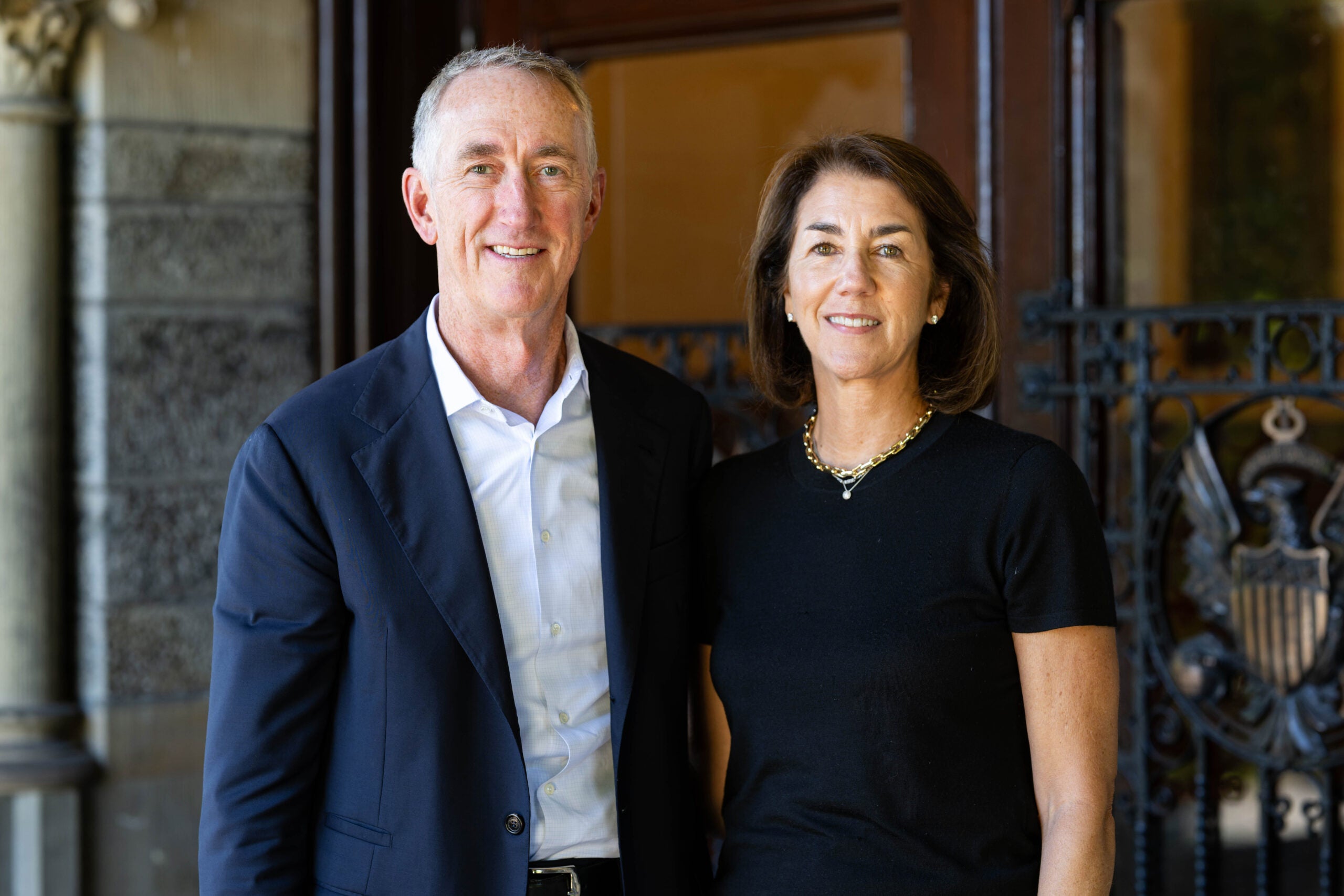
The family connection is specific. His father, John, was a first-generation student who went from rural Montana to Gonzaga University. Daniel sees the benefit of that education continuing through later generations. Mara’s work as a Court Appointed Special Advocate for children in foster care has also informed the couple’s understanding of barriers to college.
Here the career story turns outward. O’Day’s own education helped precede a working life across countries and organizations. The scholarship directs attention to people whose first consequential move may be getting to university at all. For a biography filled with appointments, it is a fitting place to pause: a new opening, this time with somebody else’s name on it.