Daniel Dines once built a dictionary that could read the words on a computer screen. Click a word, get a definition or a translation. It was a neat solution to a small irritation, and a poor business. The machinery underneath it proved more useful than the product wrapped around it. A company struggling to sell definitions had accidentally made something that could help software see.
That detour is a good place to begin with Dines. He is the co-founder, chairman and CEO of UiPath, a company built around getting computers to carry out repetitive office work. His career contains the familiar ingredients of a technology biography: an engineering job at Microsoft, a small founding team, investors, a stock-market debut. The order in which he learned what mattered is more interesting than the list.
He returned to Romania in 2005 and started DeskOver, the business that became UiPath. For years, different products failed to produce the future he wanted. The dictionary left behind a screen-reading engine. Eventually, business-process outsourcing firms saw a use for technology that could operate across the applications their employees handled. The customer had a better idea for the invention than the inventor’s original sales pitch.
In July 2026, Dines described that early application in very practical terms: it let someone extract words from any application rather than retype them. The business had changed considerably; the annoyance was recognizable. Somewhere, a person was copying information that already existed. Dines had found a recurring customer in the unnecessary keystroke.
The computer was available after eight
Before he could remove anyone else’s tedious work, Dines had to find work of his own. Growing up in communist Romania, he wanted to become a writer. His parents were a teacher and a civil engineer. He began university in 1990, just as the country was entering a disorderly new economic period, and competitive bridge competed successfully for his attention.
Programming offered a more immediate possibility. Dines heard that a developer could earn $300 a month, while he was getting by on about $30. Learning the language was one problem; getting access to a computer was another. At a small employer, the machines were occupied during working hours. He took the night shift, arriving around eight in the evening and programming until the morning buses began running.
There is something pleasingly literal about that apprenticeship. The equipment existed. Its schedule did not suit him. He changed his schedule. In a later account, he credited six months of this concentrated work with establishing the foundations of his career. Long before his company sold automation, he had discovered the value of an idle machine.
In 2001 he moved to Seattle to work at Microsoft. His technical knowledge had travelled more easily than his English: he later recalled understanding only part of what was said in meetings. Learning to participate in a large American software company involved more than writing competent code. A programming language had opened the door; ordinary conversation still had to catch up.
He worked on SQL Server Agent, then went home to start a company from an apartment. The return matters. Microsoft had offered an established structure for an engineer’s ambitions. DeskOver offered the opportunity to make the structure himself, with all the less glamorous obligations that came attached. There would be products, certainly. There would also be bills.
“I want a robot for every person.”
Daniel Dines, 2019
Eight years to half a million
Dines has described taking eight years to reach $500,000 in annual recurring revenue. The intervening experiments taught him fragments of marketing, finance, sales and law. Viewed from inside the struggle, this could look like a programmer becoming less employable. Viewed later, it looked like preparation for running a company. The same years could support either interpretation, depending on when you stopped the clock.
He ultimately chose a global route to market rather than perfecting the business in America first. That decision required tolerance for failures, awkward communications and the difficulty of finding leaders in different countries. For more than four years, he said, he rarely stayed in one city for longer than two weeks. The founder’s calendar became part of the distribution system.
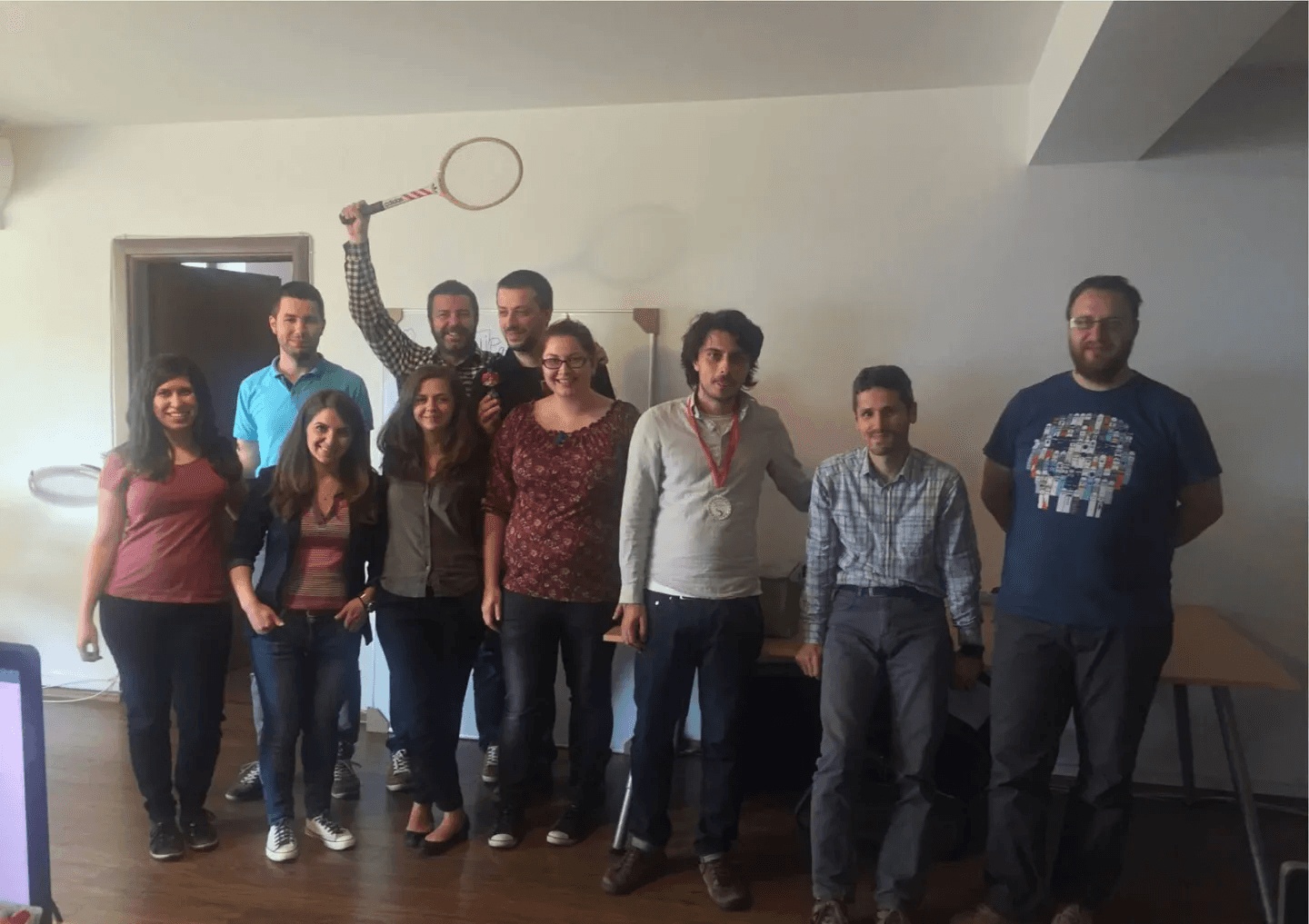
A useful early-team photograph shows Dines holding a tennis racket above a group of colleagues. It catches the company at a size where everyone can fit in a room and a celebration can be improvised. Tennis also supplied him with a business analogy: a more famous opponent can disturb your confidence before a match has really begun. He wanted his team to judge competitors by their capabilities.
That confidence had to coexist with a capacity to reconsider. Dines argues that a decision creates information; better information makes the next decision possible. Being consistent with yesterday can become expensive if yesterday’s assumptions have expired. A founder who survived several unsuccessful products had unusually concrete reasons to be suspicious of permanent answers.
Humility, with a scoreboard
Dines made humility a central UiPath value. His explanation is practical: people need to hear objections, change their minds and make decisions without becoming prisoners of their own pride. He expressed the idea as an informal equation, general intelligence equal to IQ divided by ego. It is a management provocation, rather than a psychological measurement, and an unusually economical reprimand.
The personality behind it has edges. In a 2019 encounter, he pressed a product executive to simplify an interface. The software might perform complicated work, but the user should not inherit all that complexity. His impatience with a clumsy experience sat alongside his enthusiasm for books and his willingness to describe himself as lazy. A self-description can be both revealing and carefully chosen.
In 2020, he explained that he needed time alone to read and think. Jack London’s Martin Eden had once encouraged his wish to become a novelist; fiction continued to influence his understanding of the world. Hacker News kept him connected to engineering. Reading about sales and legal matters helped him expand beyond it. The bookshelf was also a continuing education department.
He described leadership as the daily work of getting different personalities to pull together. When UiPath began adding operational discipline after rapid growth, he met employees in small groups to explain the change and hear their concerns. An all-hands announcement could communicate a decision. Smaller conversations could expose what that decision would actually mean to the people expected to carry it out.
The bell rings; the work continues
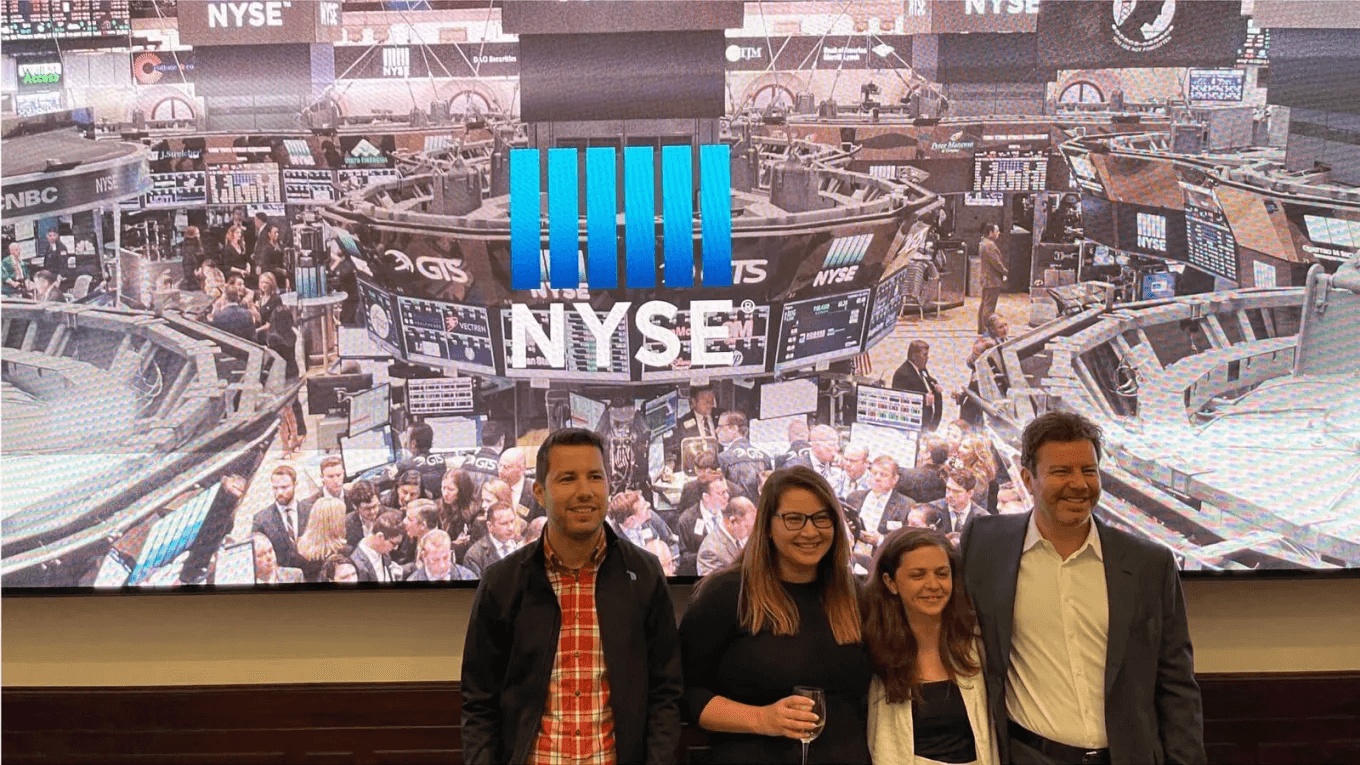
UiPath went public on the New York Stock Exchange in April 2021 under the symbol PATH. Its offering priced shares at $56 and involved roughly $1.34 billion of stock sold by the company and existing shareholders together. It was a substantial public milestone for a business that had spent years searching for a market from Bucharest.
The IPO photograph has the expected smiles and the exchange’s lettering. It is tempting to make that image the last frame. A public company immediately acquires more frames: quarterly results, shareholder expectations and the need to keep making a product customers will buy. The bell is excellent theatre. It cannot do the next quarter’s work.
Dines shared the CEO role with Rob Enslin from 2022 through January 2024, then became chief innovation officer while Enslin served as sole CEO. On May 29, 2024, UiPath announced Enslin’s resignation and Dines’s return, effective June 1. Dines said he would lead the next phase of profitable growth and innovation. His title had changed twice in a few months; the business he had founded still required his attention.
The leadership sequence is worth preserving in its actual shape. UiPath was adapting to generative AI, and Dines had briefly moved into a role focused on innovation. His return joined product direction and company leadership again. The founder’s story continued inside an organization considerably larger, and more accountable to outsiders, than the apartment company.
- 2005Returns to Romania
Starts DeskOver - 2021UiPath goes public
NYSE: PATH - 2024Returns as CEO
Effective June 1 - 2026Publishes
The Work That Remains
The aspiring novelist finally has a book
In August 2026, Dines released The Work That Remains, a book about the architecture of an enterprise using AI. The writing credit names Claude and ChatGPT alongside him. For someone whose early ambition was literary, it is an unexpected route into authorship: build a software company for two decades, then write about work in conversation with software.
His argument divides responsibilities. AI can investigate and prepare a proposal. People take responsibility for consequential decisions. Automation executes approved actions reliably. The appeal lies in its specificity. A fluent answer still needs permission to become a payment, a customer promise or a change to an official record. Those are places where a business has to know who owns the outcome.
He also describes a map of work: the rules, processes and practical knowledge that explain how an organization really operates. Much of that knowledge lives with experienced employees. A process diagram can show the usual route while omitting the exception everyone knows to ask a particular colleague about. Making that knowledge usable is a different assignment from buying a more capable model.
His public essays give human expertise a continuing role at these boundaries. Mentors, people who hold customer trust and employees who recognize an unusual case carry things that routine output alone does not capture. He worries about the junior pipeline, too. If machines produce more of the first drafts, companies must deliberately give younger employees access to the decisions through which experience develops.
In an August essay, he recommends beginning with one frequently used workflow, a real cost of error and an owner who wants the problem fixed. Invoice exceptions or access requests are better starting points than a grand program with a steering committee. There is a dry comedy in the destination: after all the discussion of enterprise intelligence, someone still needs to make the invoice go through properly.
Dines’s book biography says he lives in New York, spends much of his time in Bucharest and reads Kafka regularly as a reminder that things could be worse. It is a fitting reading choice for a person trying to make institutions less bewildering. He began with a tool for understanding a word on a screen. He is now concerned with what an organization understands about itself. The dictionary found another job. Its founder kept reading.