At ten, Daniel Amen had a Saturday job sorting bottles and crates in his father’s grocery store. He remembered liking the work because it bought him time with his father. For a child in a household of seven children, a little undivided attention could be a respectable wage. Long before he learned to address a television camera, he was finding ways to get a busy person to look in his direction.
His father, Lou, built a career in groceries. Daniel built a career that would put his surname on a company, book covers, and television listings. The distance between those two working lives is considerable. The family resemblance is easier to spot in their willingness to keep working. Daniel has described inheriting his father’s drive, along with a gentler capacity for connection that he associated with his grandfather.
Today, Amen is the founder and CEO of Amen Clinics, an author, and a familiar presence across broadcasts and social platforms. Yet the more revealing route into his life begins before any of those titles. It starts with a son who felt easy to overlook, then follows the different ways he learned to make himself heard.
The grocer’s second son
Amen was born in Encino in 1954 and grew up in a Lebanese-American family with five sisters and an older brother. He has spoken about feeling lost in the middle. In his telling, being the second son carried fewer of the expectations attached to the first. He eventually found some freedom in that position: he could choose a direction of his own.
There was a substantial family enterprise available to admire. Lou founded Super A Foods in 1971. Several of his children went into the business, and he also spent more than fifteen years chairing the board of the organization that became Unified Grocers. Daniel’s route led elsewhere. A family business can supply an example even to the child who never takes a permanent place behind its counter.
The childhood memories have rough edges. Daniel remembered a father whose reflexive answers were often blunt, a parent absorbed in work. He also remembered the stability and example that work supplied. Their relationship grew closer later in life. When Daniel wrote a poem for his father’s funeral, he returned to the encouragement he had received. Affection and exasperation evidently had to share the same family shelf.
A voice gets its practice
In 1972, at eighteen, Amen joined the Army. His subsequent education crossed several institutions: the University of Maryland’s West Germany campus, Orange Coast College, Southern California College, and Oral Roberts University. The geography alone interrupts the tidy idea of a career proceeding along one familiar campus path. Germany came before the Southern California classrooms; a community-college degree came before the later qualifications.
He received his associate degree in 1976, his bachelor’s degree in 1978, and his doctorate in 1982. Southern California College later became Vanguard University. In 2002, it recognized him with its Outstanding Young Alumnus award. These dates place years of formal preparation underneath the public career that followed.
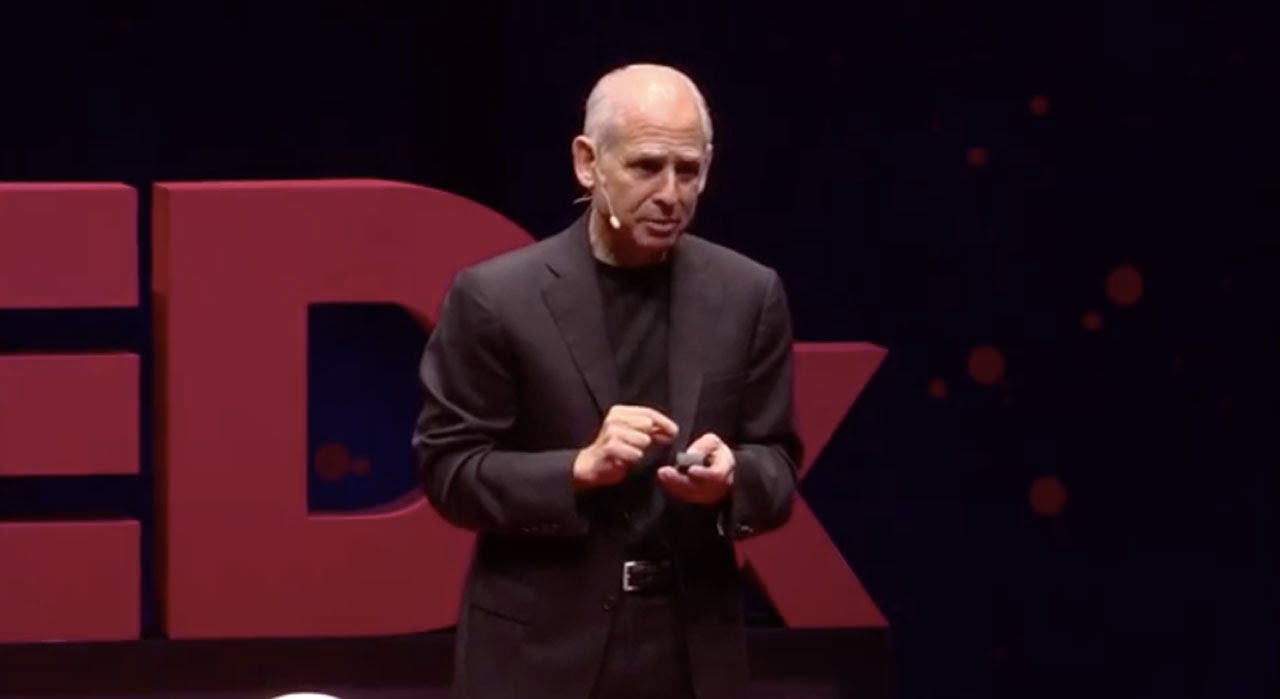
One college experience would prove particularly useful away from the classroom. Amen participated in debate and extemporaneous speaking. He remembered a speech coach’s instruction for the moment when an answer failed to arrive: “take a breath and smile.” There is room for a whole theory of public speaking in those six words. The audience sees composure; the speaker gets a second to think.
The work behind the airtime
Amen founded Amen Clinics in 1989. Alongside the company, he developed a publishing and broadcasting career that required a second set of working habits. A business can operate in several places at once. A writer and presenter must also learn to work in several formats, each with its own demands on the same person’s time.
He is a twelve-time New York Times bestselling author. He has written with collaborators as well as under his own name. Rick Warren and Mark Hyman are among his co-authors. Collaboration gives a public career a different texture: the voice on the cover may be recognizable, but the work can involve several people finding a way to speak together.
Television brought another kind of authorship. Amen has written, produced, and hosted national public television specials. Those three jobs occupy a compact phrase in a biography, but they describe different responsibilities: deciding what to say, arranging its presentation, and delivering it. He has said that he writes every word of his specials. The person in front of the camera also has a relationship with the script.
His appearances have extended to Larry King’s program, The View, and other interview shows. There is a difference between hosting a prepared program and arriving as someone else’s guest. The first offers control over the sequence. The second asks a speaker to respond to another person’s timing. College practice in speaking without a fully prepared text has an obvious place in that working life.
One idea, under a minute
Ask Amen about reaching an audience and he becomes quite practical. In a business conversation, he encouraged professionals to notice the explanations they repeat at work. Write them down. Build a list of a hundred familiar points. Then film each one in less than a minute. It is a production brief that begins with an ordinary working day, rather than a sudden flash of inspiration.
The advice also describes a way to make a large task manageable. A hundred videos sounds like an ambitious assignment. One explanation you have already given several times is a smaller unit of work. His emphasis is on recognizing material already at hand and giving it a form another person can use.
“Marketing is so important.”
Daniel Amen, on building a business
He is direct about promotion, too. He tells professionals to embrace marketing when they believe in their work and have a business capable of supporting it. That position helps explain his willingness to move between formats. A book, a television appearance, and a social account offer different doors through which someone might first encounter him. Keeping those doors open has become part of the job.
His public accounts now extend across Instagram, TikTok, X, Facebook, and LinkedIn, alongside his organization’s YouTube channel. These outlets do not require a new biography for each platform. They require another act of editing: what fits here, what can be understood quickly, and what deserves a longer conversation?
The other microphone at home
Tana Amen supplies a particularly useful companion voice. She is his wife, an author, and his podcast co-host. Their recorded conversations make room for disagreement, teasing, and the small routines a professional biography usually edits out. On one New Year’s episode, Daniel steered the discussion toward mortality with remarkably little delay. Tana’s response was economical: “Do you see what I live with?”
The same exchange included a less dramatic picture of the household. Daniel made Tana an almond-milk cappuccino, and the family sat together for about twenty minutes to talk about the day. They described looking back at the previous year’s pleasures and difficulties, then discussing their intentions for the next one. Plans could live in the Notes app on a phone and be revised.
Elsewhere, the couple have acknowledged that their first year together was rocky. Daniel joked that the attraction had been immediate for him; Tana complicated that version. The interruptions are useful. They keep a public partnership from reading like a joint press release. One person begins the polished anecdote, and the other remembers an inconvenient detail.
There is also table tennis. Amen identifies himself as an avid player, a pleasingly specific hobby beside the long lists of professional commitments. A paddle and a small table require no publisher, production schedule, or camera crew. The attraction needs no grand explanation to earn its place in the portrait.
Amen Clinics marked its thirty-fifth anniversary in 2024.
A surname, shared ownership
The company carrying Amen’s name describes itself as employee-owned. Its public explanation emphasizes that staff have a stake in the organization’s future. That detail belongs beside the founder story because a recognizable name can occupy so much of the frame that everyone else disappears.
A founder’s public profile and a company’s working life overlap without becoming identical. The television viewer encounters a speaker. The organization depends on colleagues doing jobs that cannot all be performed from a stage. Employee ownership makes those colleagues part of the business story in a concrete way, beyond the usual acknowledgment that success requires a team.
The family comparison is suggestive without needing to be forced. Lou’s grocery enterprise involved several of his children. Daniel’s company has its own stated ownership arrangement. Both stories contain a familiar business question: how does the work continue through people other than the person who began it?
Another date with the camera
Amen turned seventy-two in July 2026. His public calendar continued to point forward. An October event listing announced a Huntington Beach filming date for his twentieth public television special. The number records repeated returns to a demanding format: another script, another production, another audience arriving to listen.
His publisher also lists two projects for 2027, including a children’s picture book featuring a penguin named Freddy. Even after years of writing for adults, there is another readership to address. The audience changes, and the work of making a sentence land begins again.
The boy sorting bottles found more opportunities to speak than he could have had on those grocery-store Saturdays. Books and cameras gave him rooms of a different size. The habit beneath them remains recognizable: prepare something to say, find someone willing to listen, and return to the work. Somewhere in the background, the speech coach’s pause still earns its keep.
Follow the conversation
Explore Amen’s writing, interviews, and public work.