Dan Letter had a meeting with the chief financial officer. Or so his calendar said. Instead, the San Francisco team greeted its new chief executive with pizza, sandwiches from Runza and a cake brought out by his children. Someone had arranged a taste of Omaha for an executive whose working life had carried him a considerable distance from it. Corporate succession had acquired a lunch menu.
Letter later described the occasion with a sandwich in one hand and a smile that refused to leave. The celebration suited a particular kind of arrival. He had become chief executive of Prologis on January 1, 2026, after joining its predecessor in 2004. The colleagues throwing the party were welcoming someone who already knew the building.
The change carried considerable weight. Hamid Moghadam, the co-founder he succeeded, had spent more than four decades building the business. Letter was taking responsibility for a company whose warehouses form part of the machinery of global commerce. The celebration marked the appointment. Preparing for the job had occupied years.
The engineer before the executive
Before any of those job titles, there was paid work mowing lawns in Omaha. He was about 10 or 11 when he started. The distance from a neighborhood customer to a global property business is considerable, but both make a person answerable for a job someone else needs done.
His education was in civil engineering at Marquette University, where he graduated in 1999. Engineering offers an unusually literal introduction to business promises: eventually, something must stand up. A drawing has to survive contact with a site. A schedule has to accommodate the things that refuse to happen on schedule.
In 2004, Letter joined AMB Property Corporation as a development manager in Chicago. The job put him close to the physical work of real estate, before his responsibilities expanded across regions and then the company. AMB later merged with ProLogis in 2011 to create the present business.
There is a useful distinction between knowing a property as a proposed investment and knowing it as a development project. One arrives as a set of assumptions. The other requires people to make those assumptions happen. Letter’s career has moved through both sorts of work. His subsequent promotions widened the territory over which those judgments had to hold.
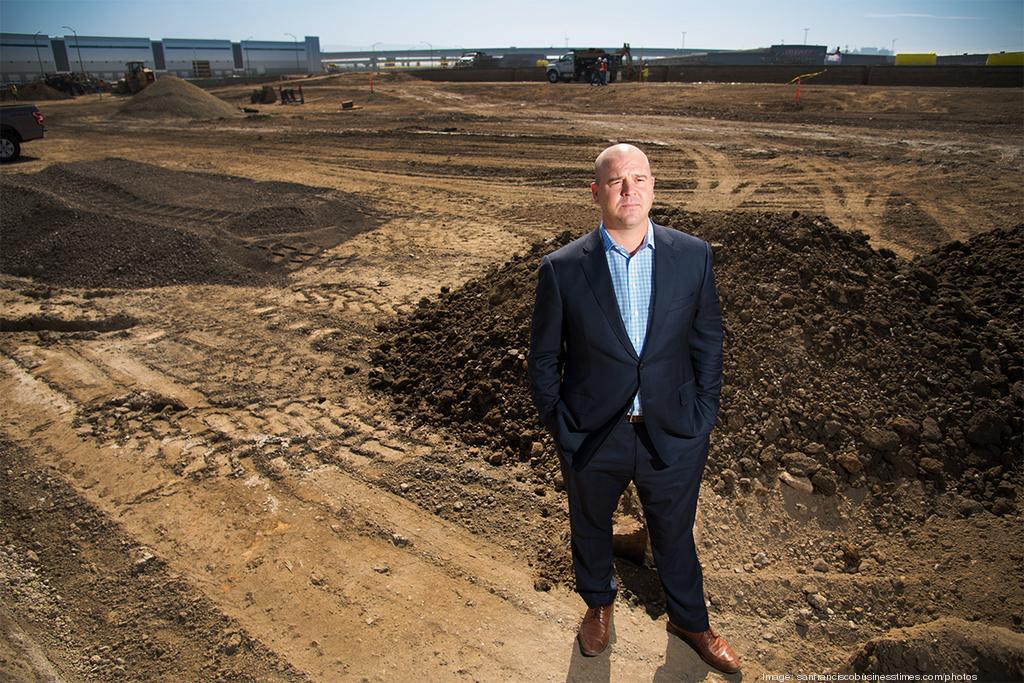
By April 2017 he was managing director of capital deployment for the West Region. In January 2019 he became president of the Central Region. Two years later he took charge of global capital deployment. The sequence matters because it shows a growing set of obligations: where to invest, how to operate and how to weigh one market against another.
The global role included responsibility for the investment committee, the deployment pipeline and portfolio purchases and sales spanning multiple markets. In January 2023 he became president. His remit extended over much of Prologis, giving him operating responsibility well before the final promotion.
- 2004Development manager
AMB, Chicago - 2021Global head
Capital deployment - 2023President
Prologis - 2026Chief executive
Prologis
Five years to change a seat
Founder succession has a furniture problem. The departing executive may surrender a title while retaining the chair everyone watches. Employees can read an organizational chart perfectly well and still turn toward the person who has always supplied the answer.
At Prologis, the handover included a physical adjustment. When Moghadam and Letter visited offices together, the founder encouraged Letter to sit in the middle and lead the town halls. Authority became visible in an ordinary room. Repeating the arrangement gave employees practice seeing someone else in charge.
The process began in early 2021 and stretched across five years. Letter had time to take on unfamiliar parts of the company while Moghadam was still available. By February 2025, when the succession was publicly announced and Letter joined the board, the preparation was already well advanced. The effective date came nearly another year later.
“You can’t be a leader without people following you.”
Dan Letter
The remark contains a practical difficulty. Appointment is something a board can accomplish. Followership involves everyone else. An executive taking over from a founder must earn attention while the founder remains a powerful presence. Giving the successor actual decisions to make is a useful place to begin.
Moghadam became executive chairman. Letter became CEO and leader of the Executive Committee. The arrangement leaves institutional memory close at hand while putting the daily responsibility in a new pair of hands. Its quality will be measured through decisions over time, long after the announcement has disappeared from the news cycle.
What the roof is worth
Letter’s next chapter begins with a deceptively plain object: a warehouse. It has a roof, land, road access and customers who need goods to move. Those familiar ingredients are gaining additional uses as businesses need more electricity and digital infrastructure.
Prologis had already made the direction explicit before he became CEO. In October 2025, Letter described the company’s expansion from logistics into data centers and its investment in their power requirements. That was a statement from the president who would soon inherit responsibility for carrying it through.
The attraction is understandable. A company accustomed to assembling sites and managing construction has relevant experience when another industry needs buildings. Yet the word relevant has limits. A data center brings different technical demands, customer requirements and power needs. A promising location still has to become a workable project.
Where can a customer operate?
Where can solar contribute?
What can the site support?
A conceptual view of the physical assets behind logistics, energy and digital infrastructure.
The roof offers another extension. Prologis’s 2026 proxy reported that the company had achieved its one-gigawatt solar and storage capacity goal during 2025. Electricity becomes part of the customer relationship, alongside the space itself. For Letter, that broadens the questions a property executive must be ready to answer.
It also makes his engineering background an interesting part of the story. The products may be digital; the constraints remain stubbornly physical. Land must be suitable. Construction takes time. Electricity must reach the equipment that needs it. The cloud, viewed from a development site, has a surprisingly substantial foundations bill.
The customer has a calendar, too
Letter’s public comments about customers are often concerned with timing. In April 2025 he described businesses carrying inventory buffers into the middle of the year while planning for tighter conditions later. He distinguished relatively steady food and beverage demand from greater disruption risks in furniture, fashion and lower-margin manufacturing.
That level of detail is useful. Supply chains do not all react together. A customer’s tolerance for uncertainty depends on its products, margins and commitments. Listening closely can reveal a problem before it becomes visible in an aggregate number. It can also prevent a landlord from offering the same answer to very different businesses.
His conversations have extended beyond tenants. At the 2025 Groundbreakers forum, he joined Port of Los Angeles executive director Gene Seroka and MIT professor Yossi Sheffi to discuss global trade. Ports, policy, automation and resilience occupied the same conversation. A warehouse sits downstream of decisions made in many other rooms.
By October 15, 2026, his first year as chief executive had produced another set of measurements. Prologis reported 60 million square feet of lease signings in the third quarter and average occupancy of 95.1%. Core funds from operations per diluted share were $1.60, compared with $1.49 a year earlier.
Prologis owned and managed portfolio · Q3 2026
Letter pointed to e-commerce, advanced manufacturing and the data center supply chain as sources of demand. He also acknowledged the effect of higher rates on investment decisions. Growth requires customers willing to commit and capital that can justify the cost. The two do not always arrive at the same moment.
The view from the field
There are smaller geographies in this global career. Marquette remains one. In April 2026 the university announced Letter and Molly McShane as keynote speakers for its National Real Estate Strategies Conference. He also serves on the advisory board associated with its real estate institute. The engineering graduate has become someone the university invites back to discuss the business.
His professional connections now include Nareit’s Executive Board and The Real Estate Roundtable’s board. Those roles place him in discussions about the environment in which property businesses operate. The development manager who once worked within one market now has reasons to think about conditions across an industry.
On a European office tour, he visited teams in Paris, Amsterdam, Düsseldorf and London. His family joined him, and the Paris team presented him with a French national football jersey. He connected the trip to the local insight within the company: people hearing directly from customers and noticing where demand is moving.
The jersey provides a cheerful counterweight to the investment committee. Both belong in the same career. A global role requires formal decisions, but it also involves showing up in another office, accepting the welcome and learning what looks different from there. The conversation can be useful before anyone opens a presentation.
His Marquette connection has a similar appeal. Universities and development sites bring people together at different stages of experience. A student may want a first opportunity. An executive may be weighing a difficult commitment. Both need a way to ask questions before pretending to have the answers. Keeping those conversations within reach is worthwhile work for someone whose responsibilities now span so much ground.
Yet some of his public observations return to people nearer the work. He has credited employees with the company’s competitive edge, from capital deployment to energy and technology. It is a demanding proposition at global scale: expertise may sit in a local office while the decision affecting it is made far away.
The useful test of the new CEO will be how information travels between those places. A customer changes its plans. A team spots an opportunity. Someone sees a difficulty in a proposal that otherwise looks splendid. A company needs those observations to reach the people who can act on them.
That returns the story to the middle chair. The seating change was preparation for a job that would keep expanding: more businesses to understand, more decisions to own, more people whose judgment matters. Letter has taken the seat. The interesting work now is what he hears from it.