Dan Hobin’s brother had self-storage properties. People had things to store. Between the two sat a problem that would occupy Hobin for years: how does the person with the boxes find the person with the empty unit? It was a wonderfully unglamorous place to start a software company. The furniture did not care about disruption. It needed somewhere to go.
Hobin had already traded the Bay Area for Bend, Oregon, arriving in 2002. He and his wife had visited for a wedding and taken to the place. By 2005, he and Greg Meier were building G5 there. In 2021, the business they had started would be sold to RealPage, serving more than 500 customers across 8,300 properties.
The usual telling of such a career would hurry towards the transaction. Hobin’s becomes more interesting if you linger over the address. Bend shaped how he recruited, how long he could operate without outside money, and what he thought a company owed the people around it. He wanted to build a business while continuing to enjoy the place he had chosen to live.
A wedding, a brother, and a search box
Before Bend, Hobin had worked in sales and marketing at CyberSource and Beyond.com. He founded and ran SmashCast, a digital publishing company in San Francisco. His education took a different route from the standard software-founder shorthand: Asian Studies at the University of California, Santa Barbara, and the Shibusawa International School in Fukaya, Japan.
He brought experience of the dot-com years with him. The next opportunity arrived through a familiar business. His brother, Bill Hobin, ran self-storage operations; reaching prospective customers online offered a practical starting point. G5 could help operators get found, bring in enquiries and examine which marketing produced them. The internet was changing where people looked for ordinary things. Storage space was ordinary enough to make the opportunity easy to understand.
Even the company’s name began as a measurable ambition. G5 referred to getting clients into Google’s top five results. There is a pleasing lack of mystery about it. The name contained a job to do.
That job expanded into websites, advertising, reputation tools and analytics. But the original question stayed useful: did the marketing help a property win a customer? A search position could be a beginning. An occupied unit gave the work a commercial point.
Five years before the cheque
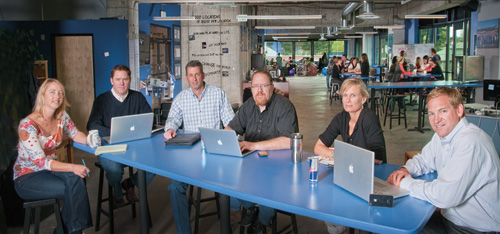
G5 operated for five years before taking outside funding. In August 2010, it secured $15 million in a round led by Volition Capital. At that point it had 80 employees and served more than 160 customers across 2,400 properties. A business that began with a brother’s storage facilities was already working across self-storage, housing and senior living.
Bend mattered to that opening stretch. Hobin’s argument was straightforward: operating there cost less than operating in Silicon Valley, and employees had reasons to stay beyond the next job offer. People who wanted the town’s outdoor life could find substantial work without moving away. The place helped him make a different recruiting proposition.
By 2011, G5 was adding space and growing into it. The contrast with the surrounding economy was noticeable. Bend had been bruised by the property downturn; a software employer with customers beyond the city could bring work into a community that needed it. Hobin’s decision about where to live had acquired consequences for other people’s careers.
When growing up gets in the way
Money did not make every decision easier. After the first funding round, G5 added layers of management, departments and systems. Hobin later described a company that had become less nimble as it grew. Some managers brought in from outside did not fit. A business can buy a surprising amount of complexity with a successful funding round.
The response involved letting some managers go and introducing processes closer to the company’s original working habits. By the time Hobin described the episode in 2014, G5 employed 175 people. He was still arguing for the energy and directness of its early days.
There is something useful about his willingness to include this awkward passage in the story. Expansion requires coordination. Coordination can become a reason to stop doing things. Hobin had to distinguish between the procedures a larger company needed and the habits that merely made it feel larger.
“The secret is constantly testing with data and not chasing rainbows.”
Dan Hobin, 2013
His approach to marketing offered a related discipline: try new technologies, examine the results and roll out what works. The attraction of the next idea was insufficient on its own. That left room for experimentation while requiring it to answer to something more concrete than enthusiasm.
A town is more than a recruiting pitch
Hobin also spent time on the conditions that let other businesses begin. He co-founded the Bend Venture Conference, helping create a meeting point for entrepreneurs and investors. His local commitments extended to the OSU-Cascades advisory board and, from 2016, the board of Summit Bank.
In 2017, he joined other technology leaders in signing a letter supporting funding for the OSU-Cascades campus expansion. The connection to his working life was plain: an expanding technology sector needed access to educated employees. Building a company and supporting a university could belong to the same conversation.
He was alert to a less obvious problem, too. As more Bend companies earned their money from customers elsewhere, their commercial networks could bypass their neighbours. He argued for maintaining the local connections that made the town appealing in the first place. A company’s customer list could stretch far beyond Oregon; its sense of obligation could still begin nearby.
That concern gives his talk of culture some weight. It reaches past the office. The town supplies the reasons people come and stay. Keeping those reasons intact takes participation from employers whose revenue may arrive from somewhere entirely different.
The sale that left the address alone
G5’s financing changed again in 2015, when a $76 million investment led by PeakEquity Partners gave that firm a majority stake. Hobin and Meier’s two-person beginning had become a company with 175 employees, most working in Bend. There were more people to coordinate and a broader business to manage.
On July 20, 2021, RealPage announced an agreement to acquire G5. The platform served 8,300 sites in the United States and Canada. Its capabilities had moved well beyond the top of a search-results page: advertising and analytics were increasingly tied to improving the renter’s journey and lowering acquisition costs.
RealPage’s announcement included plans to retain G5’s employees and Bend operations. That detail belongs beside the transaction itself. A founder who had made location part of his proposition was selling a business whose buyer publicly intended to keep that location.
PeakEquity announced the completed sale in September. It reported that annual recurring revenue had grown organically by more than 100 percent during its ownership. The financial terms remained private. The public operating numbers already showed how far the business had travelled from its initial storage-marketing assignment.
Across 8,300 multifamily, senior living and self-storage properties.
Calling the old team
Selling G5 gave Hobin another question to work on. In 2023, he and Ryan Holmes started GreenT Climate Software. The familiar setting was multifamily property. The new task was helping that industry manage sustainability.
Holmes’s public launch announcement described their ambition to bring sustainability tools to the sector at scale. GreenT’s first solution addressed compliance with Building Performance Standards. The scale of the environmental ambition met a recognisable software assignment: help property teams handle a demanding operational task.
Hobin’s confidence began with familiar colleagues. Many of the people involved had worked at G5 and understood the market. Their shared experience included the difficult business of getting a startup through its early years. His explanation started simply: “First off, I love the team.”
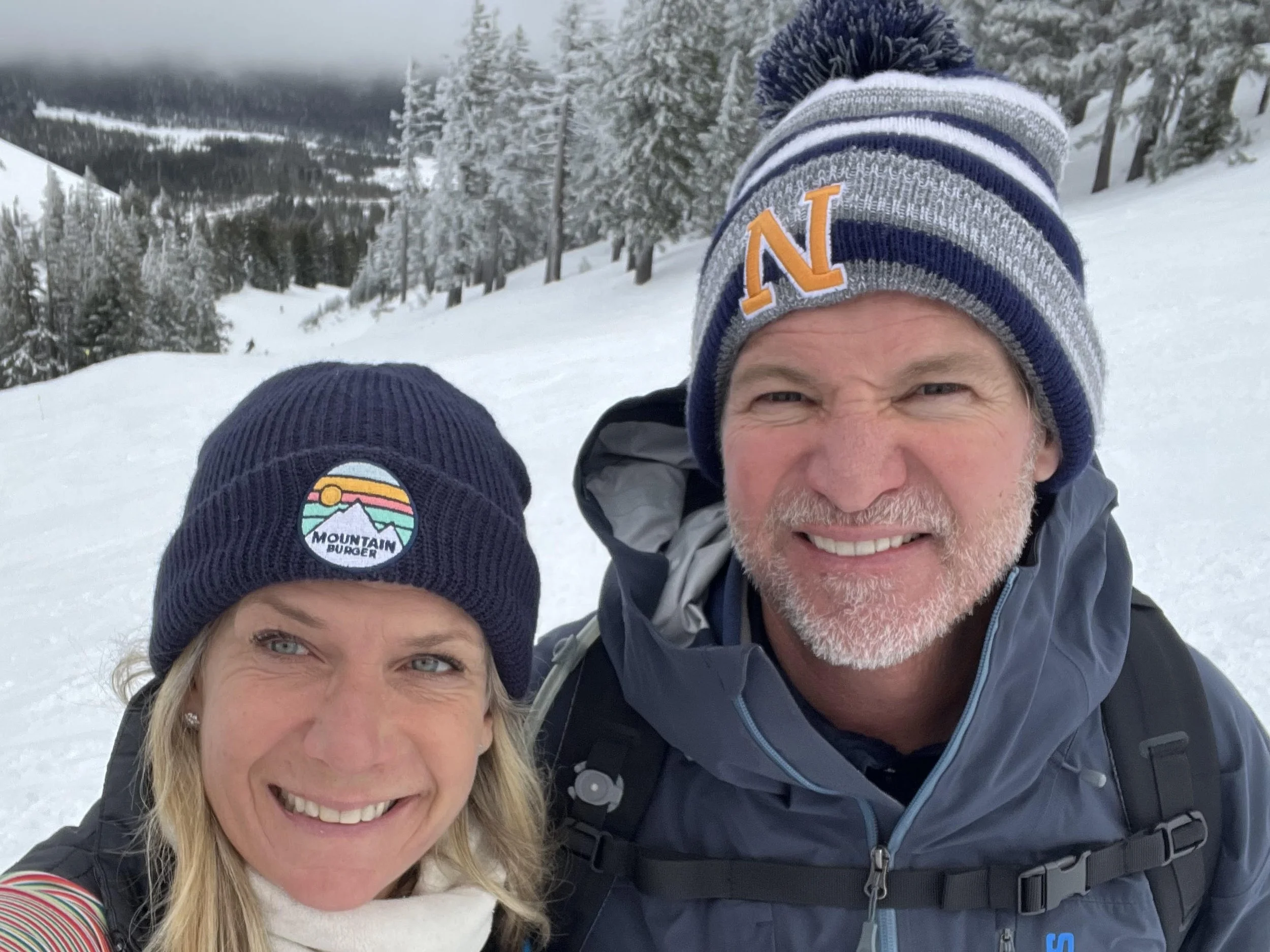
He also described wanting to give back after G5. His interest in nature was personal, tied to the outdoor life that had brought him to Bend. GreenT offered a way to connect that concern with property-sector experience. The landscape he enjoyed outside work had become part of what he wanted his next business effort to address.
The view from here
Hobin’s later roles include managing partner of Chipper Creek Innovation, an investment firm whose stated focus combines entrepreneurial ambition, impact and financial returns. A December 2024 conversation on the Bending Rules podcast returned to capital efficiency, leadership and preserving company culture. These were questions he had spent years encountering in practice.
His account of an ideal weekend supplies a smaller, revealing measure of success. In 2013, he described G5 closing at one on summer Fridays, followed by golf, dinner with family and friends, and time outdoors with his three sons. Camping, fishing, biking, a lake: the itinerary had options.
“Living life is the most important,” he said. It is an unusually useful sentence to keep beside a company timeline. The funding rounds explain how the business changed. The Friday afternoon explains why he wanted to build it there.