A fiber network can outlive the business plan that paid for it. The investors may leave, the company name may disappear, and the promises may look embarrassing in retrospect. The cable remains. Dan Caruso built much of his career around the distance between those two facts.
After the telecom collapse, he saw value in an industry that had made itself difficult to love. Companies had borrowed, built, merged and disappointed. Fiber had acquired a reputation for excess. Caruso’s eventual answer was Zayo, founded in 2007: assemble networks and sell the bandwidth other businesses needed. In March 2020, its acquisition by Digital Colony and EQT closed at $14.3 billion.
That is a tidy ending for a business biography. Caruso has made the years since rather less tidy, in an interesting way. He invests in quantum computing and space companies, interviews entrepreneurs, writes about the internet’s unruly adolescence and helps put musicians into rooms around Boulder. The subject has widened. His interest in the things that let other people build has stayed remarkably consistent.
The telephone company was a useful place to leave
Caruso grew up in Glenwood, in Chicago’s south suburbs. His route into engineering had an awkward beginning. He has described being turned down by the schools he applied to, entering liberal arts instead, then earning the marks in mathematics, physics and chemistry that allowed him to transfer into engineering. The degree took five years. His parents, he recalled, were less delighted by the extra year than he was by the eventual result.
He graduated from the University of Illinois with a mechanical engineering degree in 1986 and began his career at Illinois Bell, part of Ameritech. He studied for an MBA at night at the University of Chicago, graduating in 1990. The setting mattered: he was learning the telephone business while the breakup of the old Bell system was changing who could compete in it.
Caruso gravitated toward the challengers. At MFS Communications he worked inside the emerging competitive telecom industry; after its sale to WorldCom, he became a founding executive of Level 3 in 1997. His responsibilities there included engineering, construction, operations and products. These were jobs concerned with getting a network built and making it work, well before anyone could put a flattering valuation on the finished thing.
He also chose Colorado. Years later, explaining that decision, he said he loved the state and thought the people he wanted to recruit would love it too. The reasoning was personal and practical at once. A place people wanted to live could help a company become a place people wanted to work.
A rehearsal called ICG
The early internet rewarded ambition and punished it, sometimes in quick succession. Caruso experienced both halves. The telecom downturn forced executives to distinguish between demand that had been imagined, financing that had evaporated and physical infrastructure that still had a use. Surviving it supplied an education that would have been difficult to schedule as an evening class.
In 2004, he led the take-private of ICG Communications and became its president and CEO. The business was troubled, but the transaction gave him a smaller stage on which to test an approach: buy, simplify and concentrate on the assets that could earn their keep. ICG was sold to Level 3 in 2006. The investment produced an approximately 25-fold return on $8.7 million.
The numbers help explain why ICG belongs near the center of his story rather than in the small print. Before Zayo, there was a practical demonstration that a damaged telecom company could contain valuable pieces. A collapse could change the ownership and the price of infrastructure without eliminating its usefulness. Caruso had a result to examine, and a reason to try something larger.
The unfashionable attraction of cable
Zayo began with a particular disagreement. The conventional view treated bandwidth as a commodity and suggested that attractive profits required additional, more elaborate services. Caruso believed fiber itself could be durable infrastructure for businesses moving and processing increasing amounts of data. It was a bet on the customers’ needs lasting longer than the industry’s bad reputation.
There is a pleasing lack of glamour in that proposition. An application gets the applause. A network gets a request for more capacity. Yet the second business can serve many versions of the first. Zayo’s work was to connect offices, data centers, carriers and cloud destinations, making itself useful across the changing cast of companies on either end.
Growth meant buying networks as well as building them. By the 2020 acquisition, Zayo had completed 45 acquisitions and operated a 133,000-mile network in North America and Europe. Its 2014 stock-market listing sat between its startup years and its return to private ownership. The company had moved through several forms of financing while keeping the infrastructure proposition recognizable.
ZAYO / MARCH 2020
Acquisition transaction value
Historical company figures. Transaction value includes debt.
Those figures describe Zayo’s scale, not Caruso’s personal fortune. The distinction also reveals something about his preferred subject. He has spent a good deal of time explaining how value is created inside a business, where it belongs and how managers should account for it. A large exit gives that conversation an audience. It does not supply the whole explanation.
The Bear keeps an owner’s manual
In January 2014, Caruso published an Owner’s Manual for Zayo investors, taking his cue from Warren Buffett. It asked management to treat investors as long-term business partners, communicate clearly and ground decisions in intrinsic value. Forecasting was given the status of a strategic capability. Even the optimism was expected to bring its arithmetic.
The manual is revealing because it turns a founder’s temperament into operating instructions. Investors should see the measures managers themselves use. Debt holders deserve consideration alongside equity owners. Customers, employees and investors need a relationship that works for all of them. These are obligations that survive a good quarterly presentation.
Caruso’s nickname, “The Bear,” supplies the less procedural part of the portrait. His own explanation has been candid: intensity, aggression and high expectations. Looking back, he has questioned whether the same results might have been possible with a gentler style. That willingness to inspect the cost of his methods makes the nickname more interesting than a piece of executive merchandise.
“Did I have to be so aggressive at times?”
Dan Caruso, reflecting on his leadership
A founder can take pride in an outcome and still have questions about how it was reached. Caruso’s reflections leave both in view. There is a business to evaluate and a way of working to evaluate. They belong in the same biography.
A new set of builders to back
Caruso founded Caruso Ventures in 2020. Its portfolio now includes businesses working on spacecraft propulsion, quantum computers, quantum control electronics and related technologies. Agile Space Industries, Atom Computing, Maybell Quantum and Bifrost Electronics sit within that range. The technologies differ from telecom; the recurring interest is in making ambitious technical work commercially usable.
His involvement with ColdQuanta, now Infleqtion, went beyond writing a check. An early investor, he served as interim CEO in 2021 during a leadership transition. Infleqtion began trading on the New York Stock Exchange in February 2026 after a business combination. It makes quantum computing and sensing products. Caruso’s part in its history gives his second chapter an operating episode alongside the investment portfolio.
The firm’s published twenty-year mission puts Colorado at the center of the plan. It emphasizes earlier investments, active governance and attracting outside capital, with attention to sectors where the state has established strengths. That is an aspiration to organize people and money around a place, as well as to choose individual companies.
Bandwidth acquires a storyteller
There is another way to keep a network alive: ask the people who built it what happened. Caruso launched The Bear Roars in 2024, bringing conversations about Colorado innovators, deep technology and telecom history into a podcast. Former colleagues and industry participants became guests. Experience that might otherwise remain in private conversations acquired a public audience.
His book, Bandwidth: The Untold Story of Ambition, Deception, and Innovation That Shaped the Internet Age and Dot-Com Boom, followed in February 2025. It connects the breakup of AT&T, the growth of fiber, mobile communications and the internet with the people who pursued the opportunity, then lived through the consequences. Caruso writes from inside that history.
The combination suits him. A memoir permits an argument about what mattered; a podcast lets someone else answer back. Together they give the infrastructure business faces and voices, something a route map is ill equipped to do. They also extend his role from participant to keeper of the stories.
And then there is the pizza oven
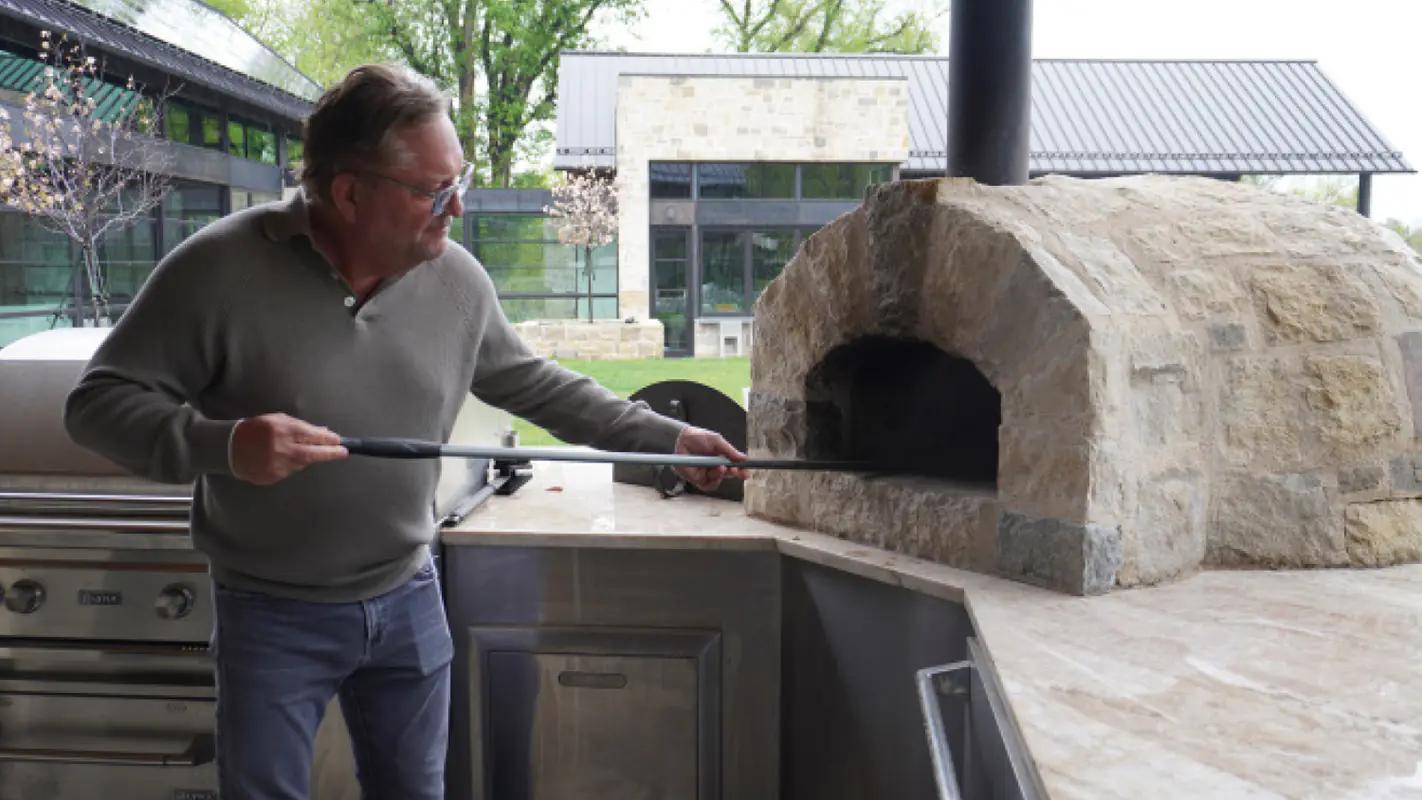
Stepping away from Zayo’s CEO role required a more personal revision. Caruso has said he did not want his next life to consist of another permanent CEO job, a private equity post or an endless collection of boards. He wanted work that held his attention and more time with family and friends. Gardening, cooking pizza and collecting wine became part of a fuller schedule.
His local ambitions have also acquired a soundtrack. Caruso Ventures partnered with Roots Music Project to launch Boulder Roots Music Fest in 2025. By 2026, the event had become Tulagi Fest, borrowing the name of Boulder’s former music venue. Caruso Ventures vice president Cody Moore helped oversee its expansion across downtown venues.
The link to technology is more concrete than a taste for a good night out. Caruso’s foundation supports the creative institutions and entrepreneurial organizations he believes help Colorado attract and retain people. Its 2026 approach concentrates most giving into a smaller group of lasting partnerships. A music festival belongs in that thinking because a city has to offer reasons to stay after work.

In June 2026, Caruso returned to Chicago Booth as its graduation speaker, 36 years after his own MBA. His closing charge was brief: “go be somebody.” By then, his own definition had room for an investor, author, interviewer and festival backer. The cable was still there. He had found more people to connect.
Keep the conversation going
READ / LISTEN / FOLLOW