Dan Avida had already built a company to protect information when he began worrying about what was happening to a lesson. At home, he and his wife, Daphne Koller, watched their daughters take classes online. The pictures arrived. The voices arrived. The feeling of a classroom had proved harder to transmit. A family observation became the beginning of another company.
There was considerable experience around that problem. Koller had co-founded Coursera and spent eighteen years as a Stanford professor. Avida had helped develop a printing business, run a public company, co-founded the storage security firm Decru, and become a venture investor. Their collaborator Serge Plotkin was a Stanford computer scientist and an old colleague of Avida’s. They brought different kinds of knowledge to an everyday disappointment.
The resulting company, Engageli, was founded in 2020. Its most revealing design choice might be its tables. Learners sit in small virtual groups, with room to speak to one another while remaining part of the class. After decades spent around sophisticated systems, Avida was giving serious attention to something schoolchildren understand immediately: it matters who you can talk to.
The copier gets a second occupation
Avida’s education was in computer engineering at Technion, where he graduated summa cum laude. Before entering EFI, he served as an officer in the Israel Defense Forces. In 1989 he joined the young Electronics for Imaging, whose founder, Efi Arazi, had previously built Scitex. The assignment that followed was practical and consequential: help make the color copier do more work.
Fiery, the product Avida led, enabled digital color copiers to function as networked color printers. A document could move from a computer into a printing workflow without the conventional steps that had made color output cumbersome. The copier acquired another occupation. The office acquired a useful shortcut. Avida acquired the product around which his early executive career would grow.
The business depended on working with companies much larger than itself. Its customers included familiar names in copiers and computing. By 1997, Avida was explaining a company that could supply competing manufacturers without belonging to any one of them. There was a certain diplomacy to being useful to several elephants at once. The engineering had to work; so did the commercial arrangement around it.
He became EFI’s president and CEO during the 1990s and eventually its chairman. His path ran from product development to responsibility for the company selling that product. Those are different jobs. A functioning controller needs an engineering team; a growing public business also needs customers, new releases, capital decisions and a convincing explanation of what comes next.
- 1989EFI
Color printing - 2001Decru
Stored data - 2005Opus
Early investing - 2020Engageli
Learning together
A bad morning on the market
The public-company chapter included a severe reversal. On December 12, 1997, EFI’s shares fell from about $40 to $15 after the company disclosed weaker results. Product delays coincided with the financial crisis affecting its Japanese customers. A business accustomed to repeated growth suddenly had a very different conversation with Wall Street.
A year later, EFI had recovered enough to report record results, while its share price was approaching the level before the fall. The episode gives the career some needed grain. Revenue can improve on a timetable the market declines to follow. A manager has to continue shipping products while investors form their own opinions, often with considerable enthusiasm in both directions.
It would be too neat to assign every later decision to that morning. What the episode establishes is simpler: Avida’s experience of building companies included a public stumble and the work that followed it. The subsequent move into a startup happened after a decade inside a business large enough to attract scrutiny well beyond its own office.
The information was still there. So was the risk.
In 2001, Avida and Plotkin co-founded Decru. Its subject was data sitting in storage. A company could put considerable effort into its network perimeter and still leave sensitive information exposed on disks or backup tapes. Decru’s DataFort appliances added encryption and controls around that stored information. Avida moved from helping documents come out of machines to helping their contents remain protected inside them.
The distinction had commercial urgency. By 2005, widely reported losses of unencrypted information were making storage security a subject for executives as well as specialists. Decru sold into enterprises and government organizations. Its technology had to fit into existing storage environments, where replacing everything would have been an expensive way to solve a narrower problem.
Approximate cash-and-stock acquisition value announced by NetApp.
NetApp announced its agreement to acquire Decru in June 2005 for approximately $272 million in cash and stock. The companies were already collaborators. Bringing Decru inside a larger storage company gave the technology a new commercial setting, while raising the familiar question of how to preserve relationships with other vendors. Useful infrastructure often has to be sociable.
For Avida, Decru also produced relationships that lasted beyond the transaction. Kevin Brown, who ran marketing, business development and product management there, later became CEO of Kidaro. Avida invested through Opus Capital and served on Kidaro’s board. Brown’s own account describes a close working friendship that continued as their jobs changed. Microsoft acquired Kidaro in 2008.
The next dollar gets its own vote
Avida joined Opus Capital in 2005. Investing meant helping other founders build, with the knowledge and opinions accumulated from running companies himself. SolarEdge became one of his early investments; its annual report records his board service beginning in 2007. His interests had expanded from printing and information security into the technology of solar energy.
He has described co-leading SolarEdge’s Series A and remaining on its board for more than a decade. In recounting its difficult early period, he emphasized the team’s cohesion as financing and sales became harder. His stated interest in green energy gives that investment a personal thread. Energy and education both appear in his account of the problems he wants technology to help address.
His management advice is correspondingly practical. He argues that money already spent should not dictate the next investment decision, and that leaders need useful information from people throughout an organization. The two ideas belong together: changing course requires both a willingness to reconsider and someone prepared to tell you what is happening.
“Never argue with people’s feelings.”
Dan Avida, on advice received early in his management career
That compact instruction is an unexpectedly domestic item in an executive’s toolkit. Avida credits an early boss with it. He also describes learning from a conversation with Steve Jobs about pursuing long-term objectives. His recollections suggest a habit of collecting workable advice from other people, rather than presenting experience as a private invention.
A place for the side conversation
Engageli brought him back to building and running a company. The founding observation was close to home, but the product required more than recreating a family’s preferred classroom. Colleges needed ways to organize instruction. Teachers needed to ask questions and see responses. Students needed opportunities to work with classmates. Live attendance and later viewing both needed attention.
By May 2021, Engageli had announced a $33 million Series A co-led by Maveron and Corner Ventures, bringing its total financing above $47 million. Its early feature set combined table groups with notes, questions, chat and feedback. Funding could pay for development and hiring. The product still had to earn its place in institutions with established habits and existing software.
In a 2021 podcast conversation, Avida discussed a small but telling feature: students could speak with their tablemates while the instructor was talking. The software made room for the side conversation, which in a physical room might mean clarification, collaboration or checking that somebody else was equally puzzled. A classroom contains several scales of attention. One speaking channel cannot comfortably carry all of them.
The company applied the idea to itself. Its account of an all-hands meeting described employees joining from six countries across seven time zones, seated at seven virtual tables. Avida and Plotkin shared developments, colleagues introduced people, and polls tested knowledge of how customers used the product. The organization was practicing with the same equipment it asked educators to adopt.
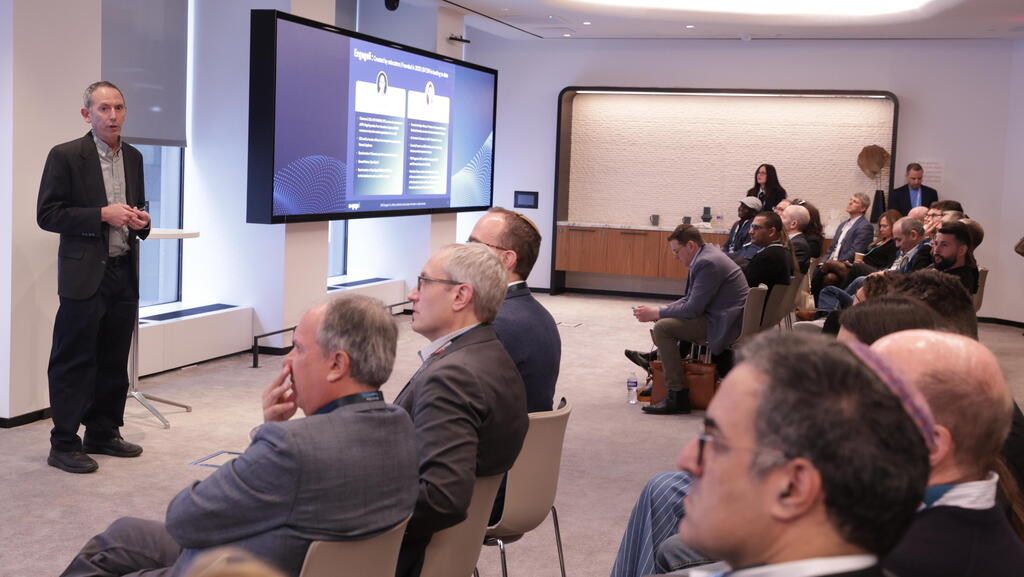
By 2025, Avida was presenting Engageli at Mind the Tech NY, with the platform reaching beyond higher education into schools and corporate learning. Its current approach also includes interactive playback for people attending later. The question has widened from how to hold an online lesson to how people participate when they cannot all be present at the same time.
An executive would like advance notice
Avida can sound rather dry about uncertainty. Asked which business superpower he would choose, he answered: “Clairvoyance. Once I obtain it, it will be quite straightforward to put into practice.” After public markets, acquisitions, venture investments and another startup, advance notice would presumably be convenient.
Without it, his career has proceeded through particular problems and people: Arazi and the print controller; Plotkin and stored information; founders seeking investment; Koller and the experience of their daughters. The industries have changed considerably. The work has repeatedly brought him close to the ordinary frustrations hidden inside a technical system.
Engageli’s table is a fitting place to leave him. It is an unglamorous object to give such prominence in software, and a familiar one. Someone has a question. Someone nearby may be able to help. Avida’s latest company is making room for that exchange, after a career spent discovering how much can depend on the arrangement.