By the time Shraga Katz announced he was leaving Ceragon, the company had already lived through a rather crowded adolescence. Founded in 1996. Publicly traded in 2000. Caught in the telecom collapse in 2001. Growing again by 2004. The neat version of a founder’s career would probably have stopped at the stock exchange. Katz’s most instructive years came afterward, when the customers behind the business plan began to disappear.
His departure was announced in May 2005, with a handover scheduled for the end of July. Ira Palti would become president and chief executive. Katz would resign from the board and remain available as an adviser. Almost nine years after starting the business, he was making room for its next management chapter.
There is a particular interest in a founder who has seen both the appetite for a technology and the sudden absence of buyers. Katz’s career contains the engineering, the public listing and the rebuilding. It also contains a later move into investing, where someone else’s promising presentation arrives with the familiar problem of an uncertain future.
Seventeen years before the startup
Katz graduated from the Technion in 1979 with a degree in electrical engineering and electronics. He then entered defense electronics research, beginning a seventeen-year career in Israel’s Ministry of Defense. From April 1993 to April 1996, he headed its electronic research and development department. He also earned an MBA from Tel Aviv University.
That combination matters to the kind of company he eventually built. Ceragon would sell equipment that had to perform inside working communications networks. An operator purchasing a link was buying capacity and reliability. A persuasive demonstration could open a conversation; the installed equipment still had to do its job.
Katz was twice awarded the Israel Defense Award. His move into business followed a substantial technical career, rather than a brief encounter with an idea. By 1996, he had spent years working with electronics and managing development. The next question was where that experience could find a commercial use.
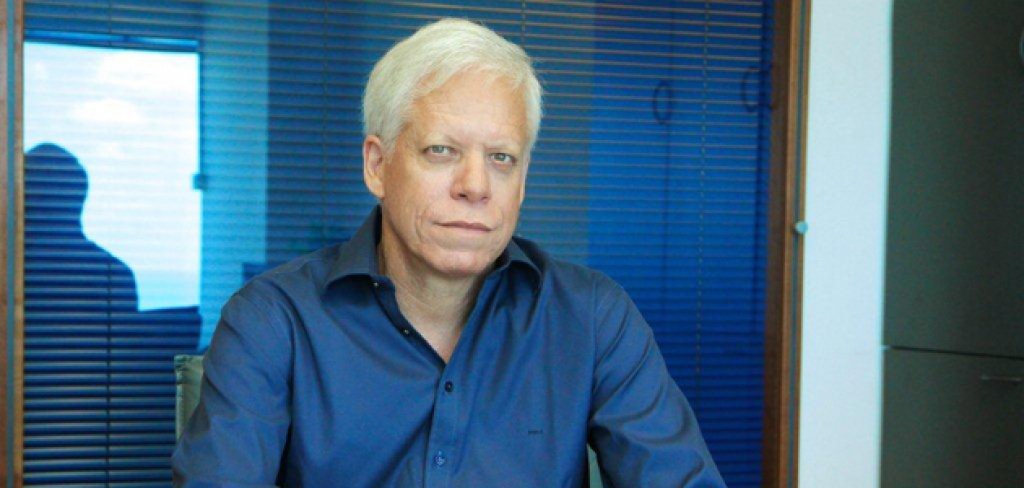
A network without the trench
New telecom operators faced an awkward admission price. Competing with an established telephone company meant building infrastructure, and laying fiber through a city could consume both time and capital. Katz and Inon Beracha, whom he knew from military service, saw an opportunity to use wireless connections instead. Their prospective customers wanted to get a network working sooner.
The founders secured backing from Zohar Zisapel, another connection from Katz’s defense work. The company was incorporated in July 1996 as Giganet. Commercial sales began in the second half of 1998. The early years were devoted to developing wireless equipment before there was much of a sales history to admire.
At its simplest, the proposition was wonderfully physical: send the connection through the air. It still required equipment, engineering and customers. But it offered a way around some of the work involved in running a cable through the ground. A trench is an expensive place to discover that speed matters.
Giganet became Ceragon Networks in September 2000. A month earlier, its shares had begun trading on Nasdaq. Four years separated incorporation from the public market. That was quick enough to make a satisfying startup chronology. The market was about to supply a much less convenient sequel.
The customers disappear
In 2001, Ceragon’s revenue fell from $12.6 million in the first quarter to $3.3 million in the fourth. Much of its business had come from American competitive local exchange carriers, the newcomers challenging established operators. The commercial opening that had helped create the company now carried a concentrated risk.
In April and May, Winstar Communications and Advanced Radio Telecom filed for Chapter 11 protection. Winstar had been Ceragon’s main American customer. An order book depends on the customer remaining capable of ordering. That basic condition had become a serious problem.
Ceragon began cutting expenses in April. It reduced its workforce by about a quarter and closed its secondary manufacturing facility in Jerusalem. These were decisions with consequences for employees and operations. A turnaround looks compact when plotted on a chart; inside the company, it involves people, costs and a shorter list of available choices.
Katz remained CEO. During 2001, he described opportunities among established operators, cellular carriers and enterprises. Mobile networks needed connections from cell sites into the rest of the system, and increasing data traffic created a reason to buy more capacity. Ceragon had to reach customers whose needs could support a business through the downturn.
One quarter, then another
By March 2002, Ceragon had announced a deployment for Denmark’s Sonofon. It followed a Swedish cellular agreement earlier that month. Katz described the Danish contract as the company’s third major Scandinavian cellular win. The geography was useful, but the customer type was the point: mobile operators were becoming an important part of the recovery.
In July, Ceragon signed a multi-year agreement with Cellcom in Israel. Its FibeAir systems connected base stations to core network infrastructure at 155 and 311 megabits per second. These were working connections purchased for an operator’s transmission network. The technology was finding uses beyond the customers that had first driven its growth.
The financial progress came in increments. Second-quarter revenue in 2002 was $4 million, up from $3.3 million in the preceding quarter. The company still reported a pro forma net loss of $3 million. Growth had returned while profitability remained work in progress. Both statements were true at once.
Katz described the company’s strategy in 2002 in terms of cellular carriers, geographic diversity and product innovation. Those priorities addressed different parts of the problem. A broader customer mix reduced dependence on one kind of buyer. Selling across regions opened more opportunities. Continued development gave operators a reason to consider the equipment. None removed the need to manage costs while orders gradually returned.
Third-quarter revenue reached $5 million, and the pro forma net loss narrowed to $2.6 million. Ceragon ended that quarter with $45.5 million in cash and liquid investments. The figures give the recovery its proper texture: more sales, continuing losses and money being spent while the business found its footing.
Recovery has a longer axis.
The business also spread internationally. In May 2004, Ceragon announced a $2.5 million contract to supply an African GSM operator. It did not name the customer. The concrete detail was the contract itself: equipment shipments were underway, adding another market to the company’s cellular business.
By the second quarter of 2004, quarterly revenue had reached $13 million after eleven consecutive quarters of growth. Ceragon reported its first operating profit. In September, it added a Tel Aviv Stock Exchange listing. For Katz, the second exchange arrived after a more consequential event: the operating business had crossed into profitability.
The founder leaves the chair
At the time of the 2005 handover announcement, Ceragon said its FibeAir products were installed with more than 150 customers in over 60 countries. The company Katz was leaving had a much broader reach than the startup of 1996. Its equipment served mobile infrastructure, fixed networks, private networks and enterprises.
“It has been both exciting and satisfying for me to establish a company and lead it through many stages of growth.”
Shraga Katz · May 2005
He joined Magma Venture Partners in January 2006. From 2008 until 2016, he chaired Allot. His later career also brought a venture partner role at Hetz Ventures. The responsibilities changed from running one company to working with companies through investment and governance. The years at Ceragon gave that transition a substantial operating background.
The question behind an exit
When Katz discussed acquisition decisions in 2016, he resisted a blanket verdict on whether Israeli companies sell too early or too late. He put the emphasis on the individual company and its alternatives. Did its founders want to keep growing? Was there a credible opportunity to do so? What would the offer make possible?
He also acknowledged the attractions of a larger organization: access to more customers and more resources for development. His argument left room for different outcomes. A founder could have reasons to sell and reasons to continue independently. The useful work was comparing the actual possibilities in front of the company.
It is an appropriately practical view for someone whose own business had experienced such different conditions in so few years. Ceragon’s first public-market chapter included an IPO, bankrupt customers, contraction, new contracts and a return to operating profit. Each stage demanded a decision under circumstances that the previous stage had scarcely prepared anyone to enjoy.
Katz’s story has room for the excitement of founding. It also has room for quarterly losses, a factory closure, a Danish customer and the eventual appointment of another chief executive. Those details make the achievement understandable. The wireless link had to keep working. So did the company around it.