Thomas Li had a job in which asking a good question mattered. First at Point72, then at Angelo, Gordon & Co., he followed technology, media and telecom companies. But before he could ask much of anything, there were numbers to move: out of earnings releases, into spreadsheets, under the pressure of a conference call approaching in a few hours. Finance had found a peculiar way to employ intelligence. It made intelligence do the typing.
- Daloopa turns company disclosures into structured financial data, with a link behind each number.
- Analysts use it in Excel; developers and AI tools can access it through APIs, MCP and cloud delivery.
- Its September 2026 Scout launch puts a modeling assistant inside the familiar workbook.
A phone call about the wrong kind of work
In 2019, Li called Jeremy Huang, an acquaintance from New York University who worked at Airbnb. Huang had been doing side projects with Daniel Chen, another NYU graduate, then at Microsoft. They began working together without immediately leaving their jobs. Their question was whether AI could collect the awkward, scattered information an investment analyst actually wanted.
The test was a database covering 100 companies. Li remembers a rough interface and good data. Users asked for broader coverage. That response helped persuade him to commit full-time: the appetite existed, but a narrow menu would not satisfy it.
“It was a bit janky but the data was very good.”Thomas Li, on the early prototype
There was also the matter of eating. In Li’s account of the early years, the founders worked in the Long Island basement of Chen’s uncle. Chen investigated economical food, and the team bought thousands of dumplings in Chinatown, plus a Costco freezer. They ate them for months. Huang, Li reports, eventually wanted no more. Product development occasionally leaves a culinary scar.

The useful number is often hiding elsewhere
Li’s distinction was between financial statements and operating detail. A conventional income statement already offers tidy rows. The more revealing information may be a segment breakdown, a non-GAAP measure or management’s guidance, disclosed somewhere less accommodating. Collecting those details requires more than recognizing a table. It requires recognizing what a company is saying.
Daloopa describes an extraction system made from small, specialized AI models. It monitors releases, collects data, structures it and attaches hyperlinks to the underlying documents. The resulting dataset can be used to build historical models or refresh them when earnings arrive. A researcher can inspect the source without beginning another document hunt.
This is a useful place to locate the business. Alternatives include collecting disclosures manually and buying fundamental data from established providers such as FactSet, Bloomberg or S&P Capital IQ. Daloopa concentrates its argument on detailed KPIs, source links and the work of maintaining models. Those are concrete differences to evaluate against a particular analyst’s coverage.
Excel gets a new colleague
The products enter at different points in that work. Data Sheets provide historical information for building a model. The Excel Add-In helps update existing workbooks. Scout, generally available since September 9, 2026, takes plain-language instructions inside Excel to build models, add new earnings actuals or compare companies.
Consider an analyst following a retailer. The useful request is specific: add the newly reported quarter, capture fresh disclosures, preserve earlier periods and highlight changed cells. Daloopa’s Scout page gives precisely this kind of example. It is an appealing division of labor: the tool moves the reported facts; the analyst reviews their placement and decides what to forecast.
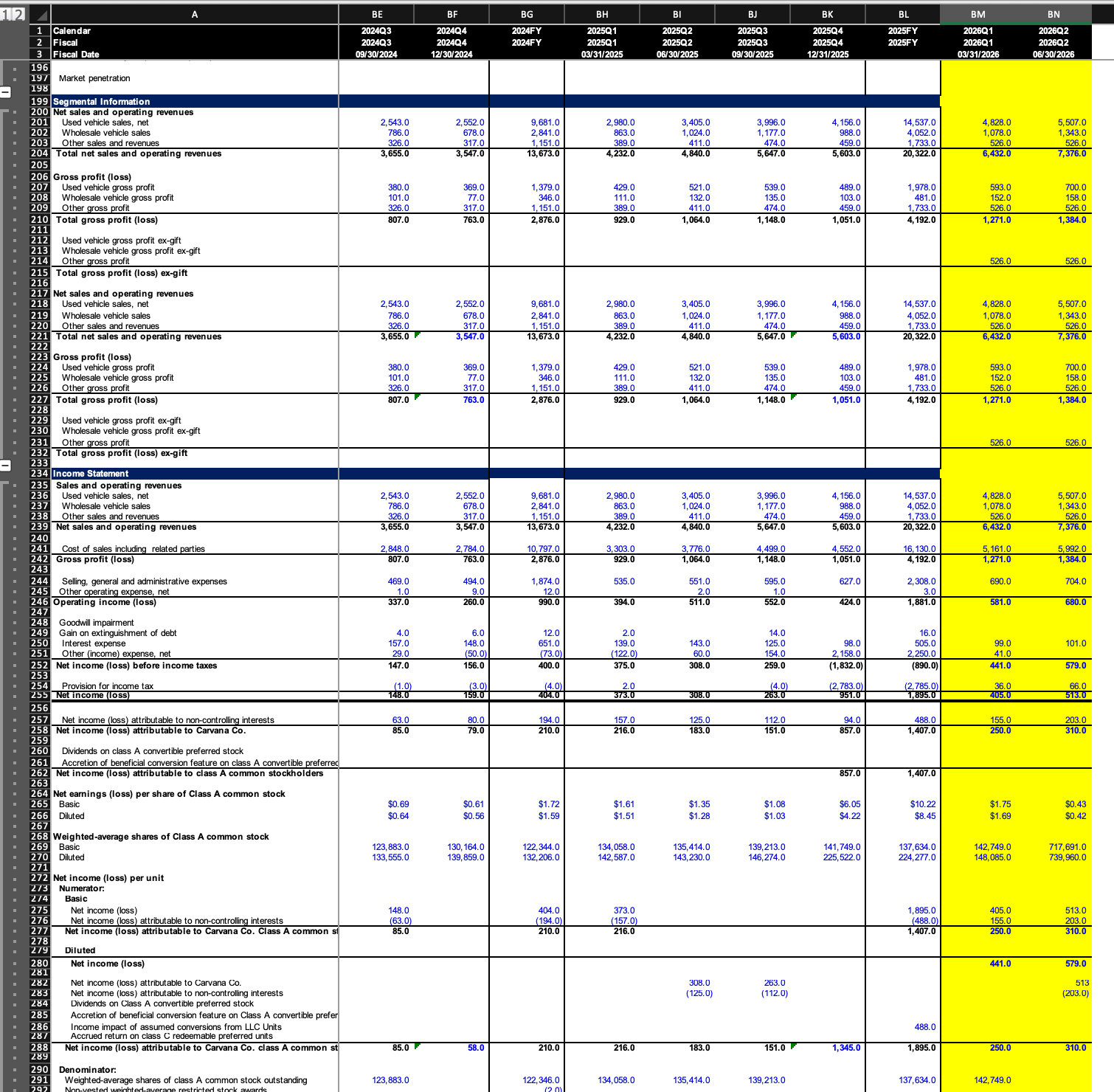
Source links help that review, but they do not settle a valuation. A forecast still contains choices about margins, growth and risk. Even an accurately copied figure can be misleading when attached to the wrong period or compared with a differently defined metric. Automating collection makes inspection cheaper. It gives judgment more time.
The data acquires a second audience
AI assistants need the same raw material. Daloopa’s MCP connector supplies structured financial data to compatible tools, including Claude, ChatGPT and Perplexity. Its API offers programmatic access for custom applications. Cloud delivery brings the dataset into Snowflake, Databricks and AWS S3. One collection of facts can therefore serve a person updating a workbook and software answering a research question.
Company-reported figures: coverage at September 2026; institutional adoption at May 2026.
The paying audience includes hedge funds, asset managers, investment banks and other research teams. Daloopa sells subscriptions and data access, with Core, Premium and API plans, plus limited free Data Sheets access. Paid plans go through sales. For a prospective buyer, the practical calculation is whether the subscription saves enough collection and checking work across the actual coverage list.
Building the supply took capital. Daloopa announced a $20 million Series A in 2021, an $18 million Series B in 2024 and a $13 million strategic investment in 2025. In May 2026, Brighton Park Capital led a $47 million Series C, joined by Squarepoint Capital, Touring Capital and Nexus Venture Partners. The company said total funding had passed $100 million.
What the analyst still has to decide
Daloopa’s public values include customer obsession and “No BS.” The most useful test of that promise happens in a workbook. Pick companies you know. Check difficult metrics against their filings. Compare update timing, period alignment and the effort needed to repair a result. Then decide whether the workflow improves.
The fit weakens when the required company or disclosure is outside coverage, or when a team mainly needs another kind of information. A source link cannot manufacture an undisclosed figure. The lesson other builders can copy is pleasantly practical: solve a tedious task thoroughly, make the output inspectable, and meet users where they already work. In finance, that place still has rows and columns.