The awkward part was the third floor. SaskTel, the Canadian telecom provider, needed more standby power for its downtown Saskatoon data center. Its existing 1,750-kilowatt generator could no longer accommodate its growth plans. A bigger machine had to fit inside the building, upstairs. Installing the replacement required a heavy crane and a specially assembled hoist crate. The cloud, in this instance, had a very definite weight.
- Cummins supplies the machinery that moves freight and keeps facilities powered.
- Shared engine architecture helps customers change fuels without discarding every familiar part.
- Its hydrogen pullback shows how quickly a promising technology can outrun its market.
Cummins Western Canada proposed a single QSK95 generator delivering 3,250 kilowatts of standby power. Existing relationships, equipment reliability and the combination of output and footprint helped win the business. That is a useful introduction to Cummins. Its customers have jobs to finish, spaces to fit and consequences when something stops. An engine specification is only the beginning of the sale.
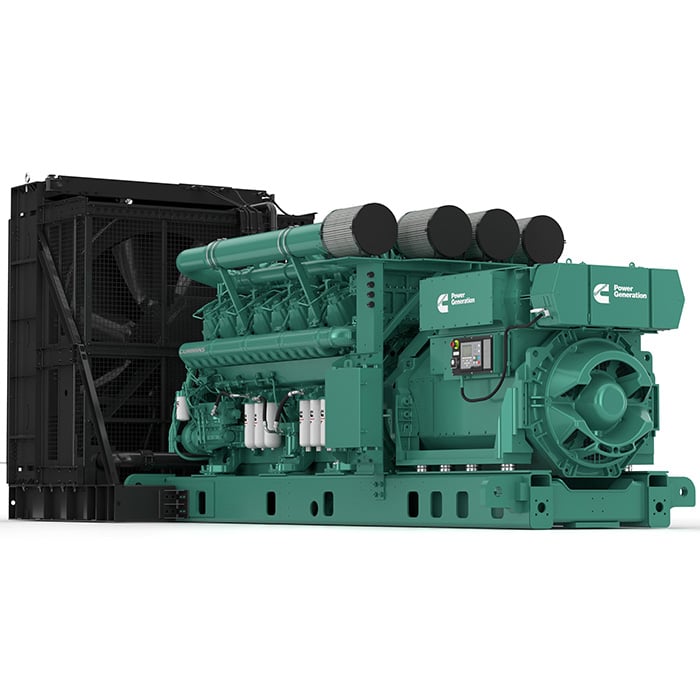
A third-floor power problem
The company supplies truck and equipment manufacturers, commercial fleets, mines, marine operators and facilities such as hospitals and data centers. Engines make movement possible; generators keep electricity available; turbochargers, fuel systems, aftertreatment, axles and brakes fill out the machinery. Distribution adds parts, diagnostics, maintenance and repair. Customers can buy equipment, integrate components into their own products or arrange support for machines already working.
There is a business model hidden in that last sentence. Equipment creates a continuing need for replacement parts and technical knowledge. Cummins earns money when it sells the machine and when it helps keep that machine useful. For a customer weighing alternatives, the service relationship belongs in the calculation alongside purchase price and fuel consumption.
About 86% more capacity. Still the third floor.
The portfolio has also become more selective. Cummins fully separated its filtration business, Atmus, in March 2024. An old list of Cummins products can therefore give the wrong impression of what the company owns today. The more useful picture is a supplier organized around engines, components, distribution, power systems and Accelera, with partnerships extending its reach into manufacturing and vehicle applications.
Eighteen years to a profit
This practical outlook took time to acquire. Clessie Cummins, a mechanic who had worked for banker William G. Irwin, started the company with Irwin’s backing in 1919. Nearly all its roughly $50,000 starting capital came from Irwin. An early contract to build engines for Sears ended in 1922 after the retailer reported defects. The invention needed more work before it could become a dependable business.
Cummins developed its own fuel-injection approach. The Model F found uses in fishing boats and then other equipment. In 1929, Clessie demonstrated a diesel-powered Packard to Irwin on Christmas Day. Public driving demonstrations helped make fuel economy tangible. Yet the company’s first profit arrived only in 1937, eighteen years after its founding. A persuasive demonstration and a profitable operation were separated by a long stretch of engineering and selling.
That history makes today’s positioning easier to understand. Cummins supplies power technology across equipment brands. Some truck manufacturers buy its engines while also making engines themselves. Caterpillar and mtu compete in power generation; other engine makers compete by region and application. Cummins’ breadth, integration experience and service relationships give buyers reasons to consider it, without making it the automatic answer to every power problem.
Keep the familiar parts
Its HELM engine strategy takes a mechanic’s view of the energy transition. The name expands to Higher Efficiency, Lower Emissions, Multiple Fuels. Different fuel variants share core architecture. Each engine is optimized for a particular fuel. A natural gas engine does not become a diesel engine because somebody changes what goes into the tank.
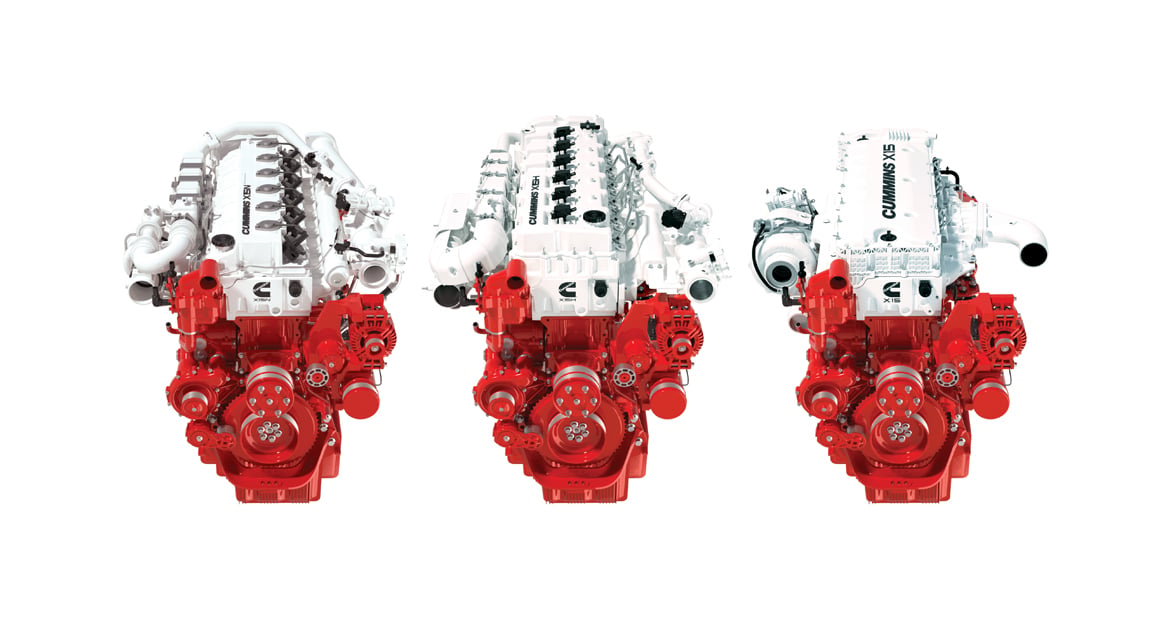
The useful part is continuity: common parts, familiar maintenance practices and less integration complexity. The X15N brings the approach to heavy-duty natural gas trucking. For manufacturers and fleets, the appeal is being able to consider another fuel while retaining some established knowledge. The copyable idea is straightforward: preserve the interfaces people understand while changing the technology behind them.
“The common platforms deliver fuel flexibility”
Sean McLean / Cummins / May 2025
There are limits. Shared architecture cannot supply a missing fueling station or make an unsuitable duty cycle economical. A fleet still needs to examine fuel access, maintenance, vehicle integration and the work its trucks actually perform. Buying flexibility makes sense only when the available choices solve a real operating problem.
For an operator, that suggests a sequence of questions. Where will the fuel come from? Who will service the equipment? What happens when it stops? Which parts of the existing operation can stay? A common platform can reduce the disruption inside the workshop. It cannot remove the need to answer those questions outside it, where routes, suppliers and customer schedules determine whether the investment works.
The price of choosing too early
Cummins has paid to widen those choices. Its 2022 Meritor acquisition carried a transaction value of approximately $3.7 billion, including assumed debt and net of acquired cash. The deal added drivetrain, braking and electric powertrain capabilities. Alongside combustion, Accelera developed zero-emissions technologies, including batteries, electric powertrains and electrolyzers used to produce hydrogen.
The electrolyzer market disappointed. Cummins cited deteriorating demand and uncertainty following reductions in government incentives. In February 2026 it announced an intention to stop new commercial activity in that business, subject to local consultation requirements, while fulfilling existing commitments. Electrolyzer-related charges for 2025 totaled $458 million; $415 million was non-cash. These were accounting charges, not a disclosed lifetime spending total.
Meanwhile, demand was arriving elsewhere. Second-quarter 2026 revenue reached $9.5 billion, with data-center standby orders among the drivers. In August, Cummins announced a battery-storage selection for a U.S. data-center project, designed to manage rapid load fluctuations. Its portfolio was following customers’ immediate electrical problems, even as one hydrogen bet contracted.
The obligations under the paint
Any cleaner-power story must also include the emissions settlement. In 2024, U.S. and California authorities announced a $1.675 billion civil penalty over alleged violations involving pickup-truck engines, plus more than $325 million in remedies. Cummins did not admit wrongdoing. Required recalls, mitigation, testing and compliance measures make this a concrete obligation, not a footnote to its environmental ambitions.

For buyers, the lesson is to evaluate the entire system: equipment, fuel, support and compliance. For other businesses, it is to separate technical possibility from customer readiness. Cummins’ most revealing product may be that third-floor generator: powerful enough, compact enough, supported by people the customer already knew. The future gets adopted one workable installation at a time.