Broadway had to close from 47th Street to 34th Street. For visitors, Super Bowl Boulevard would be part of the fun surrounding Super Bowl XLVIII. For Cristin D. Burtis, it belonged to a longer list: transportation for the week, municipal requirements, and coordination with city, state and federal agencies. Asked later to choose the best event she had worked on, she picked that one. Her explanation lingered on the arrangements. New York can provide a magnificent backdrop, provided somebody has worked out how everyone will get through it.
Burtis was the city’s lead in those coordination efforts and the mayor’s liaison for the game. Today, as founder and CEO of Burtis Consulting Group, she works in government relations, community engagement and operational planning. There is an earlier entry on her résumé, however, that makes an unexpectedly good place to begin: tournament MVP. Long before Broadway became her concern, she helped a college soccer team finish a difficult job.
The score was 1-0
In 1994, St. John’s won its first BIG EAST women’s soccer tournament championship. The team beat Boston College 1-0 in the final at Storrs, Connecticut, and finished the season 14-4-1. Burtis was the tournament’s Most Valuable Player. A one-goal final leaves little room for ornamental achievement. The result fits on a small scoreboard; the work behind it occupies considerably more space.
It was also head coach Ian Stone’s first season in charge. St. John’s beat Connecticut and Boston College on the way to the title, a pair of results the program would remember years later. Burtis’s place in that history was specific. She was a four-year starter whose senior season brought first-team Northeast Region honors, and whose academic record earned four BIG EAST Academic All-Star selections.
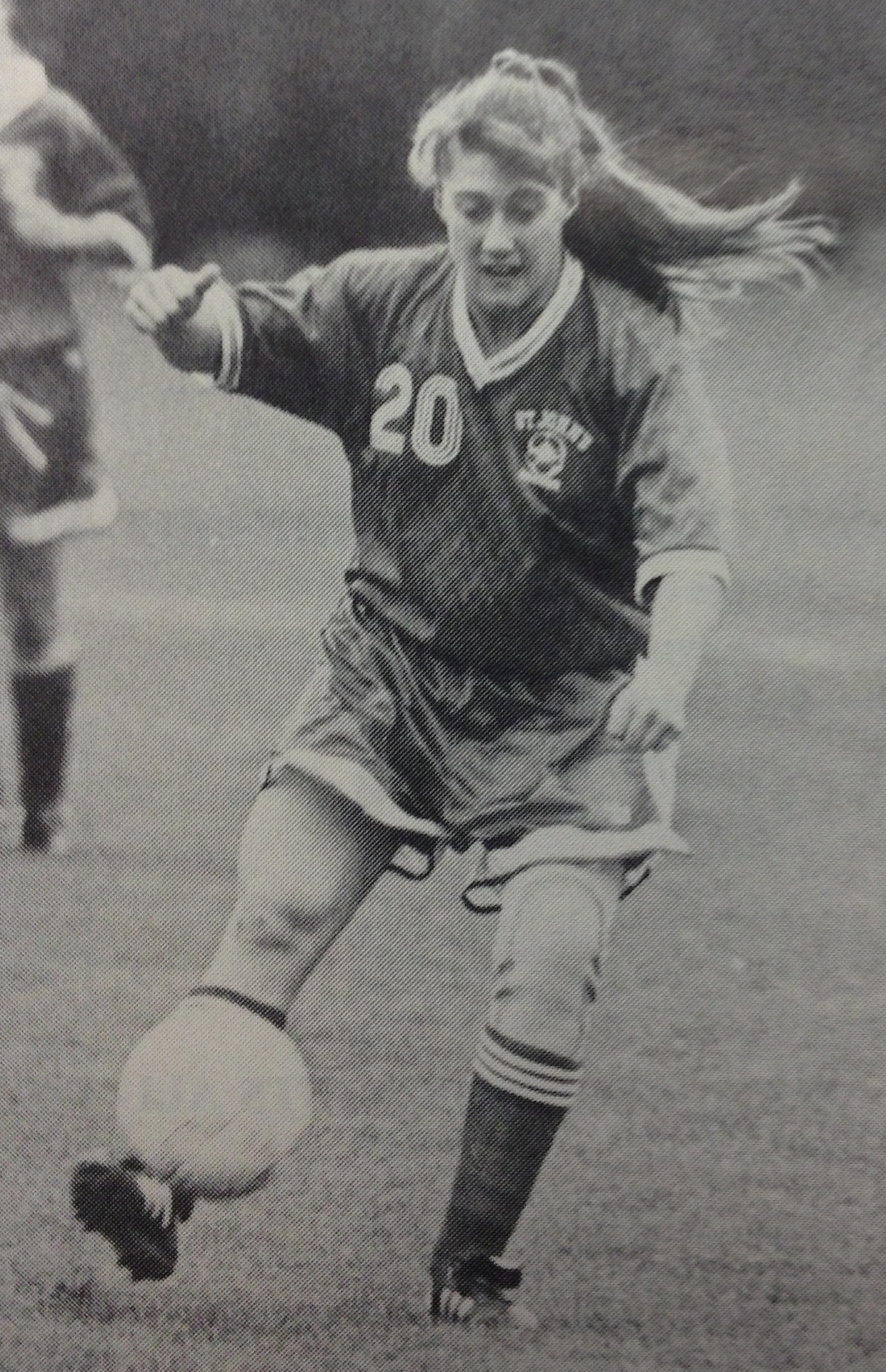
She played softball, too. Her college record includes a .352 batting average as a junior and 11 stolen bases as a senior. The second sport gives the biography a pleasantly inconvenient detail: even the athletic chapter refuses to stay in one lane. Her university education included both undergraduate and graduate study, with St. John’s later identifying her as a 1995 and 1997 alumna.
The soccer numbers had a long afterlife. Her 17 goals in 1994 remained the school’s single-season record until Rachel Daly scored her 18th against Seton Hall in October 2013. Stone, still coaching, remembered Burtis and saw similarities in the way the two players scored important goals. That June, Burtis had entered the St. John’s Athletics Hall of Fame. Within a few months, she had received a place in the university’s history and watched one of her marks become somebody else’s target surpassed.
A different kind of crowded field
Her government career crossed the administrations of Rudolph Giuliani, Michael Bloomberg and Bill de Blasio. She served as deputy director and then executive director of the Mayor’s Office of Citywide Event Coordination and Management. The title is a mouthful. So is the assignment: helping different parts of the city administration work together when public space becomes the setting for an event.
Her event-production work included serving as production manager for Times Square’s New Year’s Eve celebrations from 2005 to 2007. The wider portfolio took in the Macy’s Thanksgiving Day Parade, Major League Baseball All-Star Games, Central Park concerts and the first Summer Streets. These occasions have different audiences and rhythms. They also share a practical condition: the city surrounding them continues to have its own business to conduct.
A parade route is someone’s usual route. A place to gather is also a place people need to cross. These are ordinary observations, but they explain why event coordination belongs alongside transportation, permitting and community relations in Burtis’s professional life. A celebration may occupy a few hours on a calendar while making demands on many people who will never appear in its photographs.
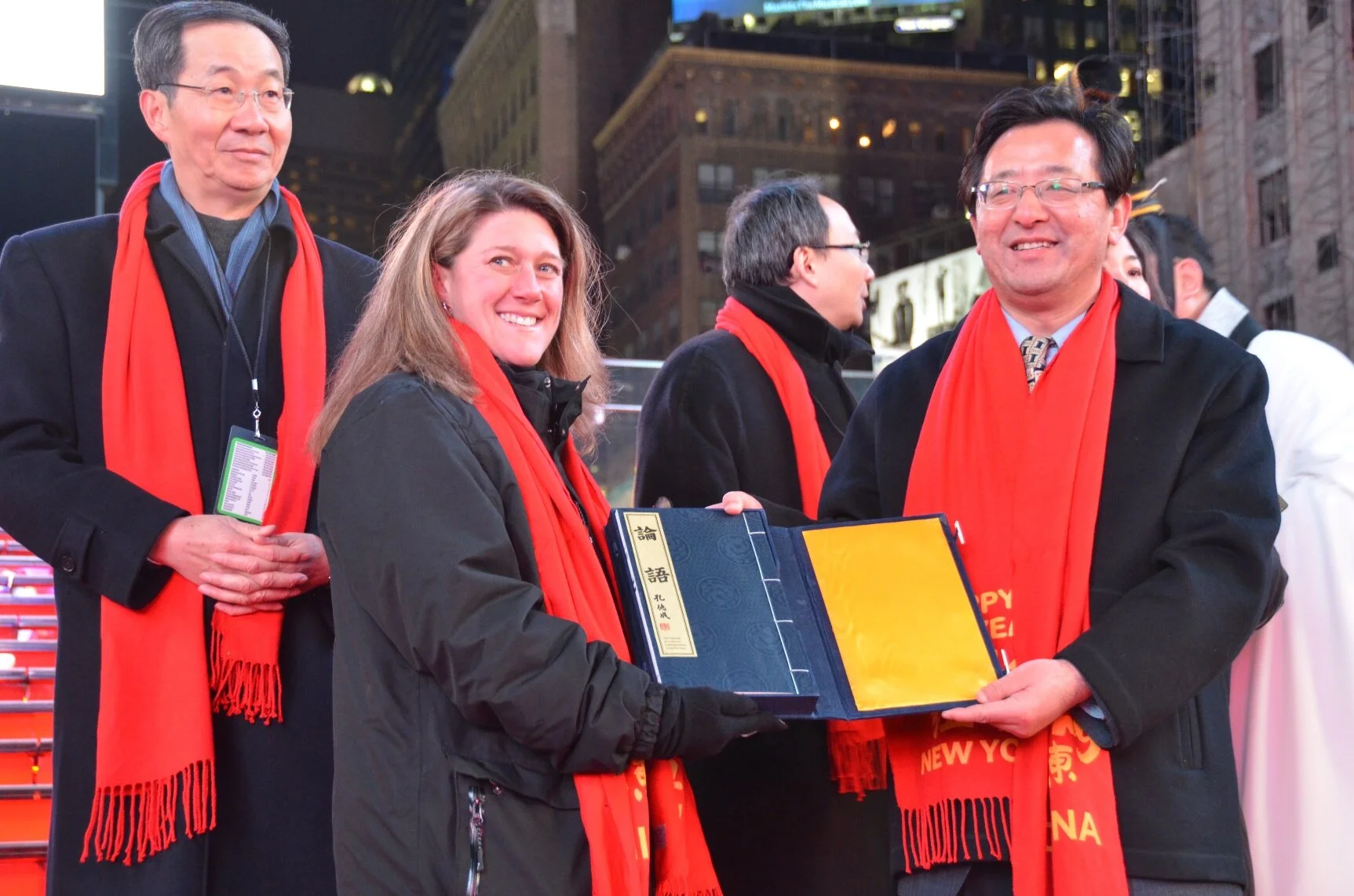
For the Super Bowl, those demands stretched well beyond the game itself. Her account of the project included the long Broadway closure and a week’s transportation needs. The attraction of the assignment, as she described it, lay in its scale and coordination. It offers a revealing angle on an event usually remembered through the field, the broadcast and the final score: Burtis remembered how the city had to work around it.
When the schedule belonged to a storm
After Superstorm Sandy, her work turned to recovery logistics. She and her team developed a citywide commodities distribution plan with New York City’s Office of Emergency Management. They coordinated more than 100 tractor-trailers carrying emergency goods and rations to affected areas across the five boroughs. The unit of work was suddenly a loaded truck, its destination and the arrangements needed to get it there.
The beach infrastructure required another set of operations. Burtis’s team helped coordinate delivery and installation of lifeguard stations and facilities for changing and bathrooms at public beaches, supporting their reopening for summer. That involved public and private partners across state lines. The season supplied its own deadline. There is something very New York about the combination: a regional logistical undertaking whose eventual public expression includes a place to change into a swimsuit.
Her recovery work also included contributing information to the Sandy after-action study. Distribution, installation and later review belong to different stages of the same undertaking. Together they show a side of her career that sits outside the parade and concert calendar, while drawing on the familiar work of organizing agencies, people and movement.
The neighborhood gets a say
Burtis Consulting Group carries that municipal experience into projects involving developers, contractors, public agencies and neighborhoods. Its services include regulatory consulting, permit expediting, government affairs and event management. The firm is woman-owned and lists certifications that include WBE, DBE and SBE. The work is concentrated in the New York and New Jersey area, where a project can encounter several layers of government before it encounters its first resident’s question.
Community construction liaison work makes the business tangible. BCG describes a dedicated officer who keeps information moving through workshops, meetings, newsletters and construction postings. A project team needs to explain the work. Residents and businesses need a way to raise concerns. The liaison gives that exchange a continuing place in the project, rather than leaving it to whoever happens to pick up a question.
A plan has people on both ends
- Project teamConstruction plans and updates
- Community liaisonMeetings, notices and questions
- NeighborhoodResidents, businesses and local groups
Information and feedback move in both directions.
In Sunset Park, BCG’s assignment included outreach around infrastructure reconstruction and catch-basin replacements. The firm worked with project teams, subcontractors, community groups, residents and businesses. Its account describes meetings with community boards, elected officials and property owners, along with workshops and other ways to gather feedback. A drainage upgrade may be described in engineering terms; the conversation around it also concerns what happens to an ordinary working day.
An October 2022 Sunset Park Task Force meeting captures the detail. Burtis attended for BCG, and AECOM and BCG presented the project’s status, phases, timeline and outreach. The work brought temporary changes to bus stops, bicycle stations and roadway access. Meeting participants asked questions about the project and its effects. This is the less photogenic part of a construction story: people needing an explanation while the work is still unfinished. It is also where the practical value of a liaison becomes easier to see.
The follow-up belongs on the list
Asked what advice she would give women starting out in events, Burtis offered a short list.
“Support each other, network, follow up and be confident.”
Cristin D. Burtis
The answer is brief enough to remember without a slide deck. Follow-up sits neatly among the more familiar encouragements. It is an action, something a person can put on tomorrow’s list. In work built around coordination, an unanswered conversation has consequences.
Her institutional connections have continued beyond City Hall. St. John’s recognized her among the sponsors of its Pitch Johnny competition in 2020. She chairs Sail4th 250, whose leadership brings together people with maritime, public-service and event experience. Its 2026 tall-ship celebration in New York Harbor added another setting to a career that already included Fleet Week and other military events.
In August 2026, City & State New York included Burtis in its Trailblazers in Real Estate list. The recognition places her current consultancy alongside an industry whose projects depend on conversations with government and communities. It is an apt point from which to look back at the range of her work: a college title, a Broadway closure, emergency supplies, a neighborhood meeting, a harbor gathering.
Those assignments have different stakes and different clocks. They also leave room for a recognizable occupation: getting the arrangements to meet the occasion. Burtis’s career has given that work a succession of settings. The scoreboard is sometimes visible. Sometimes the result is simply that the people who needed to get somewhere could get there.