The first version of Cream Co. Meats fit inside borrowed coolers. In 2016, Clifford Pollard bought ten cattle from an organic dairy in Balico, California, carried the meat on ice and drove it to a short list of Bay Area restaurants himself. There was no delivery truck, no plant and no app. There was a former cook who knew how chefs ordered and a rancher who was not entirely sure he would get paid.
That origin explains the company better than its current catalog does. Cream Co. is an Oakland-based USDA processor, whole-animal butcher and distributor for sustainable and regenerative ranches. It buys and aggregates animals from smaller producers, fabricates them into consistent kitchen-ready cuts, labels them with traceability intact and delivers the result to restaurants, grocers, schools, universities and corporate dining rooms. Consumers can shop online, but wholesale is the center of gravity.
Pollard's insight was not that chefs wanted better meat. The Bay Area had already proved that. The useful observation was that chefs hated the work required to buy it: twenty farm relationships, uneven carcass sizes, uncertain delivery and invoices arriving from every direction. Small ranches had the inverse problem. They could raise an excellent animal and still lack access to buyers large enough to purchase it profitably. Cream Co. decided to live between them.
The problem was hiding in the loading dockFrom chef frustration to cold-chain company
Pollard came to meat through kitchens. His professional cooking experience taught him that provenance matters only if a line cook can turn it into the same plate on Friday that left the pass on Tuesday. One loin cannot weigh eight pounds and the next seventeen. He later spent five years at Prather Ranch Meat Company and saw the first point of aggregation up close. The company he eventually designed would preserve the farm story while imposing the consistency a real kitchen needs.
“Consistency is king in the kitchen.”Cliff Pollard, founder and CEO
The phrase “missing middle” can sound like conference language. Here it means stainless steel, inspectors, HACCP plans, refrigerated rooms, skilled butchers and trucks that arrive on time. Meat is unusually stubborn inventory. A cattle program can take roughly two years before the animal is ready. The carcass must move through regulated slaughter and further processing without breaking the cold chain. Then somebody has to sell not only the ribeyes, but the trim, organs, bones and dozens of less fashionable cuts.
Cream Co. says all of its programs meet a “never-ever” baseline: no added hormones or antibiotics. Many partner operations carry standards such as Land to Market Regenerative, CCOF Organic, Certified Humane, Non-GMO Project and American Grassfed. The company also visits farms. Pollard's tidy line for the approach is “certified by many but verified by us” - an answer to shoppers and buyers who have seen enough badges to develop certification fatigue.
The bet gets physicalA handshake, an SBA loan and six months
For two years, Cream Co. grew brick by brick. Then Shake Shack's culinary team began asking Bay Area chefs where their best burgers came from. The answer kept being Cream Co. After farm visits and facility tours, a Shake Shack executive offered Pollard a conditional order: get a plant operating within six months, and Cream Co. could supply the chain's Northern California grind.
That changed his mind about how quickly to own infrastructure. Cream Co. raised money, used an SBA 504 loan and acquired a 15,000-square-foot USDA cut-and-wrap facility near the Oakland Coliseum in August 2018. The bill was broader than real estate: equipment, compliance, labor, inventory and a half-year clock. Its first Shake Shack delivery went to one Palo Alto store in January 2019.
One location was not an empire. It was evidence. A national customer had trusted a small regional processor to hold its specifications and its values at the same time. Pollard says the facility became profitable within six months. More important, it made Cream Co. something tougher to replace than a broker. A middleman can promise transparency. A processor can build it into receiving records, lot codes, production runs and labels.
What failed firstThe restaurant engine stopped; the consumer rocket did not stay
Then the pandemic removed the dining room. Cream Co.'s restaurant-heavy B2B foundation was the first part to fail. Half the team could be out with Covid just as the facility needed to keep running. The company responded by launching direct-to-consumer sales almost overnight. According to Pollard's 2026 account, the channel reached $300,000 a month within 90 days.
The surprising lesson is not that online meat boxes worked during lockdown. Many did. It is that Cream Co. later sunset the D2C push and rebuilt B2B from scratch. Shipping individual refrigerated boxes, buying digital demand and serving household baskets is a different company from running predictable wholesale routes. Temporary revenue had kept the plant moving, but it did not change where Cream Co.'s aggregation advantage was strongest.
Separate a crisis channel from a permanent strategy. Launch the fast workaround, measure what it saves, then ask whether it compounds the capabilities you actually want to own.
That choice is worth stealing. So is the sequence that preceded the facility. Cream Co. first proved trust with a small cohort - Slanted Door Group, Mister Jiu's, Aster and Calibur Burger - before adding the heavy asset. It used an anchor customer's conditional commitment to justify the jump. Founders in physical supply chains can copy the pattern: earn demand manually, secure a reference buyer, finance the bottleneck and use software only where it removes repeat friction.
Cream Co.'s chef-tailored app follows that logic. A buyer can use a personalized order guide, set standing orders, pay invoices, invite teammates and chat with the company. None of those features is dazzling. Together they spare a chef from late-night voicemails and spreadsheet archaeology. The software does not replace the butcher; it makes the butcher easier to buy from.
More cuts, more buyersHow the business makes the whole animal work
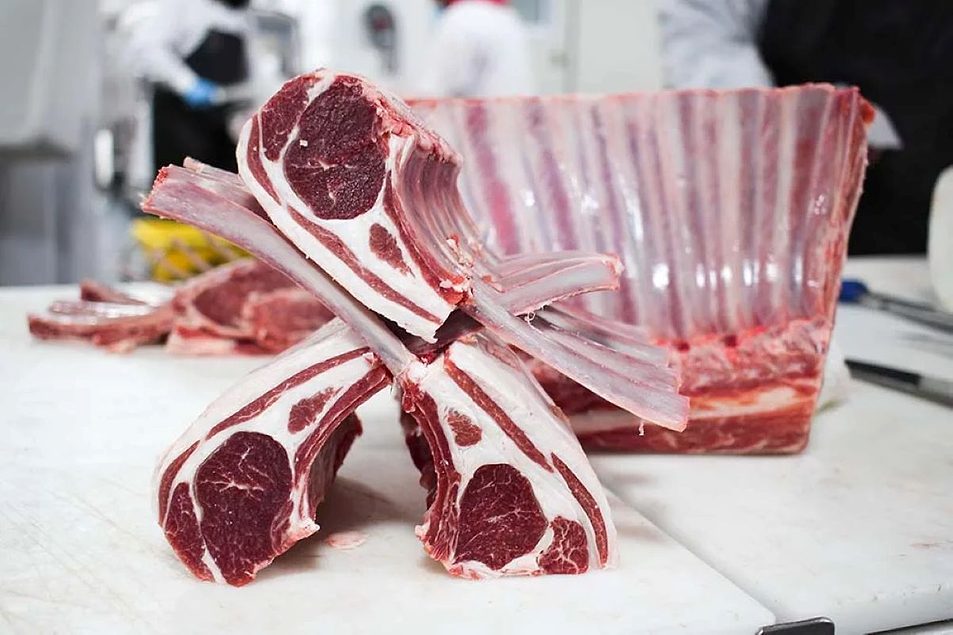
Whole-animal purchasing turns utilization into the central business problem. Cream Co. addresses it with a wide customer mix and more ways to transform meat: custom fabrication, grinding and patties, dry-aging, marinating, tumbling, seasoning, fresh sausage, catch-weight processing and retail-ready labeling. In 2023 it acquired Keller Crafted Meats, adding value-added and Non-GMO Project Verified processing capabilities. That same year it raised $4 million from Provenance Capital Group alongside existing and related backers.
By 2026, the company described production at a scale of about 80 cattle, 200 lambs and 100 pigs a week. It announced an $8 million Series A led by Soilworks Natural Capital, with Builders Vision, Desert Bloom and the Schmidt Family Foundation participating. The capital was earmarked for processing capacity and a larger regenerative sourcing network. Cream Co. also reported a USDA processing-expansion grant of more than $1.5 million.
The customer roster had widened too: more than 300 buyers, with publicly named relationships including the University of California system, Google, Eataly, public-school systems and Shake Shack. In 2026, Gott's Roadside named Cream Co. a key meat purveyor. A partnership involving Berkwood Farms and Nugget Markets put heritage pork into Northern California grocery aisles. Different buyers absorb different parts of the animal, which is exactly the point.
The brand promise is romantic. The advantage is an inconvenient pile of physical operations.Processing + fabrication + routes + trust
The honest limitWhen this model does not travel
This playbook does not work everywhere. It needs dense regional demand, enough chefs and institutions willing to pay for differentiated sourcing, reliable slaughter and processing access, disciplined food-safety talent and working capital that can wait while animals grow and inventory sells. It also needs buyers for the unfashionable cuts. A market that wants only ribeyes will turn whole-animal ideals into freezer burn.
Nor is “regenerative” a magic margin. Cream Co. is competing with commodity processors whose scale was built precisely to lower unit cost. Its ranch partners are typically small. Its certifications vary. Its claims still require verification cut by cut and farm by farm. If delivery density falls, if institutions refuse longer commitments or if consumers will not cover the real cost of responsible production, the model tightens quickly.
But the company has found a credible place in the market: larger and more convenient than buying farm-direct, more transparent and producer-oriented than a conventional broad-line distributor. Its expertise is translation. Ranch practice becomes a verifiable product attribute. A whole carcass becomes portion-controlled inventory. A chef's values become a standing order that actually arrives.
Cream Co.'s most useful lesson is pleasantly unglamorous. Do not ask customers to tolerate complexity just because the mission is good. Hide the complexity behind service they already understand - consistent specs, a dependable route, a clean invoice, a person who answers the chat. The company started by carrying coolers through kitchen doors. Ten years later, it is still solving the same problem, only the cooler is now an infrastructure company.