An apple has a calendar. Before it reaches a shop, somebody has to think about when it will be picked, which variety comes next, and what a retailer can promise its customers. In 2007, Greg Reinauer was explaining precisely that sequence for New Zealand apples. The fruit was fresh. The planning had to be ready before it arrived.
Then a senior vice president at Amerifresh, Reinauer described partners harvesting and packing varieties in succession, allowing the business to tailor programs for different retailers. He expected the first New Zealand Gala arrivals in the last week of March. Here was a management problem with a pleasantly edible outcome: connect a season in one place with a selling opportunity in another.
That is a useful starting point for understanding the president and CEO of Lange Companies. His working life runs through the connections between growers, distributors, and customers. A piece of fruit may look uncomplicated on a table. Getting it there gives quite a few people something to discuss.
Seasonal planning also changes what a sale means. An order is tied to an interval in which the product can be supplied and sold. Getting the variety right is one decision. Getting its arrival to fit the buyer’s plans is another. The calendar belongs in the conversation from the beginning.
An education in the handoff
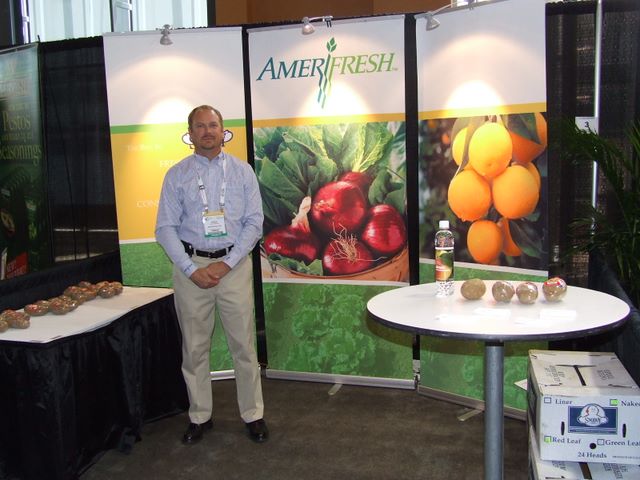
Reinauer spent his pre-Lange career with Amerifresh/Food Services of America. By the time he was selected to lead Tom Lange Company in 2012, he brought nearly 22 years of produce-industry experience. His background included growers and the retail, wholesale, and foodservice sides of the business.
Those are distinct vantage points. A grower works toward a harvest. A retailer plans for shoppers. A foodservice buyer needs product that fits an operation. The distributor sits among these expectations, translating availability into something a customer can use. The work rewards an understanding of what happens on either side of a transaction.
There was also industry work beyond his employer. In July 2006, Reinauer was named to the Produce Marketing Association’s Foodservice Board for the coming year. He was then Amerifresh’s vice president of sales and marketing. The board brought together people from restaurant purchasing, distribution, growing, and culinary education. It was a setting where the produce business met the people who put its products to work.
The job was to carry something forward
On March 19, 2012, Reinauer began as president of Tom Lange Company. The appointment followed a nationwide search. Phil “Rock” Gumpert, the company’s chairman and CEO at the time, wanted someone who could build on the business already in place. Reinauer’s breadth across the trade was part of the appeal.
Reinauer arrived at a company with more than half a century behind it. That matters to the shape of the job. A new president enters relationships that predate the appointment, habits that people know by heart, and expectations attached to the company’s name. The desk may be new to its occupant. The obligations are already there.
His response to the appointment put the organization’s talent at the center of its success. He looked ahead to opportunities in produce and logistics. There was room to grow, but the business had people and a history to grow with. Succession, in that setting, meant making the next chapter workable for those who would carry it out.
For the incoming leader, the first question is what the existing business makes possible. There are capabilities to understand before there are changes to announce. A long customer relationship carries knowledge that may never appear in an organization chart. Preserving its usefulness takes attention to the people who hold it.
The owners are already at work
The ownership structure gives that succession another dimension. Lange is an employee-owned business. Reinauer described it as 100 percent employee-owned in 2020. An employee stock ownership plan gives the people working in the organization a stake in the enterprise.
In his account, ownership helps people feel that they belong and can affect the business. He also described newer and younger colleagues developing into leaders, salespeople, logistics providers, and corporate staff. The next generation was becoming part of the company’s daily capacity.
“The larger you get, the more difficult that tossing of the keys becomes.”
Greg Reinauer
It is an unusually concrete image for a leadership problem. Keys allow someone to open a door and get on with the job. Giving them out requires confidence in the person holding them. As an organization expands, that confidence has to travel farther. Employee ownership makes the question of participation tangible; management still has to make room for people to act.
Growth in the ordinary details
By the company’s sixtieth anniversary in 2020, Reinauer could point to changes across its operations during his tenure. Technology capabilities had been updated. Strawberry production had been reinvigorated. A domestic citrus program out of California had been added. Toronto’s international business had become more closely incorporated into the wider company.
These are useful particulars because they show what growth can look like from inside a produce business. A new program broadens what can be offered. Better integration changes how separate operations work together. Technology affects the information available to the people making decisions. Each change has to become useful in practice.
Reinauer also linked the company’s expansion to recruiting talented people and opening offices. A new location needs someone capable of doing the work there. A business can draw its next dot on the map rather quickly; finding the person who makes that dot mean something is a different task.
Three businesses, one customer’s problem
Today, the organization presents its operations as Lange Farms, Lange Fresh Sales, and Lange Logistics. It is a way of seeing the entire journey instead of stopping at the sale. Under Reinauer, the leadership responsibility spans the different kinds of work that make a produce program possible.
Lange Farms works with a global collective of growers, with produce including berries, citrus, and asparagus. Grower-direct programs and import management connect that production to customers. The practical appeal is access combined with planning: what can be grown or sourced, and how it fits a customer’s requirements.
Lange Fresh Sales handles the commercial connections. Its work extends through procurement, warehousing, picking, packing, and delivery. It takes ownership of the produce it ships and manages risk around those transactions. A buyer may begin with an order for a product. Behind that order is a sequence of arrangements that must agree with one another.
Import management
Product ownership
Refrigerated shipping
Lange Logistics is a non-asset-based third-party logistics provider. It arranges transport through a carrier network rather than operating as an asset-based trucking company. The distinction puts coordination at the center: finding suitable capacity, matching it to a shipment, and keeping the arrangements moving.
Its territory includes domestic shipments, movements from Mexico, and shipments into Canada. Its customers extend beyond produce into food and beverage, automotive, industrial, and retail businesses. Refrigerated shipping remains part of its produce expertise. Taken together, the three operations explain why Reinauer’s cross-sector experience fits the company he leads.
The handoffs make responsibility worth examining. A grower’s plan, a purchase, and a transport arrangement can each be sensible on their own. They also have to fit together. The customer’s experience depends on that fit, including decisions made well before the shipment is ready to leave.
The conversation is part of the work
In October 2022, ahead of the Global Produce & Floral Show in Orlando, Reinauer talked about relationships. Technology had helped maintain and develop them. The chance to meet face to face offered something he welcomed: conversations with old and new industry friends, and an opportunity to renew those connections.
It is easy to treat a trade show as an interruption in a working week. For this kind of business, the encounter can be part of the work itself. Growers, buyers, and transport partners have to understand what the others need. An exchange of information becomes more useful when the people exchanging it know one another.
Reinauer’s comments keep technology and personal contact in the same picture. A message can sustain a relationship across a distance. A meeting can give it more texture. Both matter when a company depends on people outside its own walls to fulfill the promise it has made.
A new sign, a familiar obligation
The refreshed Lange Companies identity brought the growing, sales, and logistics operations into a more unified presentation. In 2025, Reinauer explained that the work had taken more than a year and involved stakeholders across the company. It included a new visual identity, an updated website, and a clearer account of the business.
His explanation was practical. Customers needed to understand the scope of what the organization offered. The identity also supported internal alignment. For a company with several kinds of expertise, a name and a website have a useful assignment: make the connections easier to see.
A clearer description can make an everyday conversation shorter. A buyer should be able to see which parts of a problem the company can address. For the employees, the same description sets their work beside that of colleagues elsewhere in the organization. The design earns its place by helping that understanding.
There is a pleasing continuity with the apple programs of his Amerifresh years. Then, the task was to connect harvests with retailer plans. Now, it is to help people understand a business that connects growing, selling, and shipping. The scale has changed. The need for coordination has endured.
Reinauer’s career gives that coordination a human dimension. Someone has to understand the next person’s problem, make a decision, and follow it through. Fruit supplies the deadline. The company supplies the people. A promise earns its meaning somewhere between the two.