An insurance headquarters is an unlikely place to need wrestling shoes. Craig Ritter’s had a reason. An employee who coached at a local middle school wanted somewhere to run a wrestling club. Ritter, a former wrestler himself, supported the idea. The first floor became a 5,000-square-foot place to practice. Corporate hospitality usually offers a chair and a coffee. This arrangement allowed for considerably more movement.
It is a useful opening to Ritter’s story because it puts an abstract business virtue on an actual floor. Someone had an ambition and needed the space to pursue it. Ritter could help. Much of his career has involved a similar calculation, although independent insurance agents generally require fewer mats. They need contracts, systems, answers, and people who understand the work waiting behind a sale.
Ritter has spent decades building that support. He is co-founder and CEO of Ritter Insurance Marketing in Harrisburg, Pennsylvania, and a managing partner at Integrity. Those titles belong to a career that began in insurance in 1992, passed through his father’s small business, and eventually acquired the complexity of outside investment and a national organization. The wrestling room supplies a welcome reminder that a business can become larger while its decisions remain rather personal.
Five employees, one family name
Ritter studied finance at Penn State. His professional education continued in the insurance business, where he earned the CPCU and AFSB designations. He had entered his father’s industry, but joining his father’s operation came later. Cal Ritter founded the predecessor business in 1994. Craig joined in 1997 as its first employee, working in what was then URL Senior Care Division.
Three dates matter here, and each describes a different beginning. There was Cal’s original enterprise, Craig’s arrival, and the purchase from URL in 2005, when the business took the Ritter Insurance Marketing name. In his founder’s letter, Craig recalls starting the company with his father and five employees. The family name on the door was attached to a very small group of people with a substantial amount of work to do.
There is something appealingly untheatrical about this origin. A finance graduate entered an established industry, learned its business, and joined his father. The decisive opportunity developed through years of work together. By 2005, putting their name on the company also meant accepting responsibility for the support it promised other people. A surname makes an economical brand. It also makes complaints unusually easy to address.
Enters the
insurance industry
Joins his father
as first employee
Co-founds Ritter
under its own name
The useful art of doing the paperwork
The business grew around independent agents and the practical machinery their work requires. Independence is an attractive word, especially on a business card. During the working week it also means responsibility for details that are difficult to admire and impossible to ignore. Ritter’s company took an interest in those details: licensing, contracting, submissions, commissions, and the questions that accompany them.
His founder’s letter gives software development a place alongside service. In-house software and database teams develop and improve tools with suggestions from agents. The significance is straightforward. The person using a system has information about its shortcomings that the person presenting it may never encounter. Building a feedback route between the two is a sensible way to spend a company’s attention.
A 2012 partnership with Custom Benefit Plans shows how that approach traveled. Ritter brought tools for managing leads, analyzing products, handling commission payments, tracking appointments, and managing licensing paperwork. The partner brought local relationships, training, coaching, and experience. The arrangement joined things that an agent could use during an ordinary week. Its appeal did not require anyone to develop an affection for administration.
Ritter’s public work has also included explaining technology to the people expected to use it. In 2019, he appeared with Dwane McFerrin of Senior Market Sales on a technology panel at a Georgia industry summit. The pairing is a small detail with a larger implication: his career includes teaching and discussion across the industry, as well as the internal decisions that arrive at a CEO’s desk.
“Your success is our success.”
Craig Ritter, in his founder’s letter
That short line carries the commercial logic of the enterprise. Agents need their businesses to work. A company built to support them has its own future tied to that outcome. It gives Ritter a practical test for a new tool or service: whether it makes the agent’s job easier to carry out. A pleasing presentation can win a meeting. Usefulness has to survive the following morning.
Learning to share the company
By May 2020, the business was ready for another kind of partnership. Century Equity Partners, a Boston private equity firm, acquired a minority interest. The existing executive team retained majority ownership. The announcement described more than 220 full-time employees and support for 11,555 independent agents. Those were the dimensions of the operation at that point, fifteen years after the five-person beginning.
Century brought experience in growth and acquisitions. Between 2020 and 2022, Ritter completed twelve acquisitions, counting both equity and asset transactions. That chapter made partnership an organizational challenge as well as a sales philosophy. The work of growing a company now included bringing other businesses into its orbit, with the decisions and relationships such combinations require.
In May 2022 came the agreement to join Integrity. Ritter added managing partner to his responsibilities and continued as CEO of the company. The transaction followed the investment and acquisition period, rather than appearing as a sudden change of direction. A family business that had been learning to work with outside partners was joining a larger network.
In his announcement to agents, Ritter described months of deliberation with his business partners. He emphasized access to shared resources, including technology, finance, human resources, product development, and marketing. He also said he and his partners would continue leading the business. That combination helps explain the decision in operating terms: more resources around an organization whose existing relationships still needed attention.
The chapter continued in public conversation. In March 2023, he joined Integrity co-founder and CEO Bryan W. Adams for a video discussion about the opportunities of partnership. Later that year he appeared with JoAnn Wray on A Human Connection. In 2024, he was included among the Philadelphia Smart Business Dealmakers Hall of Fame inductees. The first employee had become someone other business owners gathered to hear.
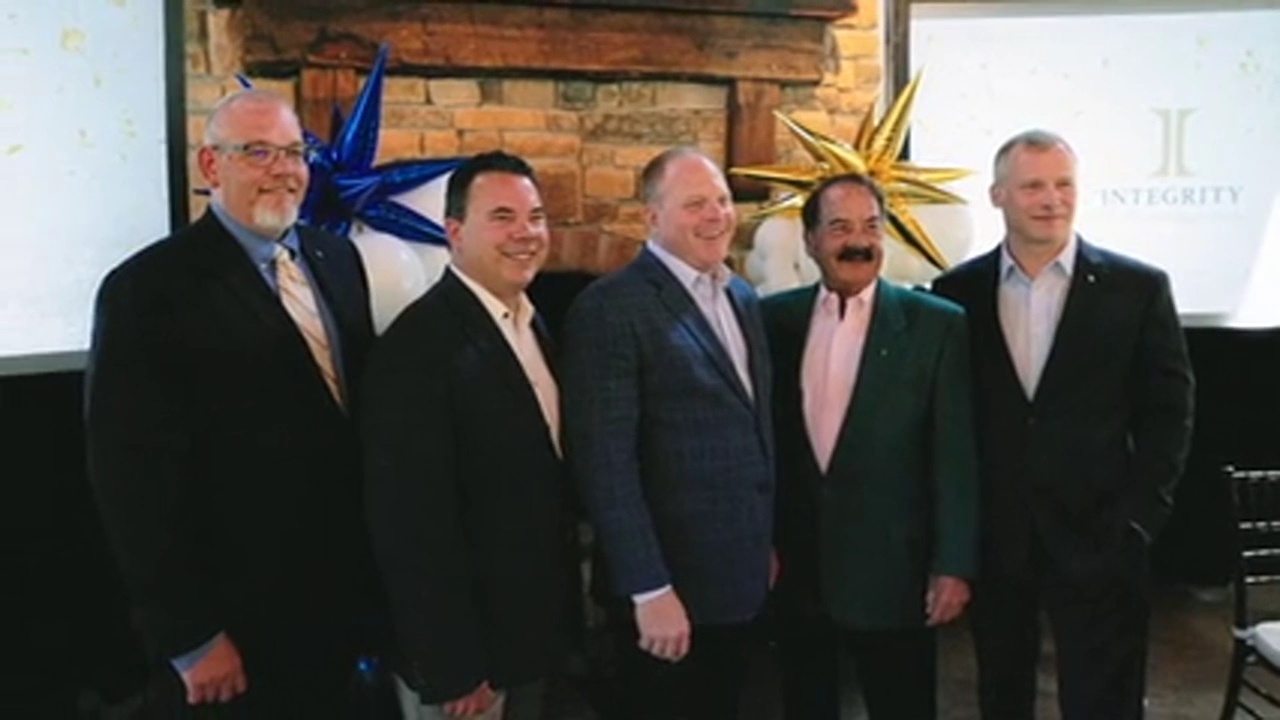 Watch the partnership film ↗
A different sort of floor plan
Return to the headquarters and the wrestling club, and the biography acquires a different texture. The request came from an employee with a coaching role beyond the office. Ritter’s own experience in wrestling gave him a connection to the idea. Supporting it turned a piece of company space into something useful for young people in the community.
The club also had an attached workout room and yoga studio available to members and employees. The detail broadens the picture of what Ritter helped accommodate. A headquarters is expensive space with many possible uses. Choosing to put a club there gives a concrete form to an employer’s relationship with the people around it. The phrase “community involvement” rarely produces such a distinctive floor plan.
His family life has its own range of sidelines. Ritter and his wife, Heidi, have three children: Quinn, Callie, and Cash. He has supported his sons’ sporting activities and watched his daughter perform with the Villanova pep band. Being present can involve listening as well as cheering. A former wrestler evidently has room in his sporting life for the musicians who help make the occasion.
He has also been involved with his church and charitable organizations, including The Partnership for Hope. Taken together, these details show where some of his attention goes beyond the company. They give the business story company of its own: employees with interests outside work, children with their own activities, and a community that sometimes needs a room.
The next room is in Washington
More recently, Ritter’s advocacy has taken him beyond the office and the conference stage. By March 2026, he had made trips to Washington to meet legislators and officials. His concerns included the administrative requirements agents face, the stability of commissions, and the protection of renewal payments. These were proposals he was advocating, rather than changes already secured.
The setting has changed, but the connection to his earlier work is easy to follow. Contracting tools address one part of an agent’s working day. Discussions about payment arrangements and administrative requirements address another. Both involve the conditions surrounding the personal relationship on which an agent’s business depends. Ritter has moved from building support within a company to arguing for it in a wider arena.
His career now spans more than three decades in insurance. There are transactions, titles, software tools, and workforce figures to account for. There is also that first employee joining his father, and the executive who listened when an employee asked about wrestling practice. The career holds both scales comfortably. One requires a national network; the other requires enough room to put down the mats.
Continue the conversation
Explore Ritter’s work, writing, and interviews.
Ritter Insurance Marketing Company website ↗Craig Ritter on LinkedIn Personal profile ↗A Human Connection with JoAnn Wray Watch on YouTube ↗Right Time, Right Partner 2022 video interview ↗Making Each Other Better 2023 video conversation ↗Ritter on the Integrity partnership Read his announcement ↗His 2026 annual address, in review Company blog ↗