An insurance agent can know a client’s doctors, prescriptions, and worries, yet still be waiting for permission to sell the right plan. Before the conversation comes the contract. Before the contract comes another form. Somewhere in that small administrative purgatory sits the business opportunity Ritter Insurance Marketing has spent years pursuing: help the person who helps the customer.
- Independent agents use Ritter for carrier access, technology, training, and back-office support.
- Carrier-paid overrides fund the core partnership; registration is free.
- Joining Integrity expanded Ritter’s resources and changed its software roadmap.
The paperwork behind the handshake
Ritter occupies the middle of insurance distribution. Carriers create and underwrite products. Independent agents advise clients and sell policies. Ritter, a field marketing organization, helps those agents get appointed, understand products, and run their businesses. Its territory is principally senior health and life insurance, with Medicare Advantage, Medicare Supplement, and prescription drug plans central to the proposition.
The customer is the agent or agency that wants more capacity without building every department itself. A licensing question, a missing supply order, or an unexplained commission can interrupt the same person’s day. Ritter’s support teams address those tasks. Its support page reports nearly $100 million paid in agent commissions in 2022. That is money moving to agents, rather than a measure of Ritter’s revenue.
The family history reaches further back than the current name. Cal Ritter founded the predecessor business in 1994. Craig joined his father at URL Senior Care Division in 1997; the business was purchased from URL and renamed Ritter Insurance Marketing in 2005. This was a company formed around an existing distribution problem, with years of insurance work behind it.

A shopping cart for permission
Consider Contract Now. An agent selects carriers and products, puts contracting selections in a cart, then completes them in batches. Saved answers reduce repeated entry. Contracts can be reviewed and signed within the workflow. The shopping metaphor is almost funny: the agent is collecting permissions to do business. Yet it makes an unfamiliar process feel manageable.
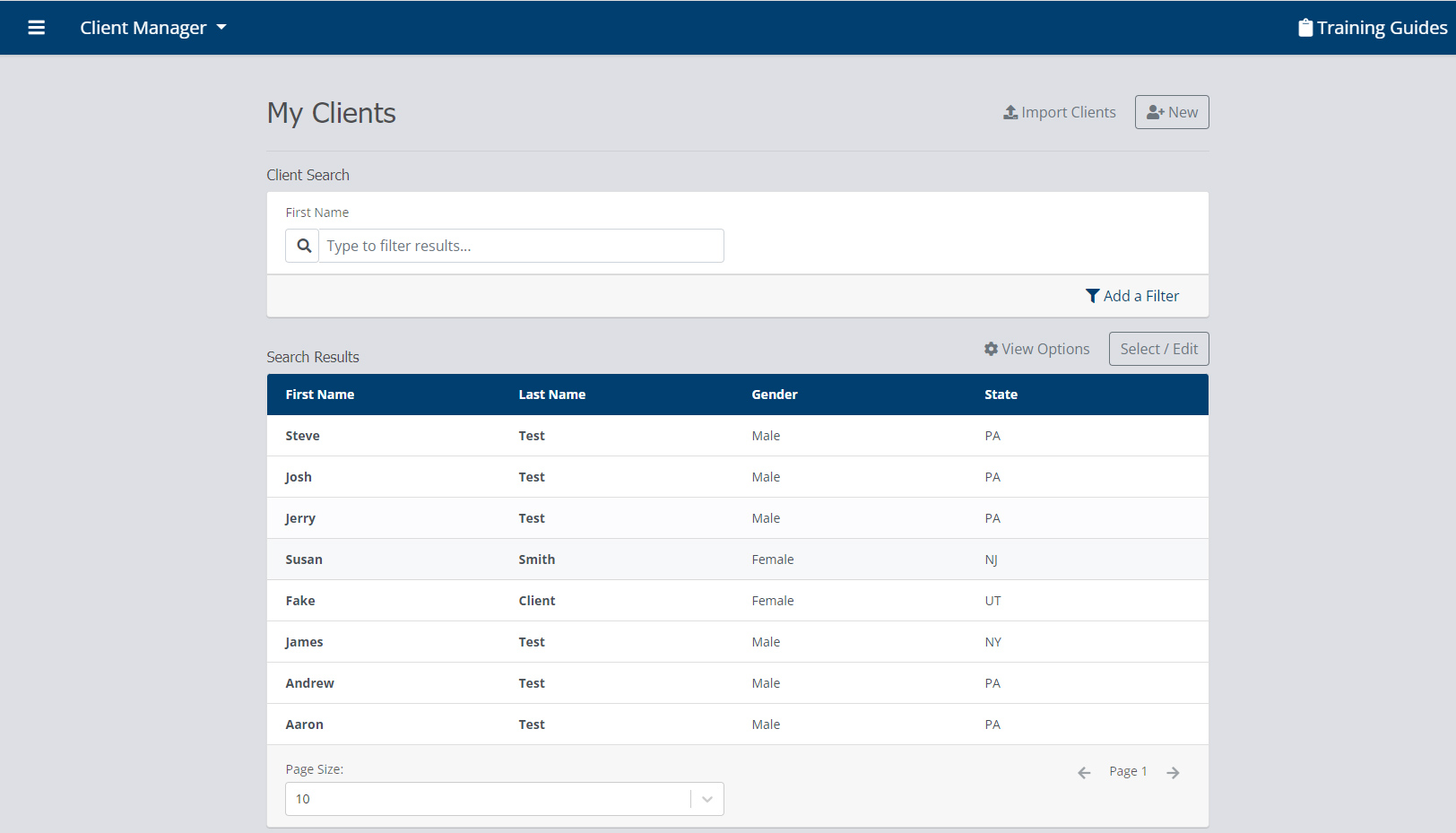
The Ritter Platform also provides contract and commission information and its Medicare Quote Engine. IntegrityCONNECT adds client management, quoting, enrollment, scheduling, and Ask Integrity assistance. PlanEnroll gives agents a consumer-facing website. The distinction matters: some tools are Ritter’s; others come through its parent. Together they cover work before, during, and after the sale.
Education fills another gap between having access and knowing what to do. Ritter publishes guides, webinars, and the Agent Survival Guide podcast. Its content library ventures into recipes, travel, and Halloween alongside Medicare basics. The range suggests an everyday problem for agents: staying in touch with clients when there is no immediate policy decision to discuss.
Free has a payer
Ritter explains the economics plainly. When an agent sells a carrier’s product through the FMO, the carrier pays Ritter an administrative override. Ritter says agents receive their street-level commissions without a service fee deducted for the partnership. Recruitment, training, and support give the carrier a reason to pay. Free registration therefore has a commercial explanation.
It does not follow that an agency has no expenses. IntegrityCONNECT offers leads for purchase. Nor does free registration authorize a new user to sell everything on the screen. Newly registered agents must speak with Ritter’s sales team to activate Contract Now. Carrier appointments and required certifications still matter. The service removes work; it cannot remove the conditions attached to the work.
The company that retired its own tool
In May 2022, Integrity announced an agreement to acquire Ritter. Craig described months of deliberation and consultation before the decision. His explanation emphasized shared technology, finance, human resources, product development, and marketing. The attraction was additional operating capacity. Financial terms were undisclosed.
The consequential detail arrived in a 2024 migration FAQ. Ritter was phasing out Shop & Enroll and putting development support behind Integrity’s technology suite. Its explanation was that partnership should bring development teams into alignment. A company that had built its own systems was choosing where to stop duplicating effort.
“As partners of Integrity, we want to lead with them, not compete with them.”Ritter’s 2024 Shop & Enroll phaseout FAQ
There were practical costs to that choice. Ritter stopped accepting paper applications for processing after August 31, 2024. Former Shop & Enroll pages redirected to a single PlanEnroll site per agent, and the old client database became read-only after migration. These were specific workflow changes for customers to absorb. Keeping historical information available helped, but joining a larger platform still required adjustment.
Growth comes with a minus sign
Ritter’s March 2026 review reported 214,564 Medicare Advantage enrollments for 2025, up 27 percent. Part D enrollments fell 81 percent to 9,634. Medicare Supplement premium production declined 11 percent. These measures describe different products and different units; they should not be blended into a single growth score. They show why agents need more than a cheerful sales dashboard.
Separate measures, same reporting year. Bar length represents the magnitude of change.
Ritter also added five Medicare carriers in 2025, including Kaiser Permanente and Peak Health. More choice can help an agent rebuild a portfolio, but a national carrier list is only a starting point. Availability, geography, and appointment status determine which choices become useful in an actual client meeting.
Speed has a similar qualification. Ritter’s August 2026 preparation guide warns that carriers can sometimes take more than six weeks to process contracting. An online form may shorten the agent’s part of the process while leaving an external queue intact. For someone planning a selling season, that difference belongs on the calendar.
Borrow the back office
Other distributors offer overlapping services. URL Insurance Group promotes Medicare expertise, technology, training, and compliance assistance; AmeriLife’s health-distribution network spans Medicare, ACA, ancillary, and life products. Ritter’s case rests on the particular combination of its contracting system, human support, educational material, and access to Integrity’s platform. An agent should test that combination against their own market.
The transferable lesson is refreshingly ordinary: find the administrative task a professional repeats, make it easier, and keep a knowledgeable person nearby when software is insufficient. Agents can begin with registration and a portfolio conversation, then check carriers and activation requirements. The arrangement is less useful when the needed carrier is unavailable, the workflow does not fit, or the agent expects registration to replace preparation. Independence still takes work. Ritter sells help with the work around it.