In 1942, the business now called BEC Legal Systems sold typewriters and refurbished office equipment in Cincinnati. By 1970, it was concentrating on lawyers. Eventually, the machinery changed: documents, calendars and case information moved into software. The customer stayed remarkably recognizable. A lawyer still needed the right document, for the right matter, at the right time.
When the business joined the portfolio now known as CORA Group in 2019, that history mattered. A software company can contain decades of accumulated knowledge about one profession’s inconveniences. Buying it means taking responsibility for those relationships. CORA’s proposition begins there: acquire the specialist, provide support, and keep owning it.
- CORA buys industry-specific software businesses and holds them long term.
- Its companies serve banks, law firms, foodservice operators and other specialist customers.
- Local expertise stays close to customers; capital and operating knowledge come from a larger group.
01 The customer knows the difference
“Vertical market software” sounds like something designed by an organizational chart. In practice, it means software built around a particular trade. An elevator maintenance company needs service and inspection workflows. A law firm needs calendaring and matter management. A foodservice operator needs systems that understand its daily operations.
CORA owns businesses in those markets. BEC serves legal workflows. Volanté supplies enterprise point-of-sale software for foodservice. Site Service Software handles the elevator industry. InfoMax supports data capture and workflows for Canadian long-term care and municipal customers, including the movement of medication-related forms between care providers and pharmacies.
The specificity is the attraction. A general software supplier can offer broad functionality; an industry specialist can understand why a seemingly minor detail matters to the person using it. CORA assembles these businesses under an ownership structure that lets their knowledge remain useful.
02 An owner with acquisition experience
Jonas Software officially launched CORA in November 2022. The new name came with an established operation: 23 software businesses across more than ten verticals and over 1,000 employees. Matt Otchet, appointed CORA’s CEO, had entered Jonas through an acquisition himself.
The launch announcement identified a practical irritation: delays and friction in selling a company. Otchet described focused diligence and honest conversations as ways to reduce seller fatigue. That is a revealing founding concern. A seller may spend years building a business, then discover how exhausting the process of transferring it can become.
CORA sits within Jonas, which belongs to publicly traded Constellation Software. The structure supplies financial backing and a network of operating experience. CORA is an owner and operator of software businesses; its acquisition work feeds that portfolio. The underlying businesses sell software and related services to their respective markets.
“Like most of our employees, I came into Jonas Software through an acquisition.”
Matt Otchet · CORA’s launch, 2022
03 What “forever” asks of an owner
Permanent ownership is CORA’s central pitch to sellers. A founder seeking liquidity can transfer ownership while placing employees and customers inside a continuing business. Compared with a buyer planning a later resale, the proposed time horizon changes the conversation about what happens after closing.
There is a useful caution inside that promise. Independence requires managers who can run their businesses and an owner willing to support them. Simply extending a holding period cannot make a product relevant. The model makes sense where specialist teams retain customer trust and can keep adapting their software.
CORA’s expertise lies partly in that operating work: helping acquired companies, exchanging knowledge and developing leaders. It offers founders a combination of financial backing and people who have faced similar transitions. For customers, the practical benefit being offered is continuity of products, support and industry understanding.
04 A group photo with an operating purpose
There is a surprisingly human mechanism behind the decentralized structure. CORA University brings people from portfolio businesses together to exchange practices and build connections. The 2024 gathering took place in Orlando, with workshops and career-development sessions. Its published recap even links to a musical introduction.
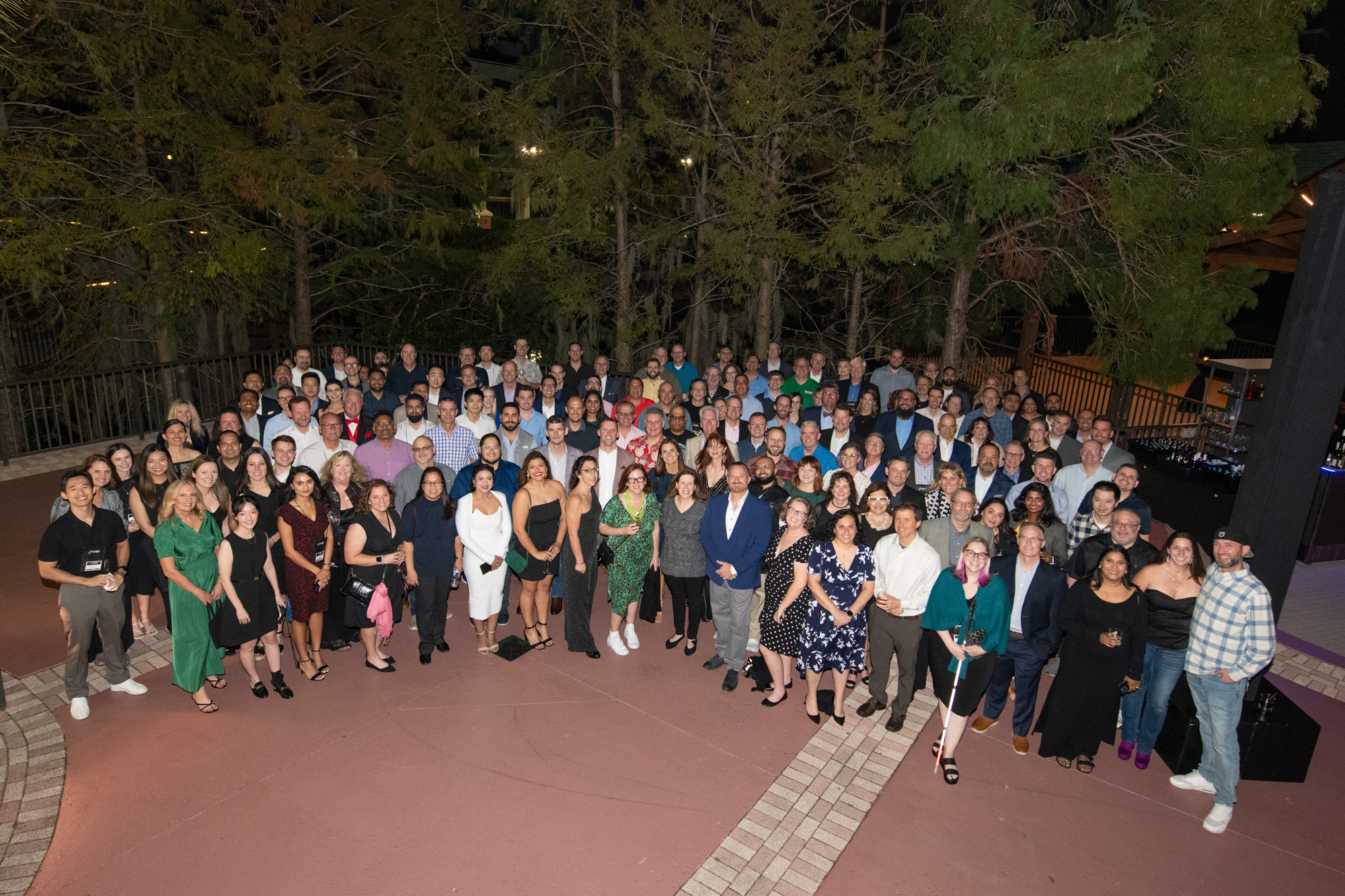
The company reported that 22% of team members assumed new roles during 2024. Treat that as a company-reported development measure, rather than proof of business performance. Still, it shows what CORA wants to count alongside acquisitions. Moving knowledge and people through a group may help it support more businesses without centralizing every decision.
05 Independence has room for collaboration
Local autonomy does not mean each company lives on an island. In February 2024, CORA Legal Group brought BEC Legal and RBRO Solutions into a strategic partnership while stating that both would continue operating independently. Their capabilities span legal documents, calendaring and document-management systems.
The elevator software portfolio offers another version. Following the December 2025 Site Service Software acquisition, Douglas vanden Bosch was named to lead both that business and Total Service. The announcement paired independent operations with shared leadership and an aligned research-and-development direction. Brand continuity can coexist with coordinated work.
CORA Loyalty makes collaboration visible to customers, too. It brings together RewardOps, Vanson Technologies and Carlson Marketing Solutions, offering capabilities from program strategy to rewards and technology. The broader ownership group can therefore support both focused businesses and coordinated offerings where their skills fit together.
06 The next owner of the bank’s engine
In June 2026, CORA acquired Finastra’s U.S. mid-market banking business, including Phoenix, MalauzAi, Analyzer IQ and enterprise content management. The announcement described software used by hundreds of U.S. banks and credit unions, with Joe Gomez leading the standalone business.
Denis Brosnan, a CORA portfolio CEO, described the appeal as “strong products, loyal customers, and people who really know their industry.” It is a compact explanation of the selection logic. The software matters because people rely on it; the team matters because it understands those people.
For another business owner, the transferable idea is straightforward: keep decisions close to the customer, and make experience easier to share. A founder considering a sale can use CORA’s proposition to ask concrete questions about management, product investment and customer support. A buyer of software can examine the specialist brand that will actually serve them. Across this varied portfolio, the meaningful test arrives after the announcement, when a customer needs help and someone familiar answers.