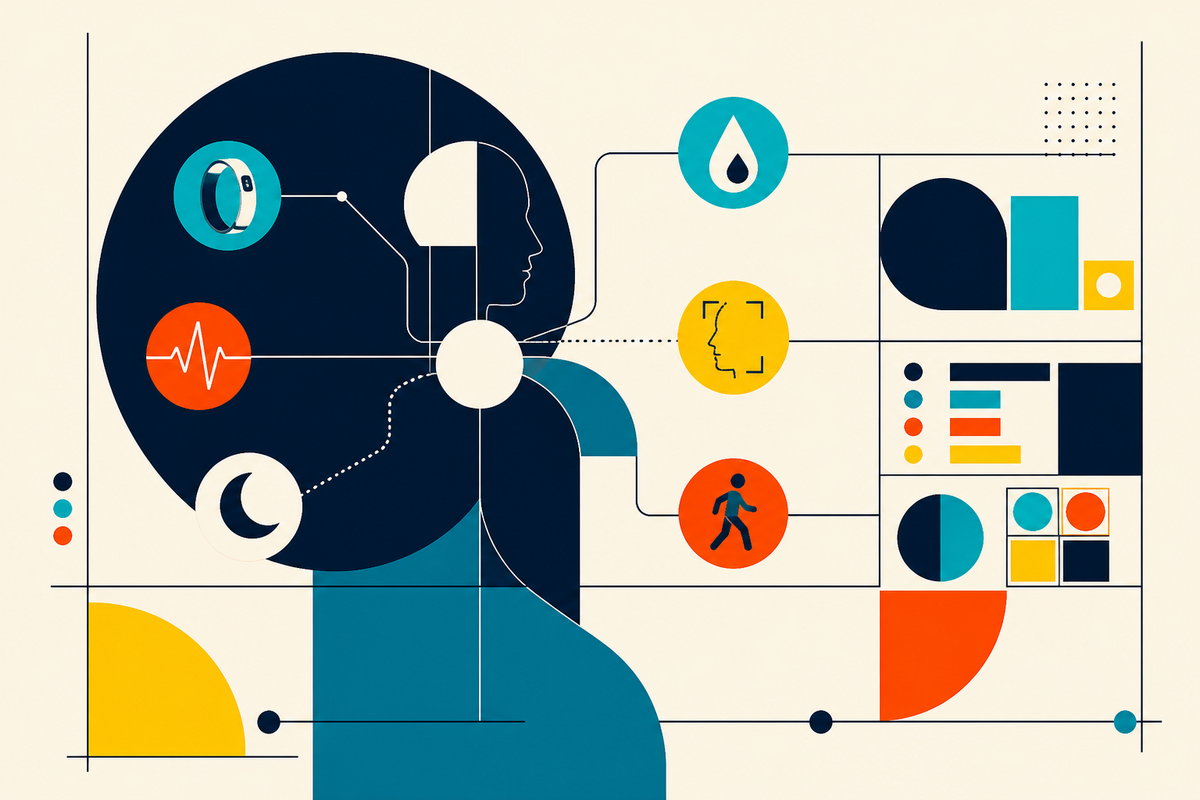
A health tracker is an excellent witness and a mediocre narrator. It remembers the hour you fell asleep, the afternoon your heart rate jumped and the week your step count collapsed. It rarely knows why. ConnectedLife has built its business around that gap between measurement and meaning. The company pulls together more than 70 biomarkers from wearables, laboratory tests, face scans, clinical readings and lifestyle questions, then tries to turn the jumble into something a person, a doctor or a health system can act upon.
The proposition is prevention by pattern recognition. A single short night is ordinary. A slow change in sleep, resting heart rate, activity, blood pressure and reported stress can be a different kind of signal. ConnectedLife's software gives users a consolidated dashboard, health scores, trends, goals and personalised nudges. Organisations receive the other side of the system: population views and clinician dashboards designed to show who may need attention and whether a prescribed lifestyle change is working.
This makes ConnectedLife less a fitness app than connective tissue. It does not manufacture the watch, run the laboratory or replace the physician. Its job is to make those parts legible to one another. In a market crowded with step counters, telehealth portals and remote-monitoring dashboards, that middle layer is both the opportunity and the difficult bit.
The first dashboard was a family worry
The origin was less clinical and more personal. Founder Daryl Arnold was travelling while his elderly father lived alone in Britain. After a health scare, Arnold wanted a quiet way to know whether daily life at home still looked normal. His team installed sensors and built an app that could report movement and environmental conditions. The first gateway, according to an account of the project, came from a 3D printer - clever enough for a prototype and expensive enough to clarify the need for scale.
The venture began as Silverline in 2013 and became ConnectedLife. Its early subject was ageing in place: allowing an older person to remain independent while giving approved relatives or caregivers a little more context. That first product already contained the company's lasting thesis. Ambient data can reveal a change before a person thinks to make a call.
What changed was the breadth of the signal. Motion sensors in a home gave way to wearables, mobile apps, connected medical devices and cloud analytics. The focus widened from elder care to chronic-disease prevention, recovery after surgery, employee wellbeing and population health. ConnectedLife now lists Dubai as its headquarters, with operations across the United Arab Emirates, Singapore and India. Daryl Arnold remains identified as founder and board director; the current management team is led by chief executive Charlie Barlow alongside technology, operations, AI, design and medical leaders.
“Your health has a story. We help you read it and rewrite it.”ConnectedLife
Seventy signals, then one next step
The number “70+” is central to ConnectedLife's present identity. Those biomarkers sit across 10 broad health groups, including cardiometabolic health, physical activity, mental wellbeing, sleep, nutrition, hormones, organ health, inflammation and functional ageing. Compatible wearables include Apple Watch, Samsung, Fitbit, Garmin and Oura. A wearable is useful, the company says, but not mandatory; laboratory data, lifestyle inputs and in-app tools can also fill out a profile.
Labs
Face scan
Lifestyle
Medical review
Trends and risk
Personal nudge
Clinician action
The important output is not a prettier pile of data. The platform calculates scores, spots trends and translates an observation into a task: take a walk, protect a sleep window, follow a diet recommendation, remember medication, book a check-up or ask a clinician to review a changing pattern. The company describes its AI as shaped by its own health team and Google technology, with recommendations validated by medical experts. That hybrid matters. Health advice is not merely a prediction problem; it is a trust problem with consequences.
ConnectedLife publishes encouraging engagement figures: 95 percent of users return, 71 percent achieve health goals with personalised nudges and more than 82 percent engage with messages. These are company-reported measures, not a substitute for peer-reviewed clinical outcomes. They still illuminate the product's design. A technically accurate alert that nobody opens has little preventive value. ConnectedLife is trying to make the loop sticky without turning health into a scolding notification feed.
The product changes with the buyer
ConnectedLife is a modular SaaS business, sold mainly to institutions that already have a relationship with a population. A government can use it in a preventive-health programme. An insurer can identify risk and encourage healthier behaviour. A hospital can watch recovery beyond discharge. An employer can run a wellbeing programme, while an individual sees a companion app rather than the institutional machinery behind it.
Governments
Population dashboards, chronic-disease programmes and personalised interventions at public-health scale.
Healthcare
Clinician views, remote monitoring and continuity of care between appointments or after discharge.
Insurers
Risk assessment, engagement and prevention tools intended to improve outcomes and manage claims.
Workplaces
Health plans, challenges and wellbeing insights aimed at energy, resilience and lower fatigue.
That model is visible in the company's partnerships. In India, Manipal Hospitals used ConnectedLife with Fitbit to monitor people recovering from knee replacements, angioplasty, cardiac bypass and other high-risk procedures. The system captured activity, sleep, heart rate, oxygen saturation and pain, while issuing medication and physiotherapy reminders and warning the care team about significant deviations. Early programme data indicated better adherence to medication and exercise, though the public announcement did not turn that observation into a broad clinical claim.
In Indonesia, state-owned pharmaceutical group Bio Farma worked with Google Cloud, Fitbit and ConnectedLife on Preventive Care Medwell. Users could combine Fitbit information with a ConnectedLife dashboard, receive a dynamic wellness score and join gamified preventive-care experiences. In Singapore, StarHub's LifeHub+ linked consenting patients with GPs, Alexandra Hospital health coaches and caregivers. The first cohort covered 300 eligible patients; a ConnectedCare plan was introduced at S$9.99 a month through healthcare providers, with the opening group subsidised for a year.
A public-health test with a doctor in the loop
HealthTrack SG is the clearest version of ConnectedLife's current ambition. Announced by Singapore's Health Promotion Board with Google and Fullerton Health, the 12-month programme is aimed at people with hypertension, diabetes, lipid disorders or related risk factors. A Fitbit collects step count, exercise and sleep. Participants add measures such as blood pressure, cholesterol and blood sugar. The app turns those inputs into a Wellness Score and a personal view of progress.
Doctors see a parallel dashboard that layers clinical information over lifestyle change. After a consultation, the participant receives a Wellness Plan in the app, with tailored prompts, tips and educational videos. The useful design choice is not the score itself. It is the shared object: patient and clinician can look at the same trend, discuss what happened between appointments and adjust a plan together.
This is where ConnectedLife fits in the market. Consumer platforms such as Apple Health, Fitbit and Samsung Health are strong at collection and everyday experience. Remote-monitoring companies such as Huma, Biofourmis, Current Health and Health Recovery Solutions concentrate on clinically managed populations. ConnectedLife reaches across both worlds, offering consumer-style engagement and enterprise deployment, with a particular emphasis on preventive behaviour rather than acute monitoring alone.
The competitive question is not who can collect another metric. It is who can make the metric matter on an ordinary Tuesday.
The burden of being early
Prevention is a pleasing word with an awkward business case. The benefit may arrive months or years after the intervention, perhaps as an event that never happens. Buyers need evidence that a nudge changed behaviour, that behaviour changed a biomarker and that the improvement lasted. Users need assurance that sensitive data stays under their control. Clinicians need a signal that reduces work instead of adding another dashboard to check.
ConnectedLife says its systems use end-to-end encryption and follow HIPAA, GDPR and Singapore PDPA requirements. Its programme designs foreground consent, especially when data moves from a user's wrist to a clinician or caregiver. The company also leans on medical advisers and institutional partners for validation. Those are necessary foundations, but the more data the platform connects, the more clearly it must explain what an algorithm inferred, what a human reviewed and where uncertainty remains.
The company's differentiation is therefore also its exposure. A unified picture is more useful than 10 isolated apps, but it must reconcile measurements taken at different times, by different devices and for different purposes. Face scanning, self-reported mood, a laboratory result and last night's sleep do not carry equal weight. Making them coexist without creating false precision is the craft behind the interface.
From a quiet sensor to a health operating system
Silverline starts at home
Sensors and an app help an older adult live independently while keeping family informed.
Ageing in place finds institutional partners
The ConnectedLife name becomes associated with IoT-enabled elder care.
Healthcare deployments widen the lens
Projects with Manipal Hospitals, Bio Farma and StarHub move from home awareness to clinical and population use.
HealthTrack SG closes the loop
Wearable and clinical data meet a shared dashboard, a doctor consultation and a personal plan.
ConnectedLife's evolution mirrors digital health's own growing up. The first wave proved that phones and wearables could collect extraordinary quantities of intimate data. The second wave has to prove that the data can support timely decisions, sustained habits and better long-term outcomes without exhausting the people asked to use it.
The company's strongest idea remains the one inside Arnold's original family problem: notice a meaningful change early, share it with the right person and make the next action simple. Everything since - the 70 biomarkers, AI models, scores, dashboards and multinational partnerships - is an attempt to perform that small act reliably at much larger scale.