In February 2026, Community Health Systems sold its 80% interests in two Clarksville joint ventures to Vanderbilt University Medical Center for $623 million. One venture ran a 270-bed hospital; the other held ancillary businesses. Vanderbilt already owned the minority interests. The building did not have to disappear for CHS to become smaller. The ownership changed. Cash moved. A national hospital operator had one less hospital in its portfolio.
- Sell selected hospitals. Turn ownership into cash for a heavily financed business.
- Build around the hospitals kept. Add surgery centers and other outpatient access.
- Watch the right numbers. A smaller footprint can hide growth - and selling assets can flatter profits.
There is something wonderfully awkward about a hospital company making news by letting hospitals go. For years, buying them had been the point. Now the interesting question is where CHS puts its money after the sale.
The expensive idea that more was better
Founded in 1985, CHS began with a focus on rural and community hospitals. Its proposition had an appealing simplicity: local institutions could draw on the purchasing power, investment resources and operating knowledge of a larger organization. People would receive care nearby; the parent would make the collection work economically.
In January 2014, CHS completed its acquisition of Health Management Associates. The final transaction value was approximately $7.3 billion, including roughly $3.8 billion of assumed debt. HMA brought 71 hospitals. Buying scale was straightforward enough to announce in a sentence. Making those hospitals perform was a longer assignment.
The early warning appeared in operations. In January 2015, Fitch described problems at inherited HMA hospitals and legal investigations that were slowing the hoped-for improvement in leverage. Weak patient volumes had already weighed on the business. By 2016, CHS identified falling market capitalization and lower expected earnings among the triggers for a goodwill impairment review. The promise of more hospitals had met the daily economics of running them.
Buying scale was straightforward enough to announce in a sentence. Making those hospitals perform was a longer assignment.
The acquisition problem
The later sales suggest a change in capital allocation rather than a single, cinematic conversion. In May 2026, CHS used about $600 million from recent divestitures to repurchase approximately $599 million of debt principal and pay related expenses. Selling a hospital can reduce financial obligations. It also gives up the hospital’s future earnings. Both belong in the calculation.
Two numbers. One smaller company.
Consider the second quarter of 2026. CHS’s net operating revenue fell 9.8% to $2.825 billion. Yet revenue at comparable, retained businesses rose 2.4%. These figures describe different things: the size of the company, and the performance of the operations still inside it.
Different denominators. Divested businesses leave the total; comparable operations tell a second story.
Neither figure supplies a victory lap. CHS reported $70 million in quarterly net income attributable to stockholders, but a loss of $0.19 per diluted share after its specified adjustments. Net interest expense was $206 million. Shrinking the portfolio changes the picture; it does not settle the question of sustainable earnings.
The small buildings matter
The other half of the strategy lives outside the overnight ward. In April 2026, CHS reported 36 affiliated ambulatory surgery centers, following openings in Birmingham and Foley, Alabama, and a majority investment in South Anchorage Surgery Center. An announced agreement for another Alabama center would take the count to 37. Its purchase price was confidential.
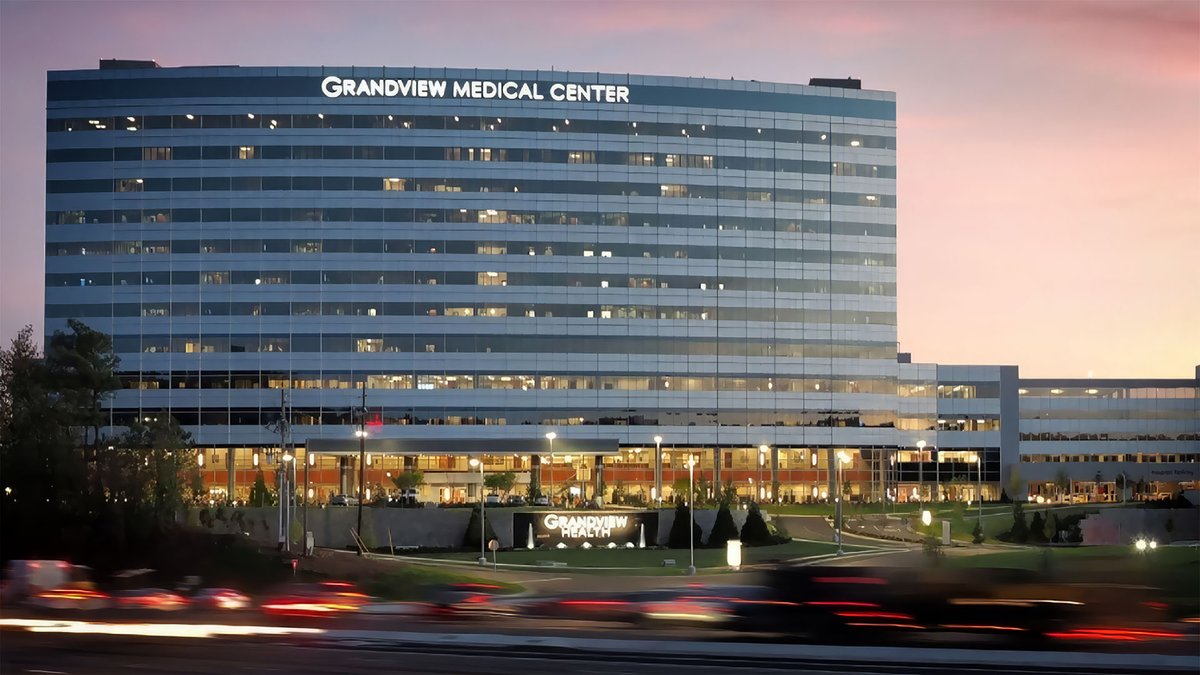
At Grandview Health in Birmingham, the planned addition would create a four-center surgery network. At Baldwin Health in coastal Alabama, CHS also reported a completed $154 million hospital expansion. Outpatient investment and inpatient expansion can coexist. The company is choosing particular places and services rather than applying one construction plan everywhere.
For patients, the offering is tangible: physician visits, imaging, urgent care, cancer treatment, emergency services and surgery through affiliated facilities. For selected procedures, a surgery center provides care without an overnight admission. Complex illness still needs appropriate hospital resources. Moving a procedure into a smaller building only makes sense when the clinical requirements fit.
That distinction matters to a family looking for care. A corporate name does not tell them whether a nearby site offers a particular specialist or procedure. The local network has to make the handoff work: from a physician visit to a scan, from the scan to treatment, and, when necessary, back to a hospital. More locations are useful only if they offer the right capabilities and a workable route between them.
This is a for-profit delivery business. Government programs, commercial insurers and patients pay for care. Its competitive arena includes HCA, Tenet, nonprofit systems and independent outpatient providers, depending on the market. CHS’s pitch is the combination of local access and shared corporate resources. That is an operating proposition, not an exclusive invention.
A hospital is a people business
Scale can help with less visible problems, too. In 2024, CHS announced a relationship with Mark Cuban Cost Plus Drug Company to purchase selected pharmaceuticals, initially including epinephrine and norepinephrine for hospitals in Texas and Pennsylvania. The practical target was supply and cost. The announcement was a purchasing arrangement, not evidence that every hospital drug bill had fallen.
Then there are the people delivering care. CHS says its Pathways Program has provided more than $90 million in tuition assistance and student-loan repayments since 2022. Its safety work borrows high-reliability techniques from aviation and nuclear power. The 2026 impact report describes more than 12.1 million patient encounters during 2025. Those are encounters, not 12.1 million different people.
Read the local sign
Another operator can copy the discipline: measure retained businesses separately, fund capacity around a specific need and test purchasing assumptions. The approach needs buyers willing to pay sensible prices and remaining facilities capable of supporting investment. Expensive staffing, unfavorable reimbursement or lost earnings can overwhelm the benefits of a sale.
A patient’s version is simpler. Find the affiliated local facility, check its services and insurance participation, and arrange care there. CHS supplies the organization behind those doors. Whether its smaller network succeeds will be decided inside them, one appointment, procedure and shift at a time.
Follow the next chapter
Find care, meet the people running the company, or follow its next earnings discussion.