In 2015, Ben Kovler had a problem that most cannabis entrepreneurs would have envied. His company had won three Illinois cultivation licenses. There were only twenty available. Then he began losing sleep. He worried Green Thumb Industries could not afford to build all three facilities. So he gave one license back.
Kovler recounted the decision to MJBizDaily eight years later. It is a useful place to begin because the company he built is now associated with expansion: dispensaries, factories, brands. The early decision exposes the arithmetic underneath. Permission to grow cannabis creates an opportunity. It also creates a bill.
- Two businesses, one network: GTI makes cannabis products and runs RISE Dispensaries.
- A portfolio with a twist: major brand rights were sold in 2025 and licensed back.
- The useful lesson: decide what you can finance before celebrating what you can win.
Three licenses. Money for two.
Green Thumb began in 2014, after Illinois established its medical cannabis program. Kovler had studied the industry and visited operators elsewhere. In a 2018 interview, he described the original thesis with unusual economy: “the way to win is brands distributed at scale.”
That formulation matters. Cultivation gets a product into existence; a recognizable brand gives someone a reason to ask for it again. Pete Kadens, a co-founder and former CEO, helped build the business outside Illinois. The ambition was national, but the work arrived in local pieces.
Permission to grow cannabis creates an opportunity. It also creates a bill.On the economics of a hard-won license
A shelf full of different promises
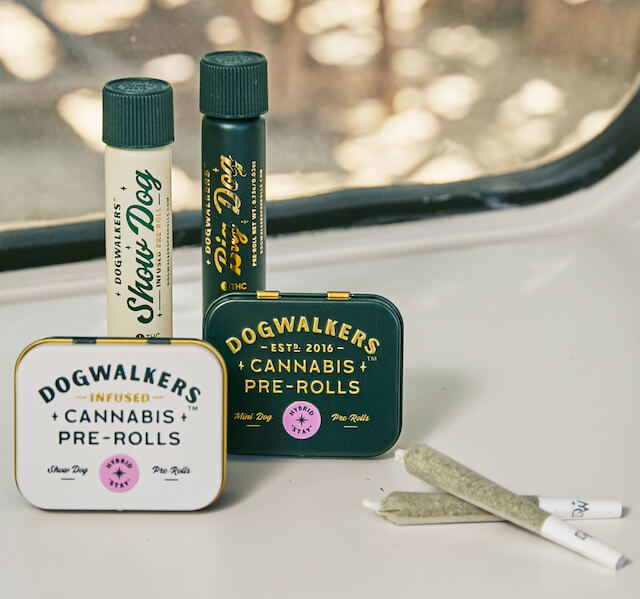
Consider the products. RYTHM sells flower, vapes and concentrates. Dogwalkers makes pre-rolls, borrowing its name from the ordinary pleasure of walking a dog. Incredibles makes chocolates and other edibles. Beboe emphasizes design and occasion. Doctor Solomon’s offers tinctures and topicals. &Shine and Good Green address shoppers looking for value.
The portfolio makes more sense when viewed as a collection of purchases. A chocolate, a jar of flower and a topical do different jobs in a shopping basket. Different formats also require different manufacturing skills. Consistency here means managing cultivation, processing, packaging and the labeled product experience.
For customers, GTI’s other recognizable name is RISE. Its dispensaries offer a place to compare formats and ask staff questions. Medical patients and eligible adult-use shoppers enter through different state rules. Online menus help people inspect a local selection before visiting; delivery, mobile ordering and pharmacist consultations depend on the market.
Build before the door opens
There are two routes to the shopper. GTI sells through its own dispensaries and supplies independent licensed retailers. Wholesale customers therefore buy from a company that may also compete for their retail business. The advantage is reach: a product can travel beyond the company’s own checkout counters.
The expertise is in coordinating those handoffs. GTI has to produce reliably, fulfill wholesale orders and make the store experience understandable. Its footprint spans fourteen U.S. markets, but a national logo does not make the local operating details disappear. Eligibility, available products and permitted services still follow the location.
The October 2026 opening in Belleview, Florida, makes that geography tangible. GTI described a connection between the new dispensary and its cultivation and production facility in nearby Ocala. Some products could reach local patients from an operation in their own community. A national company was still assembling a local supply chain, one store and one production relationship at a time.
Arriving early can pay. GTI said eight Minnesota RISE stores transitioned to adult-use sales in September 2025 and contributed to its fourth-quarter performance. Existing infrastructure could serve a newly expanded customer base. The wager required investment before those additional sales arrived.
Money for that work has come from several directions. GTI began trading on the Canadian Securities Exchange in June 2018 after a reverse takeover and private financing. In 2024, a Valley National Bank-led syndicate provided a $150 million, five-year credit facility. Its rate was SOFR plus five percentage points. Borrowing brings a clock and an interest bill.
The labels stayed. The rights moved.
One recent change makes the familiar brand list deceptive. In August 2025, GTI announced a $50 million sale of a subsidiary holding rights to several brands to Agrify, now RYTHM, Inc. It licensed the brands back and separately extended Agrify a $45 million loan. GTI disclosed the deal as a related-party transaction.
The distinction is practical: making a branded product and owning its trademark are separate activities. April 2026 amendments set aggregate cash licensing fees for seven brands, including incredibles, at $70 million a year. The labels could remain familiar while the economics behind them changed.

GTI also presents community participation as part of its operating identity. Its Growing for Good program began in 2020. One concrete example: the company reports hosting four adult Olive-Harvey College students for four weeks through a training and scholarship initiative. That is a modest, inspectable activity behind a broad social mission.
Growth has a second number
By 2025, annual revenue had reached approximately $1.175 billion. That makes the returned license an interesting origin story, rather than an argument against expansion. The useful question is how much of the next investment the existing business can support, and what obligations remain if growth slows.
Scale does not remove pressure. Second-quarter 2026 revenue rose 4.6% from a year earlier, while comparable-store sales fell 1.1%. Gross margin declined from 49.9% to 45.0%; GTI pointed to licensing fees and price compression. A growing network and a strengthening mature store are different things.
More revenue can coexist with less margin.
Curaleaf, Trulieve, Verano, Cresco Labs and local operators offer alternatives, depending on the state. GTI’s combination of manufacturing, wholesale distribution and owned stores gives it several ways to reach customers. Competitors can pursue similar combinations. Execution has to carry the argument.
The transferable ideas are fairly plain: define the purchase occasion, control the handoffs, measure established locations separately and leave room in the budget. Early investment becomes expensive when an opening is delayed or prices fall. A fixed licensing bill still arrives when demand disappoints. The returned Illinois license remains a useful reminder: an attractive opportunity can exceed the business’s capacity to pay for it.
Go a little further
Explore GTI’s website and the RISE store menus. Follow LinkedIn, X, Instagram or Facebook. Read company news, watch Kovler’s 2018 video interview, or listen to earnings webcasts.