Canopy Growth began with a delicious piece of Canadian industrial recycling. In Smiths Falls, Ontario, a former Hershey chocolate factory became a cannabis headquarters. The symbolism wrote itself: one regulated pleasure replacing another, with a ticker symbol - WEED - that no branding shop could improve. For a while, the company looked less like a grower than the chosen vehicle for an entire legal-cannabis future.
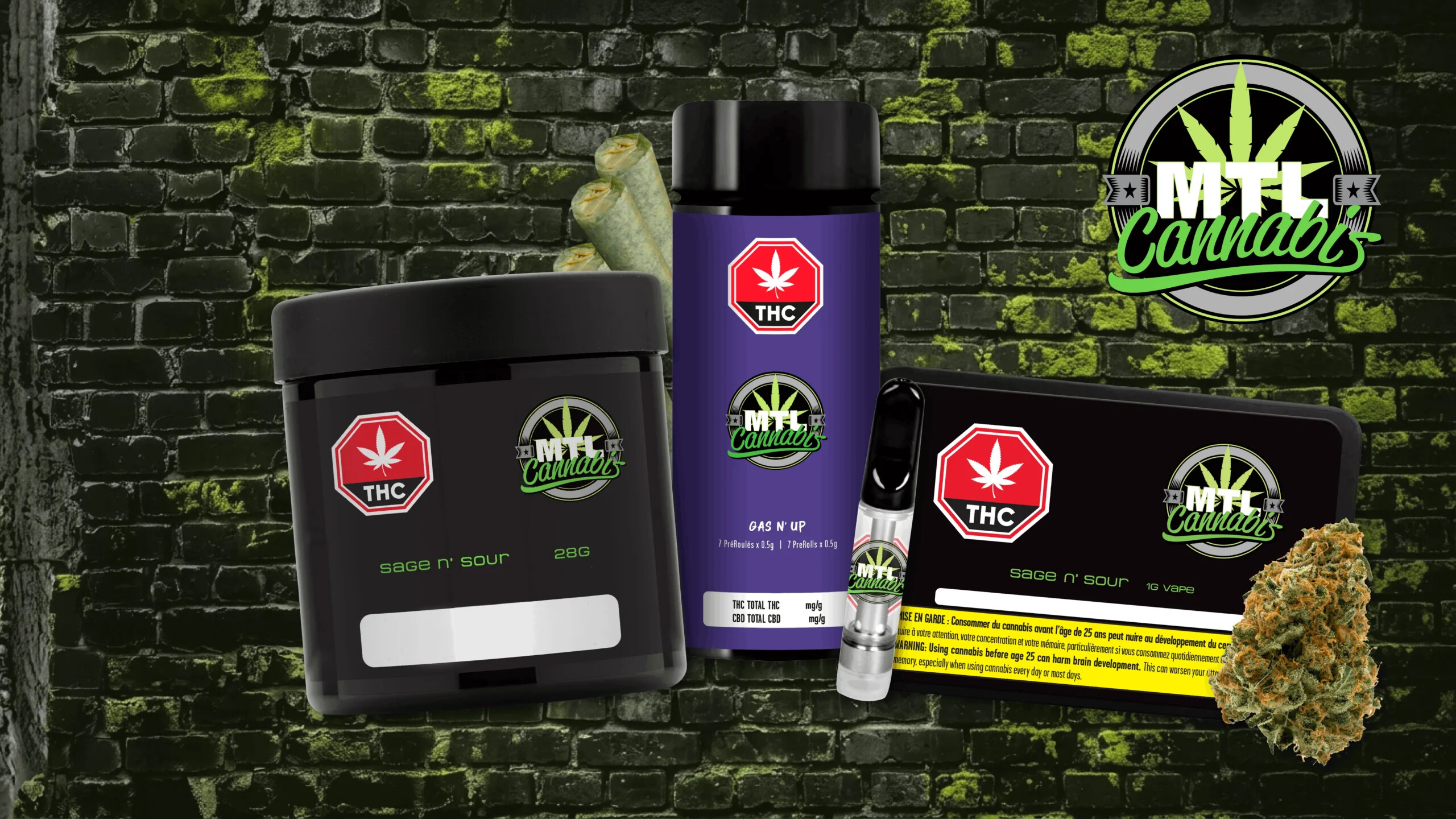
The business today is more legible. Canopy sells medical and adult-use cannabis in Canada, supplies regulated medical markets overseas, operates patient-facing clinic and ecommerce channels, and owns Storz & Bickel, the German maker of VOLCANO, VENTY, VEAZY and MIGHTY+ vaporizers. Its cabinet includes Tweed, 7ACRES, DOJA, Claybourne, Deep Space, DeeLish and, since March 2026, MTL Cannabis. It also holds a non-controlling interest in Canopy USA, whose portfolio includes Wana edibles, Jetty vapes and Acreage's cultivation and retail operations.
That range can sound like the old empire in fresh packaging. The difference is operational intent. Canopy now speaks about cultivation consistency, medical channels, European certification and cost control. Those are narrower nouns than "global leadership," and that is precisely why they are interesting.
The money was the plot
In 2017, drinks giant Constellation Brands bought roughly C$245 million of Canopy. A year later it put in about C$5 billion, taking its ownership to roughly 37 percent at closing. The deal gave Canopy what every young industry covets: time, cash and a famous corporate tutor. Constellation brought consumer analytics, brand development and the belief that cannabis beverages might someday sit beside beer.
Canopy used the money as an option on many futures at once. It built and bought cultivation, entered international markets, collected brands and paid for technologies. It acquired Storz & Bickel in 2018, adding a genuinely differentiated hardware business. It arranged a future route into U.S. cannabis through Acreage, then Wana and Jetty. The bet was coherent on a whiteboard: regulation would open, scale would matter, and Canopy would already be standing everywhere the doors swung wide.
What did it cost? More than acquisitions. Fixed facilities, staff, inventory, integration and corporate complexity kept charging rent while legal markets developed unevenly. In 2023 alone, Canopy announced 800 job cuts and expected C$425 million to C$525 million in restructuring charges as it closed and consolidated Canadian operations. Constellation's capital was an investment, not revenue; the distinction became painfully concrete.
The first thing that failed was not cannabis demand. It was the timetable.YesPress analysis
Legal supply arrived faster than efficient retail, sensible taxation and stable consumer habits. Producers built capacity into forecasts, then competed through price compression and write-downs. Canada's excise burden made legal flower harder to price against illicit sellers. Abroad, every medical market carried its own rules. In the United States, federal illegality kept Canopy's most anticipated market behind elaborate corporate glass.

What changed their mind
Losses changed it. So did Constellation's influence and the 2019 removal of co-founder Bruce Linton. Facility closures began. Consumer businesses outside the core were sold. Production of vapes, edibles and extracts moved toward an adaptive third-party model, while Canopy kept flower processing, pre-rolls and softgels closer. The company stopped treating every permissive jurisdiction as a market that deserved its own expensive footprint.
By fiscal 2026, Canopy's strategy had four practical lanes: Canadian medical cannabis, selected adult-use formats, European medical cannabis and Storz & Bickel devices. Canopy USA remained exposure rather than a controlled subsidiary. That legal separation matters. It gives shareholders an economic line toward state-legal U.S. cannabis, but Canopy Growth cannot direct or consolidate the platform as if federal law had already changed.
The lane Canopy now emphasizes most is medical. That customer can be a registered patient ordering online, a veteran using reimbursed coverage, a clinic patient working with Apollo or Canada House, or a European patient receiving prescribed product through a pharmacy. The problem is not simply access to THC or CBD. It is predictable supply, documented quality, appropriate formats and a route through reimbursement and regulation.
Adult-use customers are different. They choose between legal brands, store recommendations and cheaper illicit alternatives. Here, Canopy competes on recognizable brands, product formats and retail availability. Its Q1 FY2027 Canadian adult-use revenue rose 10 percent, helped by MTL flower. The company said it reached sixth place overall in Canada, with top-two positions in premium flower, infused pre-rolls, and oils and softgels. Those are company-cited rankings, but they show where management wants to fight.
Quality has to repeat
Genetics, cultivation and flower supply must show up as reliable products, not agriculture-themed branding.
Access has to convert
Clinics, pharmacies, provincial buyers and ecommerce matter only when they create repeat orders at workable margins.
The MTL test
Canopy paid an equity value of about C$125 million for MTL Cannabis, plus the assumption or settlement of debt and debt-like items that put announced enterprise value around C$179 million. Management projected roughly C$10 million in annual run-rate synergies within 18 months. The acquired business brought premium genetics, cultivation talent, medical patients, Canada House clinics and the Abba Medix channel.
This is not another flag on a map. It is a vertical connection: MTL can supply flower; Canopy can process, brand and distribute it; clinics can reach Canadian patients; EU GMP facilities in Kincardine and Sankt Leon-Rot can move compliant product toward Europe. In August 2026, Kincardine renewed its EU GMP certification. The quarter before that, Canopy relaunched Tweed in Germany with MTL-derived strains.
Storz & Bickel supplies the other kind of differentiation. Cannabis flower is agricultural and vulnerable to price competition. A high-end vaporizer has engineering, certification, accessories and an installed user base. The division generated C$70.7 million in fiscal 2026 revenue, though that was down 14 percent. In Q1 FY2027, revenue returned to 6 percent growth and gross margin rose sharply after cost rationalization and a tariff recovery. Useful asset, imperfect quarter-to-quarter machine.
“At the heart of our cannabis strategy is our company-wide push to elevate cultivation.”Luc Mongeau, CEO / Q1 FY2027
What a builder can steal
The old Canopy lesson is easy to moralize: don't spend too much. The useful lesson is more specific. When regulation determines market timing, separate reversible options from fixed commitments. A distribution agreement can wait. An enormous greenhouse cannot. Stage capital behind observed reorder rates, not press-release geography.
- 01Rank channels before countries. A clinic, pharmacy network or provincial listing is more valuable than a theoretical market-size slide.
- 02Keep the capability that compounds. Canopy retained cultivation, flower processing and regulated-device expertise while outsourcing more variable formats.
- 03Give each acquisition an operating sentence. MTL grows; Canopy processes and distributes; medical channels reorder. If the sentence needs six semicolons, integration is already losing.
- 04Measure the unflattering number. Q1 revenue grew 13 percent and adjusted EBITDA improved, but free cash outflow was C$25.7 million. Momentum without cash is still a promise.
The conditions where this playbook fails are equally important. Medical focus will not rescue weak economics if reimbursement falls, as Veterans Affairs Canada's reduced rate already demonstrated. European growth will not matter if certification lapses or local regulation tightens. Premium flower cannot defend itself when consistency slips. The Canopy USA option may stay an option if U.S. federal rules remain unchanged. And another round of portfolio expansion would recreate the complexity the reset was designed to remove.
Canopy reported C$284.6 million in fiscal 2026 net revenue, a C$20.2 million adjusted EBITDA loss and C$69.1 million of free cash outflow. In the first quarter of fiscal 2027, revenue reached C$81.2 million, adjusted gross margin improved to 31 percent and the adjusted EBITDA loss narrowed 59 percent to C$3.2 million. Every business grew. Free cash outflow, however, widened to C$25.7 million. There is the tension in four numbers: the reset is showing in the income statement, but the cash-flow proof is unfinished.
One more yellow flag: in 2026 Canopy restated earlier financial statements after finding a technical, non-cash error in the classification of certain U.S.-dollar warrants. It did not change the underlying operating story, but a company selling discipline must make financial control part of the product.
Where Canopy fits now
Canopy is no longer best understood as a pure Canadian grower or a borderless cannabis conglomerate. It is a regulated consumer-health company with an agricultural core, a medical distribution layer, a premium hardware subsidiary and indirect U.S. optionality. Tilray, Aurora, Organigram, Cronos and SNDL compete across parts of that map; illicit sellers compete on price; PAX and other device companies compete with Storz & Bickel. Few share the exact mix, which is an advantage only if the pieces improve one another.
The company says it is targeting positive adjusted EBITDA during fiscal 2027. That would be a milestone, not a conclusion. The better test is wonderfully boring: repeat customers, stable gross margins, controlled working capital and fewer restructuring footnotes. Canopy's first era made cannabis feel inevitable. Its second has to make the business feel ordinary enough to work.